
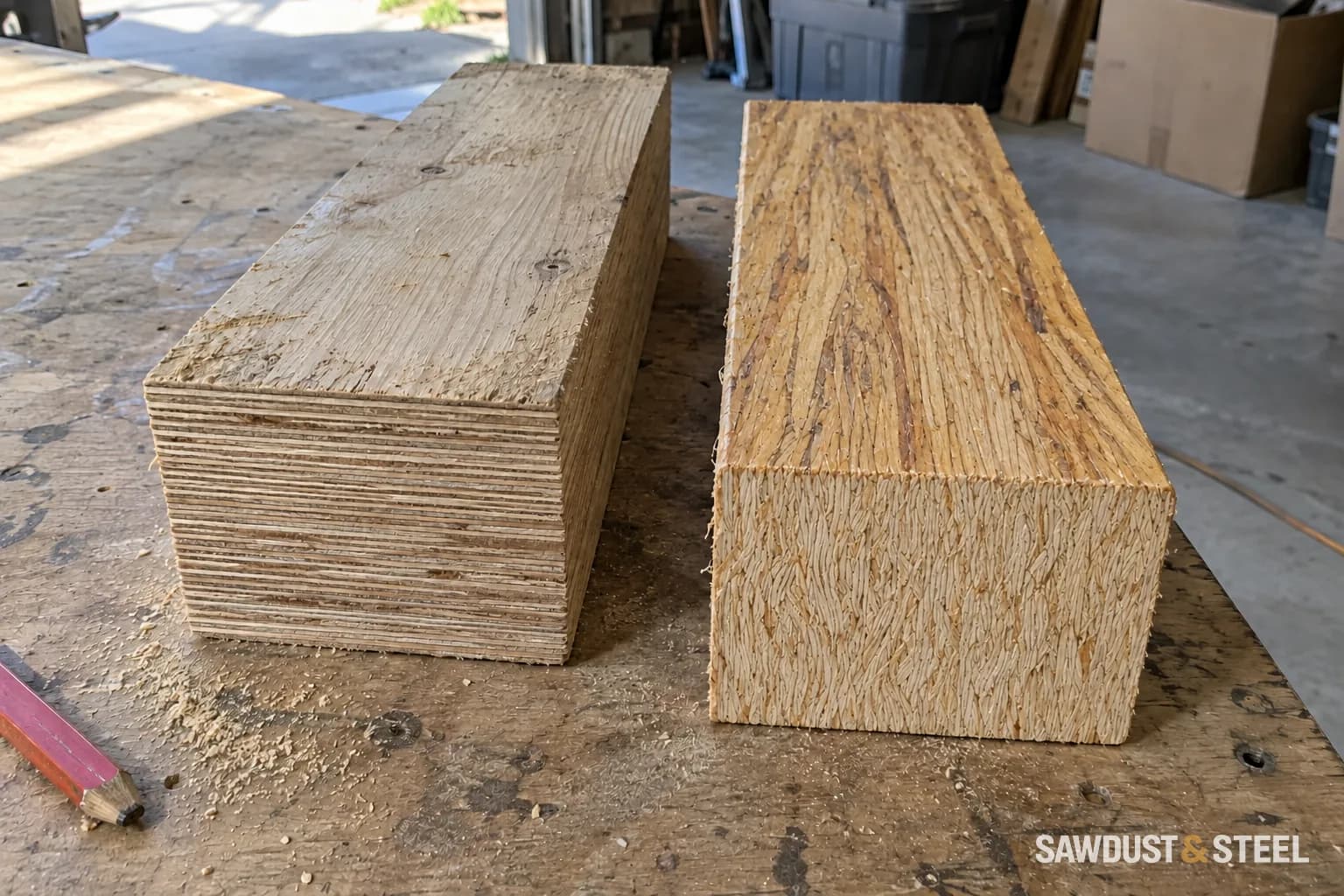
The beam is installed. The electrician arrives. The shortest route for the cable passes directly through the new wood.
This is an excellent moment to pause and a poor moment to improvise. "It is only a small hole" is a description, not a design check.
Identify the member first
Record the product name, grade or series if marked, dimensions, span, and the proposed hole's position. Keep photographs of the stamp and the relevant structural drawing. LVL, PSL, glulam, and an I-joist do not share one drilling rule.
Weyerhaeuser's beam-hole guidance uses product-specific limits. Hole size and position matter, and the conditions behind a chart matter too.
A chart is not a blank permission slip
The allowed-hole detail may depend on the member's depth, loading, location, and the number or spacing of openings. An opening outside its stated conditions needs a design response. Do not borrow an I-joist web diagram for a solid beam because it looks reassuringly technical.
Weyerhaeuser's PSL explanation describes limits to its published hole guidance. For an existing engineered opening, have the responsible designer confirm how the proposed service penetration fits the actual beam design.
Give the trades an alternative route
Ask for the route to be resolved before finishes are closed. On a wall-removal job, we marked the new beam on the ceiling before the electrical rough-in walkthrough. A cable route that had looked simple on the floor plan ran straight into it. The electrician rerouted through the adjoining service space before anything was drilled. A few pencil marks and a conversation saved a structural query later.
Other jobs need a planned bulkhead or a revised structural detail. Tape the proposed enclosure on the wall and ceiling so you can judge it from the room entrance. A small box aligned with a cupboard can be easier to live with than an awkward last-minute jog. Have the trades and designer agree the route; an unapproved notch is not another layout option.
If someone has already cut it
- Stop further cutting or drilling.
- Record the opening's dimensions and location without altering it again.
- Notify the structural designer and contractor promptly.
- Obtain the required assessment and repair detail before concealment.
Do not fill the hole and call the original capacity restored. A neat patch and an engineered repair answer different questions. The useful paperwork is the designer's disposition of that specific opening.