
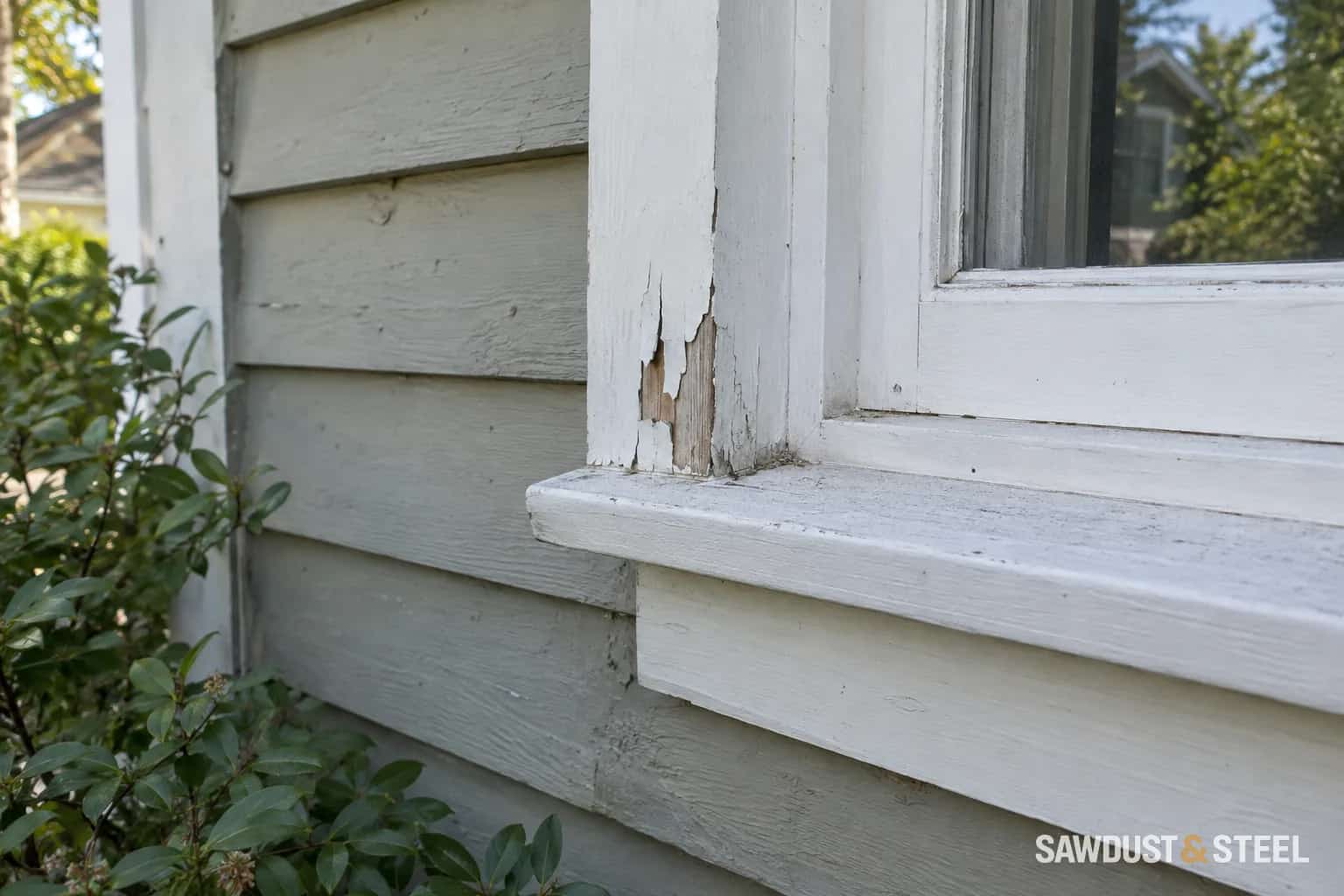
One crack does not mean the whole exterior needs replacing. It does mean the repair should start before a tube of filler hides the useful evidence. Photograph the full board and its neighbours as well as the crack itself.
Separate a surface mark from a broken board
From a safe position, note whether the line crosses the entire board, reaches an edge or meets a fastening point. Record chips, an impact mark and any visible displacement. Do not flex the board to see whether it opens. Loose or hanging material needs prompt attention and a clear area underneath it.
Small surface chip
Ask whether the identified finish system allows a cosmetic repair.
Through-crack or loose board
Ask about replacement and inspection of the attachment.
Several boards in a pattern
Investigate the shared support or installation condition before replacement.
Identify the product before specifying the repair
Different fibre-cement products have different profiles, fastening instructions and finish systems. James Hardie installation documentation is a route to the relevant documentation for that manufacturer. Do not assume a paintable filler approved for one product is suitable for another, or that a surface patch restores a broken board.
Give the contractor the approximate installation date, original invoice if available and photographs of each affected area. Ask whether the proposed scope includes checking fastener placement, backing and clearances where the board is removed. These are inspection questions, not proof that the original installer made an error.
Plan the match as well as the replacement
Compare the new material in daylight before agreeing to a tiny repair that produces an obvious rectangle. Matching the profile matters as much as matching the paint. Retain an offcut or product label for future maintenance.
Cutting and removal require the manufacturer's dust-control and handling precautions; this is not a dry-grinding repair. Keep the homeowner task to documentation and scope decisions. If cracking is accompanied by wall movement, widening masonry cracks or distorted openings, arrange assessment of the wall rather than treating the siding as the whole problem.
Nearby soil contact and opening PVC trim joints are worth recording separately. A repair proposal should explain which details it fixes and which it only makes less visible.