
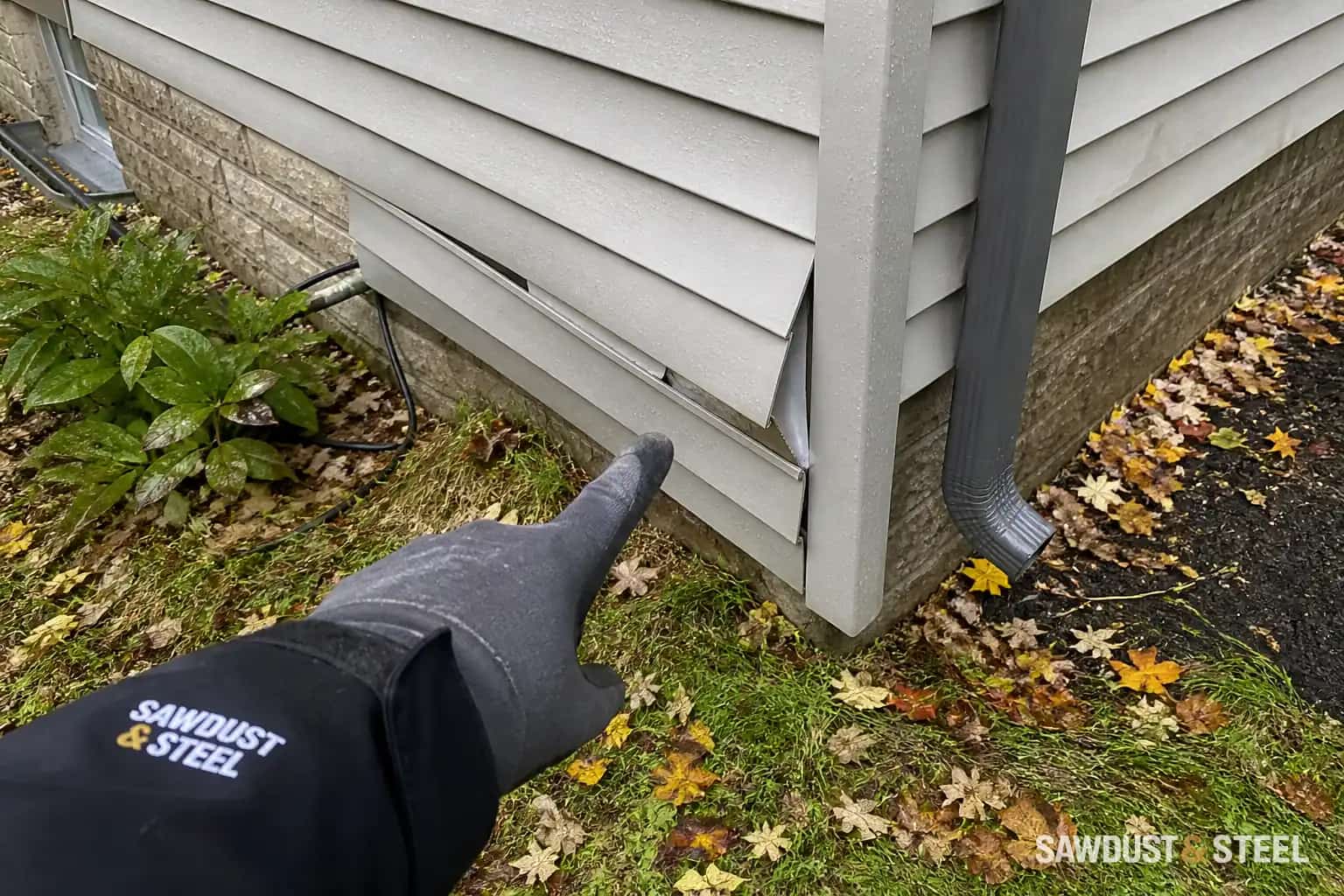
A sunny afternoon can make an ordinary wall look like it has developed a bad haircut. Start with a photograph from straight on and another along the wall. Low sunlight exaggerates small surface variations; a moving bulge and a shadow are different observations.
Record the pattern, not just the worst photograph
Mark the affected courses on a simple wall sketch. Does the distortion repeat at regular points, begin beside a fixture, or stay within a sharply defined patch? Take the same photographs on a cooler morning. Record nearby heat sources and reflected sunlight without trying to reproduce the damage with a heater.
Changes with temperature
Ask whether panels are restrained at fasteners, ends or attachments.
Same waviness all day
Ask the installer to check the backing surface as well as the panel.
One concentrated patch
Document local heat exposure and compare neighbouring courses.
Let the installer inspect the concealed details
Vinyl Siding Institute installation manual explains that tight fastening can cause buckling as vinyl changes size with temperature. That makes the hidden nail hem worth checking. Do not flatten a bulge with face screws: they may add another restraint and leave visible holes.
Ask for a diagnosis that distinguishes damaged material from an installation condition. A replacement panel over the same uneven support can reproduce the same appearance. Photograph the exposed condition during a planned repair and retain the product identification for a warranty enquiry.
Choose the smallest repair that resolves the cause
One defective attachment may allow a localized repair; a widespread backing problem can require a larger opening. Check whether matching profile and colour are still available before removing sound material. A new board can be visibly different from sun-aged siding even when the colour name matches.
If the waviness begins beside a sign or fixture, review how attachments should meet siding. If lower courses are also damp or dirty, the separate issue may be raised soil against the wall. Keep those observations on the same sketch, but do not assume they share a cause.