
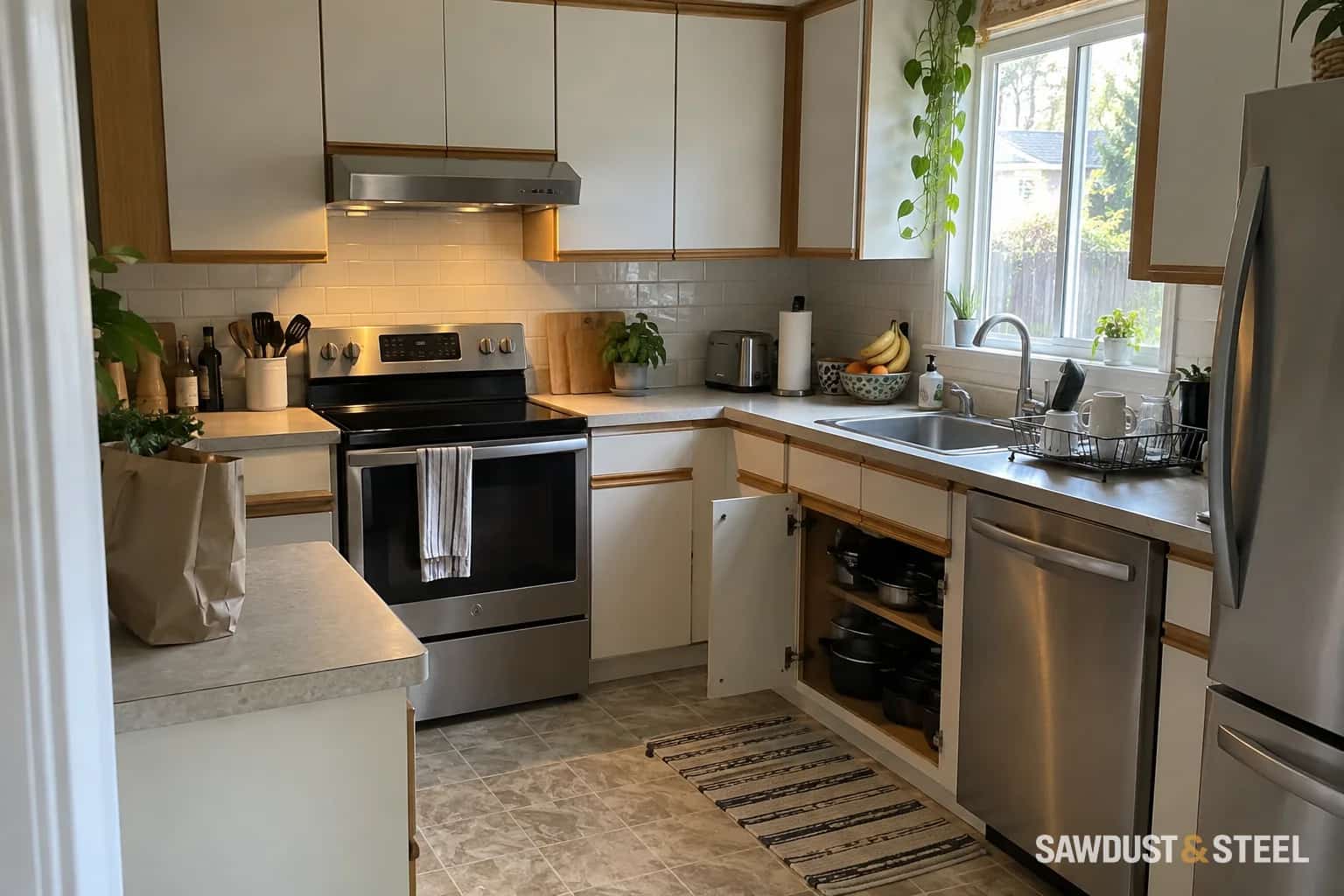
You know where the ice dispenser is. Could you find its water shutoff without pulling the fridge across your new floor? That small valve is easy to forget while choosing the tall cabinets around it. Find it before the drawing is approved, then check that you can still reach and operate it with the fridge and storage in place.
Find it before the cabinet drawing is approved
Ask the plumber to show you which valve serves the refrigerator and what it shuts off. Photograph its location. Then compare that spot with the proposed cabinets, drawers, fillers, and finished appliance position. A valve that is visible during demolition can become remarkably invisible after a pantry is installed.
Some appliance instructions specify an adjacent cabinet or another accessible location. JennAir’s built-in refrigerator installation guide, W11311783 gives that type of direction. Use the requirements for your actual refrigerator rather than assuming every model uses the same connection zone.
Reachable means you can operate it
- Can you see the valve and identify it without moving the refrigerator?
- Can a hand reach and turn it without removing fixed shelves or cabinet panels?
- Will a full drawer, recycling bin, or appliance tray block that reach?
- Is the location clear to someone who did not watch the renovation happen?
At one pantry fitting, the valve was visible through the empty frame but disappeared behind the installed pull-out baskets. We caught it before fixing the finished side panel. The plumber and cabinet installer agreed on a reachable position, and we checked the hand space with the baskets loaded. A removable panel can also work in a designed arrangement, but its fixings and opening need to remain usable. Label the location and keep a photo; the person dealing with a leak may not be the person who approved the kitchen.
Give the water line a route, too
The line needs to reach its connection without being pinched by the fridge or cut by a rough cabinet opening. It also needs the movement allowance and protection specified for the installation. More loose tubing is not automatically better if it becomes a coil that catches under a wheel.
Whirlpool’s guidance for leaks behind a refrigerator identifies the household supply tubing and its accessible connections as places to check. That makes a sensible handover task: the installer checks the connections before and after the fridge moves into its final position.
The five-minute conversation at the end
Ask for a demonstration of the shutoff, an explanation of how the appliance is removed, and the location of the main water shutoff as well. Do not force a seized valve or drag a heavy built-in appliance out alone to investigate it. A questionable valve is a plumbing job, not a grip-strength contest.
If a leak appears later, stop using the affected water feature and arrange prompt help. Being able to identify the correct shutoff is precisely why this unglamorous little planning detail belongs beside the fridge specifications.