
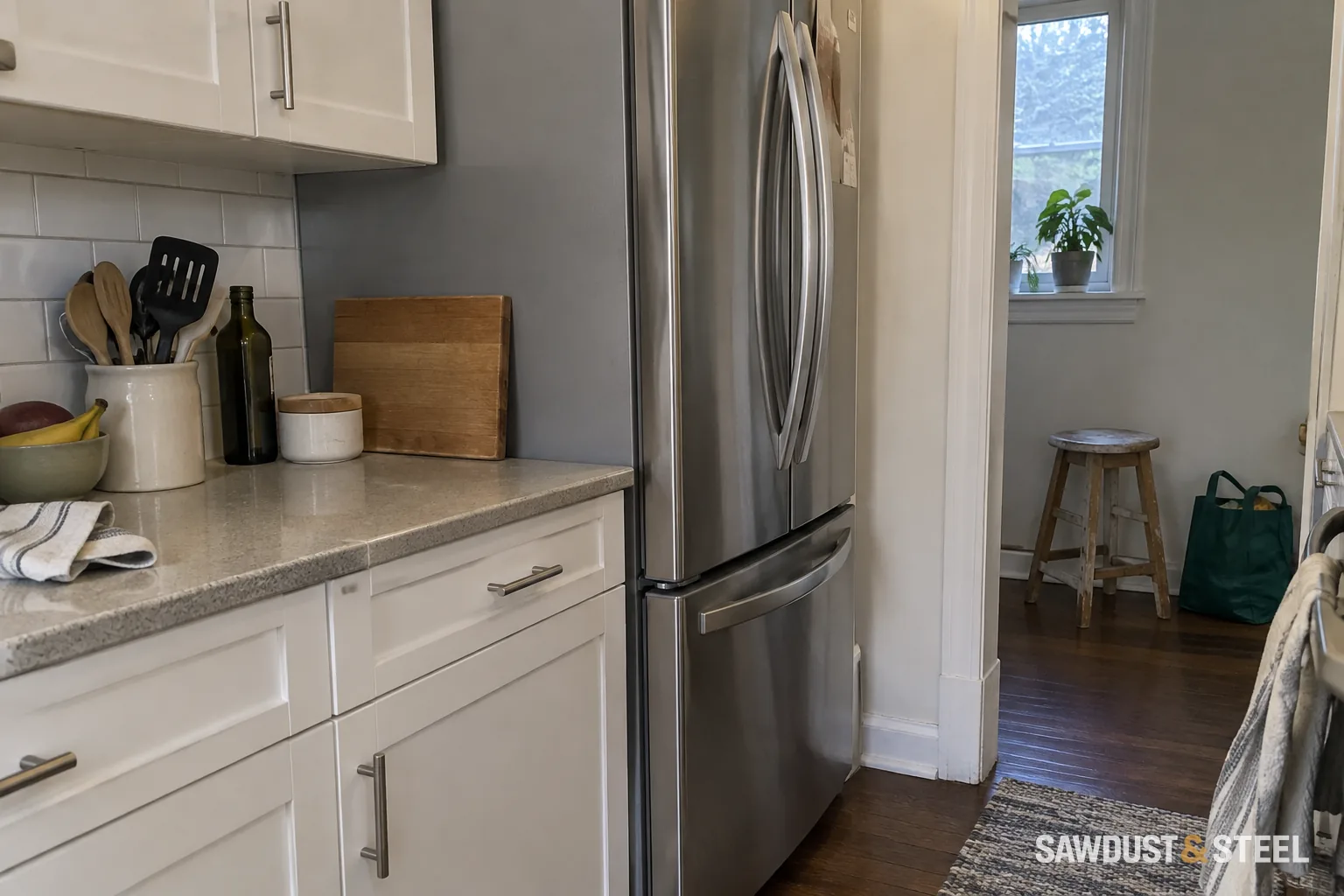
The fridge fits with millimetres to spare. The vegetable drawer does not come out. This is an unusually expensive way to discover the difference between fitting and functioning.
Use the model drawing, not the showroom width
Check the hinge arrangement, door swing, handle projection, ventilation requirements, and access needed to remove interior parts. Whirlpool's installation manual illustrates why fixed-wall clearance is a separate measurement. Its dimensions apply to the models covered by that manual, not every French-door refrigerator.
Ask the supplier which opening angle is needed for daily use and which is needed to remove drawers or shelves for cleaning. Test both if the model is on display. Include the handle and finished wall return when imagining the restriction. Being able to reach the milk is the easy test; taking out a sticky vegetable drawer is the one people tend to discover after the cabinet installer has gone.
Include the cabinet face and the wall return
Draw the finished side panel, adjacent countertop, wall trim, and door handles. Test the arrangement with a full-size plan or a showroom demonstration that matches the wall condition. A fridge standing freely on display has an easier life than one in an alcove.
For a refrigerator with an ice maker or water dispenser, mark the water shutoff and supply-line access on the same cabinet drawing.
Check the future replacement too
- Save the installation drawing with the cabinet plan.
- Leave the specified ventilation and service access.
- Confirm water and electrical connections remain serviceable.
- Measure the delivery route, including doors and tight turns.
Do not approve cabinetry using an appliance described only as a standard-size fridge. We would settle the exact model while the filler panel is still a line on the drawing. It is a small conversation that protects a surprisingly large part of the kitchen.
Depth deserves a separate check too: a counter-depth fridge can still project beyond the cabinets, especially at the doors and handles.