
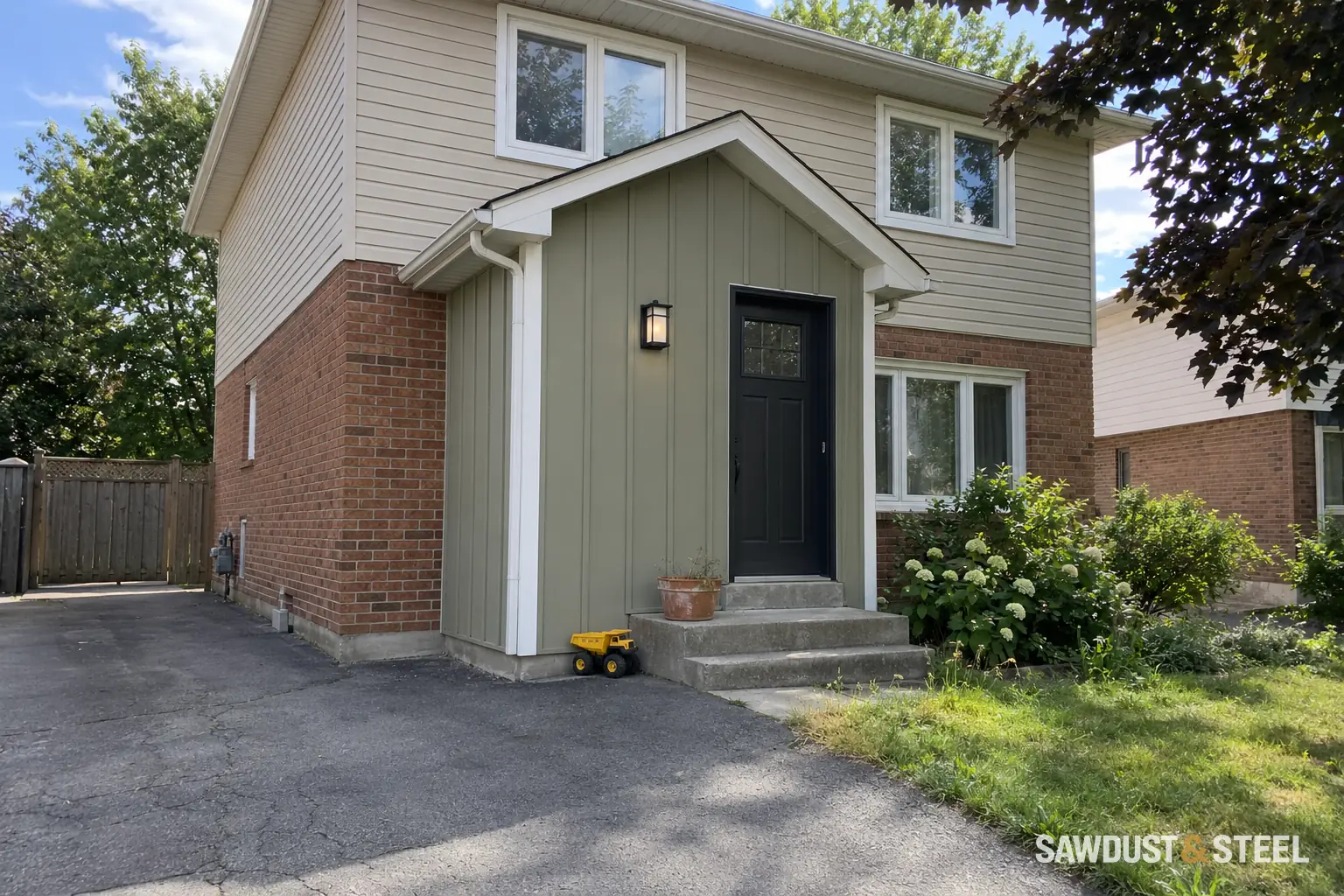
A narrow stain runs down the siding beside the end of a lower roof. The rest of the wall looks fine. Repainting that strip is tempting because it is such a small strip.
Follow the water above it before choosing the paint. On a lower-roof repair, the stain sat just below the gutter end. The owner had already touched it up twice. From the ground during rain, you could see water tracking along the wall instead of clearing it. That gave us somewhere useful to start opening up, rather than treating the entire wall as suspect.
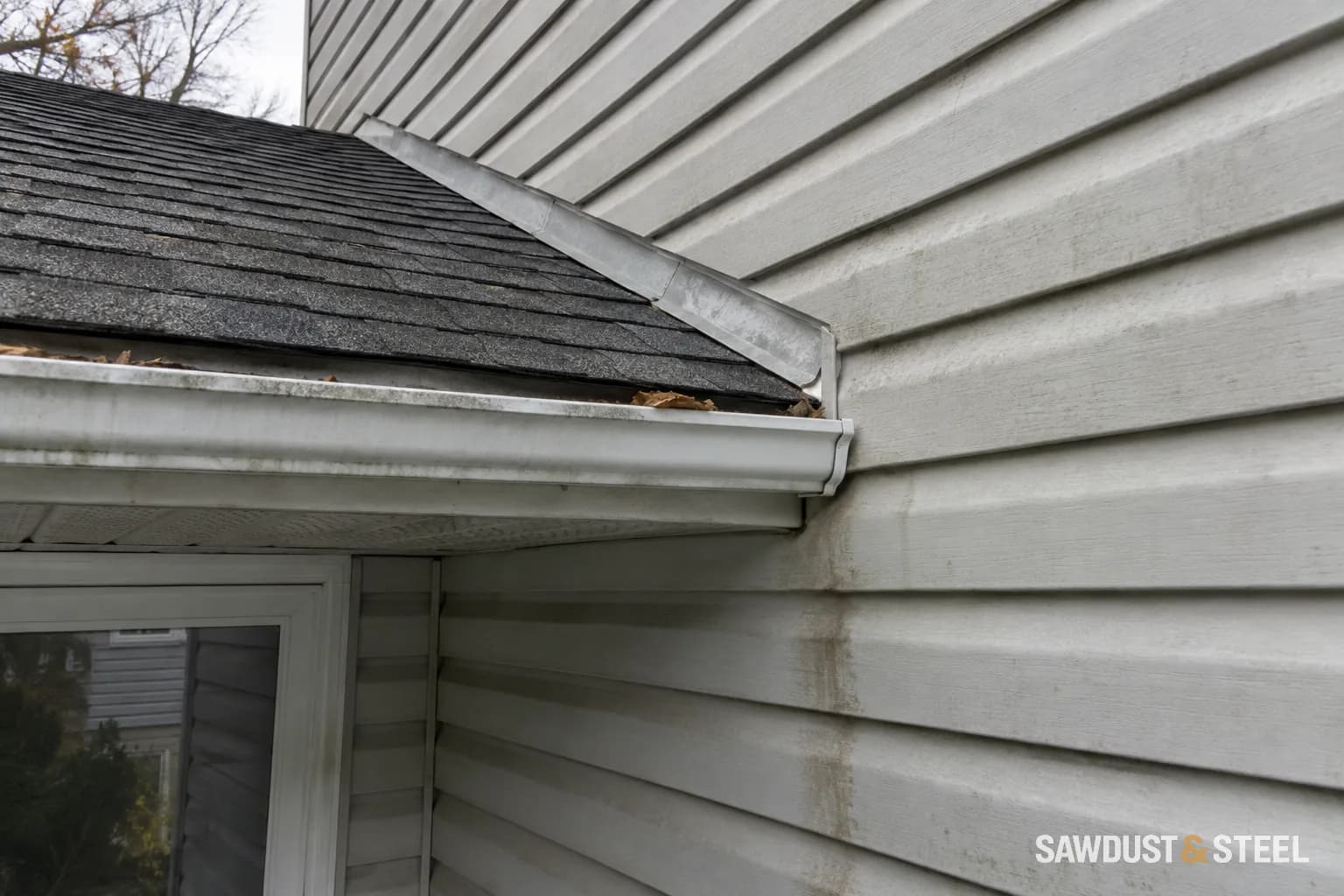
Look at the end of the roof-wall joint
Where a sloping roof meets a taller wall, step flashing manages water along the joint. At the lower end, a kickout redirects the flow away from the wall. Building Science Corporation's flashing guide explains this transition and why it matters.
Without an effective exit, water can concentrate at a vulnerable location rather than draining clear. The stain may be the visible part of the problem; it does not reveal the condition of the layers behind the cladding.
Three parts need to agree
| Part | Question to ask during assessment |
|---|---|
| Roof flashing | How does water reach the lower end of the joint? |
| Wall drainage layer | How is the flashing integrated behind the cladding? |
| Gutter or discharge route | Where does the redirected water actually land? |
The US Department of Energy's building-science guidance describes the roof-wall deflector's role. This is a building-science reference, not a statement that a US construction detail alone satisfies an Ontario permit.
Ask what must be opened
A repair may require access behind siding or roofing to make the layers work together. A conspicuous metal piece attached to the surface is not proof that the concealed integration is correct.
Ask the contractor to explain the proposed water path and photograph the work before the finishes return. Include an allowance or agreed change process for damage behind the siding, plus who finds matching replacement cladding. We keep removed pieces in order while we assess the opening. A small flashing repair becomes unnecessarily conspicuous if the only undamaged piece of matching siding has gone into the skip.
Observe safely, then resolve the source
From the ground, note staining, repeated wetting, peeling finishes, or water missing the gutter during rain. Do not climb onto the roof to probe the joint. Give the assessor the location and timing of what you noticed.
The satisfying repair may be almost invisible when finished. Its success is a wall that stops getting wet in the wrong place, not a thicker bead of sealant around the old stain.