
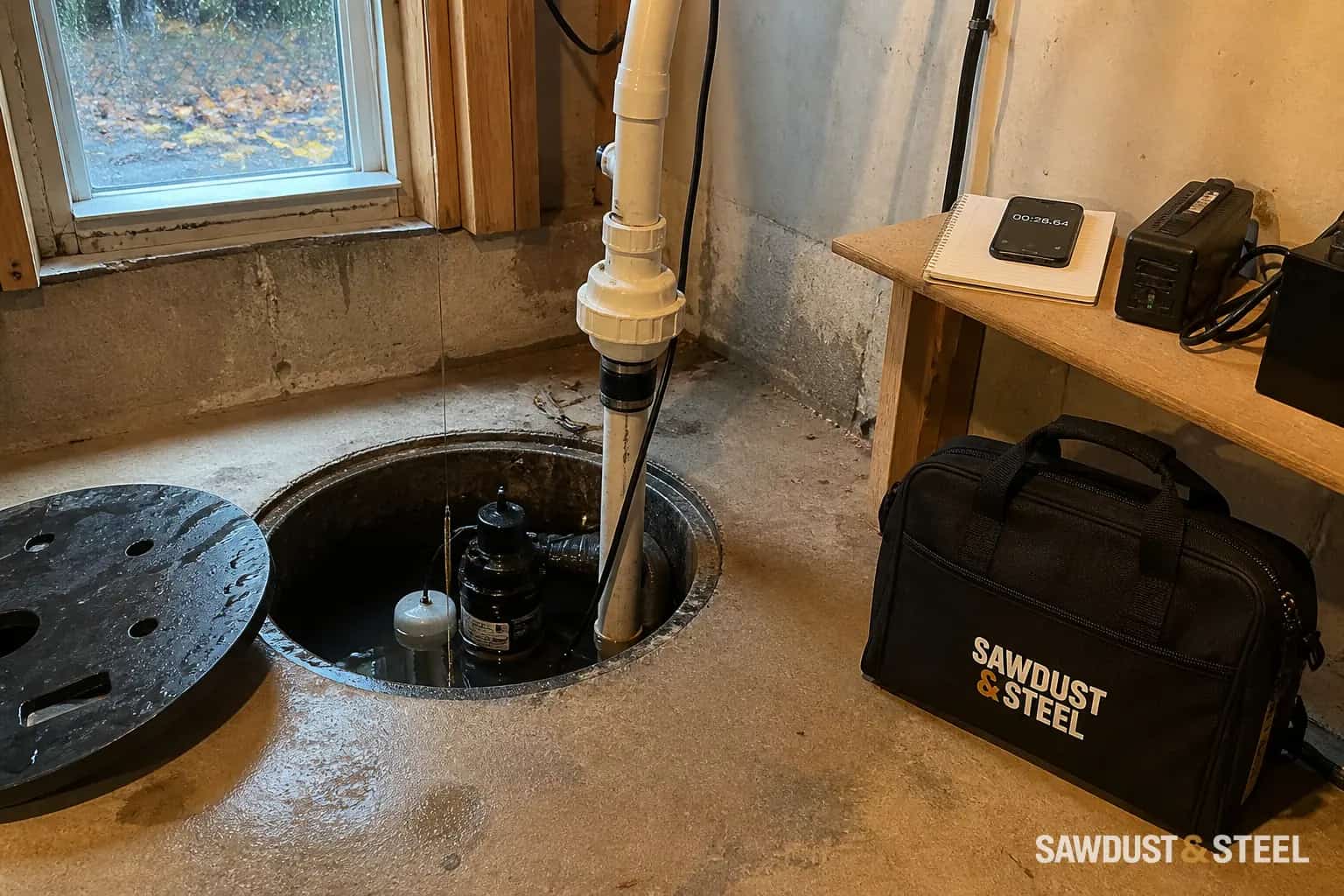
Once you notice the sump pump starting every few minutes, it is hard to hear anything else. During heavy rain or snowmelt, it may simply be busy. In dry weather, the same rhythm deserves a closer look. From a dry, safe position, observe whether each cycle lowers the water, whether it rushes back after shutoff and where the outdoor discharge lands. Those clues tell the service professional more than the noise alone.
Is the pump moving real incoming water?
| What you observe | Likely direction | Priority |
|---|---|---|
| Pit refills steadily during heavy rain and empties each time | High but plausible inflow | Watch closely and confirm the outdoor discharge |
| Water rushes back into the pit just after shutoff | Check valve may not be holding | Investigate today |
| Pump cycles in dry weather and water lands near the foundation | Discharge may be recirculating | Correct the drainage route promptly |
| Pump starts with little water, runs too long, or will not switch off | Float may be stuck, obstructed, or poorly positioned | Arrange service today |
| Pump runs or hums but little water exits and the pit keeps rising | Blocked, frozen, disconnected, or failed discharge | Urgent flood risk |
The federal sump-pump guidance recommends checking the pump during and after rainfall, rapid ice melt, snowmelt, and power outages. It also says to confirm that the pit empties, the visible check valve works, the outdoor pipe is clear, and discharge travels away from the foundation.
Five reasons it keeps restarting
- Heavy inflow: saturated soil, rapid rain, or snowmelt can refill a healthy pit quickly. The pump should still lower the level decisively.
- A small pit or short float travel: the pump has little water to remove before its switch changes state, so it starts more often than a larger, properly arranged system would.
- Check-valve return: water left in the vertical discharge pipe falls back after shutdown and triggers another cycle.
- Discharge recirculation: water leaves the pipe, follows poor grade back to the foundation, enters the drainage system again, and is pumped out again.
- Float or discharge trouble: a cord, pit wall, debris, ice, or another obstruction can interfere with switching or flow.
The National Research Council's private-side drainage guide says a float should move without touching the pit or cords, and reports that missing check valves increased pump cycling in investigated failures. It also warns that exterior discharge piping should be graded or protected against freezing. Have a qualified professional assess the valve, float, and discharge arrangement.
Watch, investigate today, or call urgently?
- Watch closely: the pump is cycling during major rain, the water level drops each time, discharge is visibly flowing, and the pit is not gaining on the pump.
- Investigate today: frequent cycling continues after the weather clears, water falls back after each stop, the float behaves oddly, or discharge returns toward the house.
- Call urgently: the water level is rising toward the top, the pump cannot start or stop, the pipe appears blocked or frozen, the backup activates repeatedly, or water is close to electrical equipment.
What can you check safely today?
From a dry position, time three cycles and note the weather. Watch whether the water drops to roughly the same level each time, listen for water falling back after shutoff, and look outdoors for a strong discharge away from the wall. Photograph the water level and piping without touching the equipment. The City of Mississauga Rain Ready guide is a useful reminder to inspect the whole drainage path, not just the appliance making noise.
In one basement, the owner described a pump that 'never gets a break.' From the dry doorway we could hear it stop, hear water return, and hear it start again. That gave the plumber something more useful than a guess about pump age. The valve and discharge arrangement needed checking before anyone ordered a replacement pump. Send a short log: 'Every 2 minutes in dry weather; water returns for about 10 seconds after shutoff.' Include a safe photograph of the piping. Do not unplug a working pump just to make the basement quiet while the cause is being investigated.