
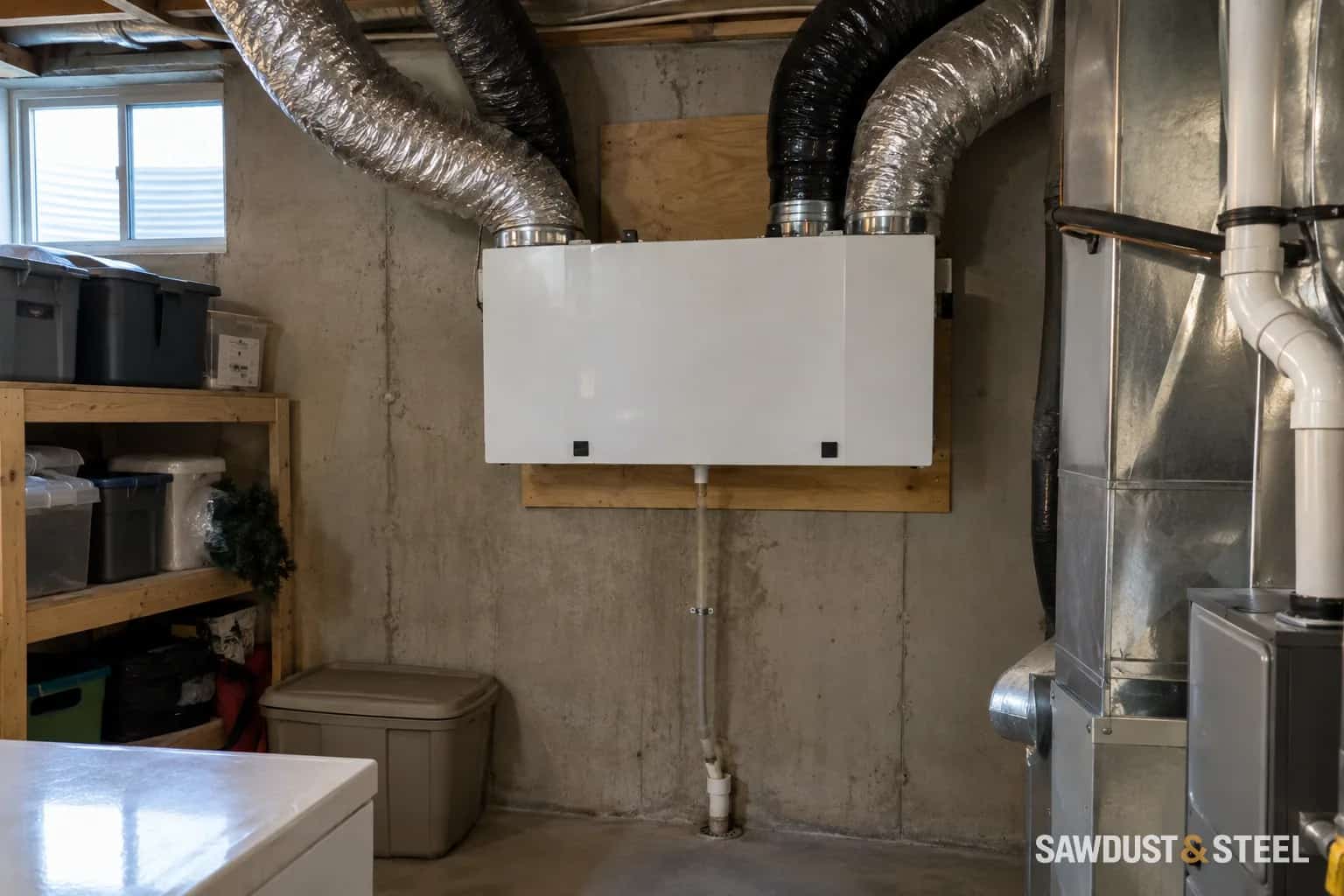
The HRV is easy to forget because most of its work happens inside a plain box in the basement. When the filter finally comes out looking like a grey blanket, it is tempting to clean that one part and declare the job finished.
A useful maintenance visit follows the air through the unit and checks the parts the manufacturer expects the owner to service. It also leaves alone the settings and components that need specialist attention. Find the model label and manual before removing anything; the box next door may look identical and contain a different core.
Start with safe access and the manual
Clear enough space to open the cover and remove the serviceable parts without bending ducts or standing on stored boxes. Shut down and isolate the unit as instructed. Photograph the position and orientation of removable filters and the core before taking them out.
| Part | Check |
|---|---|
| Filters | Correct type, cleaning method and orientation |
| Core | Permitted handling and washing instructions |
| Drain where fitted | Clear route and correct trap arrangement |
| Outdoor hoods | Debris, snow and damage |
| Controls and airflow | Service or balancing if performance remains poor |
Do not infer a cleaning method from the appearance of the material. Some filters are washable, some are replaced, and core instructions vary, especially between heat-recovery and energy-recovery equipment. A label saying 'clean regularly' still needs the specific method. Keep water and cleaning products away from electrical parts.
Clean both air paths where the model requires it
Health Canada's ventilation guidance explains that filters protect fans and heat-exchange cores and that both supply and exhaust sides need attention. A clean-looking filter on one side does not establish that the other side is clear.
Inspect the core and accessible interior according to the manual. Let approved washable parts dry as directed before reinstalling them. Do not substitute a denser filter because it seems like better filtration; the unit must be suitable for the additional resistance. General HRV filters are not automatically equivalent to a room air cleaner's fine-particle filtration.
Check drains and outdoor openings
Where the model has a condensate drain, inspect the accessible tubing and trap arrangement for damage or blockage. Follow the service instructions rather than changing the trap because it looks untidy. Water beneath the unit deserves investigation; a towel permanently tucked under it is not a maintenance plan.
Locate the outdoor intake and exhaust hoods and inspect them safely from the ground where possible. Remove accessible leaves or debris only as permitted by the instructions, and keep snow from obstructing the openings. Do not add a finer insect screen or decorative cover without confirming that it is suitable for the system.
The NRCan maintenance guidance identifies ventilation-equipment upkeep as part of maintaining home performance. Use the manufacturer's schedule for the exact tasks and intervals, then adjust inspection frequency for actual conditions such as nearby trees or dusty renovation work.
Cleaning is not balancing
If rooms are still poorly ventilated, the system is noisy or the house has changed significantly, ask for service rather than continually increasing the control setting. Duct damage, fan problems, controls or incorrect airflow can remain after the filters are cleaned.
HRV balancing after renovations explains the separate work of measuring and setting flows. Do not move balancing dampers while cleaning simply because a lever is easy to reach. Marking a position helps preserve it, but it does not establish that the position was correct in the first place.
Leave a useful record for the next visit
Write down the date, filter type, parts cleaned and any unusual noise, water or debris. Keep a photograph of the model plate and a copy of the manual where the household can find them. Record replacement parts by their actual specification rather than 'the small filter from the hardware shop'.
Finally, check that the cover is properly closed, the unit restarts and controls operate as described. If humidity remains troublesome, consider the season and outdoor conditions before running the HRV harder. Our summer HRV humidity guide explains why more ventilation is not always more drying. Maintenance keeps the equipment able to work; choosing the right operating strategy is the next decision.