
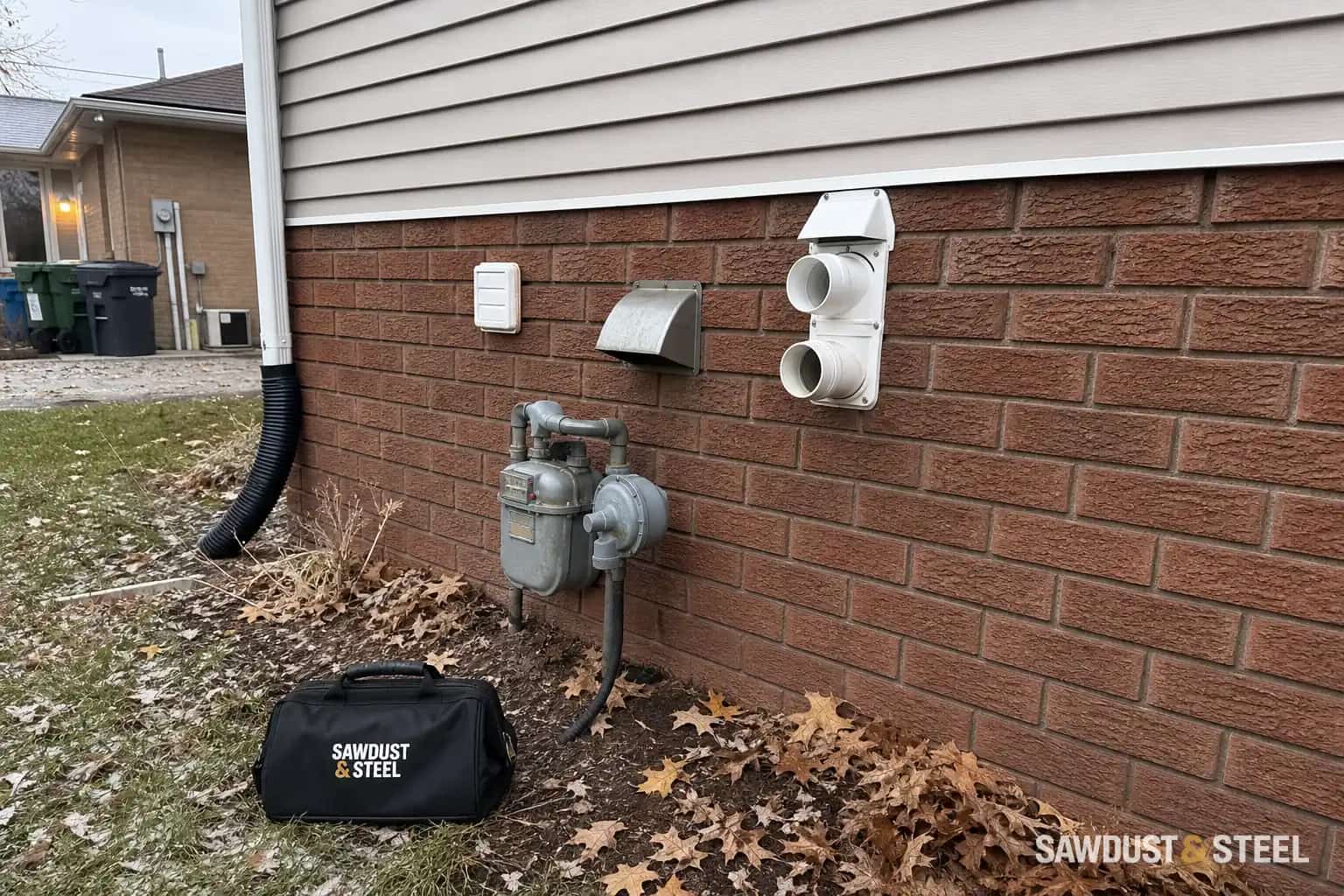
Before laying out a deck, we found two similar hoods on the wall behind the proposed stairs. The owner's sketch called both of them vents, which was accurate and not quite enough. One served the dryer; the other belonged to the ventilation system. We traced the accessible ducts, checked the equipment information and had the affected clearances confirmed before settling the stair location. Label a wide photo of the wall while you have those answers. Pipes and hoods can look alike while doing different jobs, and the person planning next year's landscaping will appreciate more than 'probably the furnace.'
What is each opening likely to be?
| Outside clue | Often connected to | What confirms it |
|---|---|---|
| One or two white or grey plastic pipes | High-efficiency furnace, boiler, or tankless water heater | Equipment label, installation manual, and a qualified heating technician |
| Small hood with a flap or louvers | Dryer, bathroom fan, or range hood exhaust | Trace the duct indoors and operate one appliance at a time |
| Two similar wall caps | HRV or ERV intake and exhaust | Labels at the unit and its manual; the two openings are not interchangeable |
| Meter and regulator assembly | Natural-gas service and its regulator vent | Gas utility or registered gas technician; leave the assembly alone |
Health Canada’s home ventilation guide lists dryer exhausts, range hoods, bathroom fans, and HRV/ERV systems among the mechanical openings found in Canadian houses. Two caps that look alike can move air in opposite directions. That is why a photo from outside is useful for triage and useless as a permission slip to modify one.
What should you check before the first snow?
- Photograph the whole wall, then match each opening to equipment, labels, and accessible ductwork indoors.
- Look for loose leaves, nests, lint, plant growth, damage, or a flap that cannot move. Do not push a tool into an unknown opening.
- Plan where shoveled and drifting snow will land. A clear vent in October can disappear behind a January snowbank after drifting or shovelling.
- Keep the gas meter and regulator accessible. If either is damaged, iced over, or buried, contact the gas utility instead of chipping, heating, or adjusting it.
Ontario’s carbon monoxide safety guidance says exterior dryer, furnace, stove, fireplace, and other fuel-burning appliance vents should remain clear of snow and debris. For HRVs and ERVs, Health Canada also calls for clearing outdoor inlets and outlets and following regular maintenance. Clear the area gently; the manufacturer’s required termination layout and clearance still rule.
What never belongs in the DIY pile?
- Do not cap an opening because it seems inactive. It may run only when an appliance, fan, or defrost cycle calls for it.
- Do not add insect screen, elbows, extensions, or a shared cover unless the equipment manufacturer and qualified installer allow that exact detail.
- Do not combine two terminations to make the wall look tidier. Each opening needs its specified airflow and clearances.
- Do not move combustion pipes or touch the gas regulator. Book the correct registered or qualified technician and provide the equipment model first.
Natural Resources Canada recommends following manufacturer procedures and using a qualified technician for heating-system concerns in its home heating and cooling guide. If a renovation will add siding, insulation, a deck, or landscaping near these openings, identify every system before the design is finalized, so the new work preserves required clearances.
When is it an emergency?
Soot, scorching, repeated equipment shutdowns, exhaust odour indoors, or visible damage around a fuel-burning termination are reasons to stop using the affected appliance and arrange prompt professional assessment. If fumes are entering the home or anyone feels ill, leave and call emergency services. For a harmless-looking mystery opening, take the photos, find the connected equipment, and label it for next time. Keep the labelled photos with the equipment records.
If a kitchen outlet clatters when the fan is off, the wind-rattling damper guide explains what to observe before choosing a repair.