
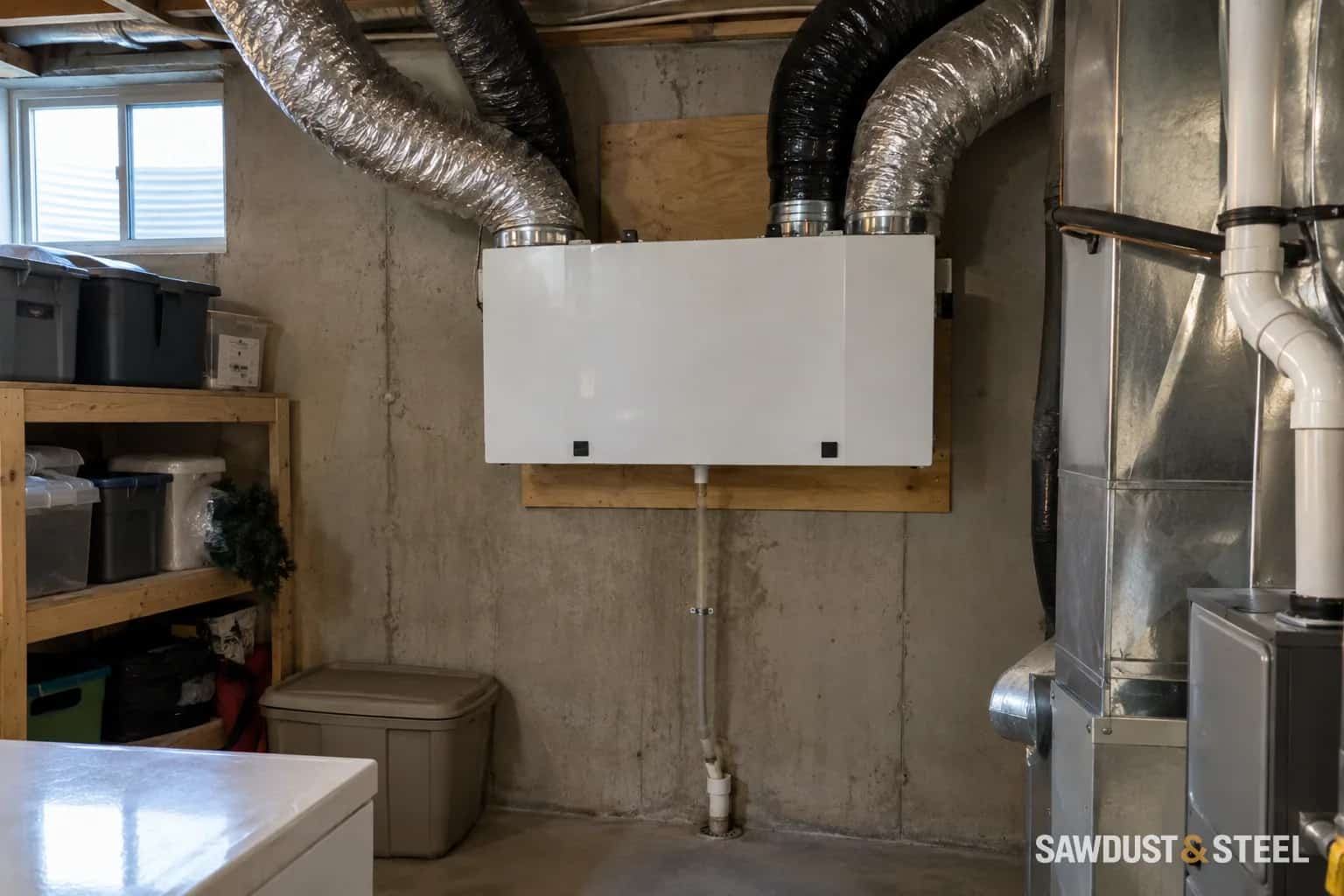
The basement feels sticky, so you turn the humidity dial down and let the HRV work harder. That can help on a cold winter day. In muggy July weather it may do the opposite. The word humidity on a wall control does not mean there is a little dehumidifier hidden in the ductwork.
Identify the equipment and the dial
Read the unit's nameplate and the wall-control model. HRV means heat recovery ventilator. ERV means energy recovery ventilator. Both exchange air; an ERV also transfers some moisture between the outgoing and incoming air streams. A furnace fan setting, a whole-house humidifier dial and an HRV control can all sit near the thermostat while doing different jobs.
Health Canada's ventilation guidance explains that mechanical ventilation can add summer humidity and that a humidity-triggered ventilation control is based on winter drying conditions. It also distinguishes an ERV's moisture transfer from an HRV's heat recovery. Neither description makes an ERV a substitute for active dehumidification in every home.
| Control or mode | Question to answer from its manual |
|---|---|
| Normal or continuous ventilation | What is the commissioned everyday exchange setting? |
| Boost or bathroom timer | Does it temporarily increase outdoor-air exchange, and for how long? |
| Dehumidistat | What happens when measured humidity exceeds the setting? |
| Recirculation | Does this mode move indoor air without exchanging it outdoors? |
| Automatic or seasonal mode | What sensors determine its operation on this particular unit? |
Understand why the winter habit can fail
Outdoor relative humidity alone is misleading. Cold winter air can have a high relative-humidity percentage yet contain much less moisture than warm indoor air. Once introduced and warmed, it can provide drying. Warm, humid summer air may bring a larger moisture load into a cool house. The basement window guide explains the dew-point comparison without relying on percentages alone.
A dehumidistat commonly calls for more ventilation when indoor humidity exceeds its threshold. Turning the number down can therefore make the ventilator run more, not make it remove water like a compressor appliance. Confirm your model: Broan-NuTone's VTDEHUMW control, for example, varies HRV or ERV operation in response to humidity. That is an example of control function, not a recommended setting for another system.
Use a seasonal check that keeps the observations separate
- Save the current normal setting and photograph the display. Record indoor temperature and humidity away from a vent.
- Note the outdoor weather, whether air conditioning is running, and whether laundry or showers explain a temporary rise.
- Read the seasonal instructions for the unit and control together. Separate background ventilation from a humidity-triggered boost.
- Make only the homeowner adjustments described there, then compare conditions during similar weather. Keep a brief note of what changed.
- If humidity remains high, ask the ventilation contractor to check airflow, controls and the need for dehumidification. Bring the notes rather than another guessed dial position.
Avoid switching the entire ventilation system off for the season as a blanket solution. It may be the house's intended supply of outdoor air. Also avoid increasing every exhaust fan indefinitely: air leaving has to be replaced, and the building's equipment and pressure balance matter.
Choose the next question from the pattern
A damp whole house, one stale new room and a cold bedroom are different complaints. For rooms changed during construction, review HRV balancing after a renovation. For a room that changes temperature only when its door closes, investigate the forced-air return pathway; that is not the same as increasing outdoor-air ventilation.
If moisture removal is the unresolved need, use actual room conditions when choosing a dehumidifier. During wildfire smoke, follow current outdoor-air guidance and the system's smoke-event instructions. A portable air cleaner filters particles; it does not remove humidity or replace the ventilation design.