
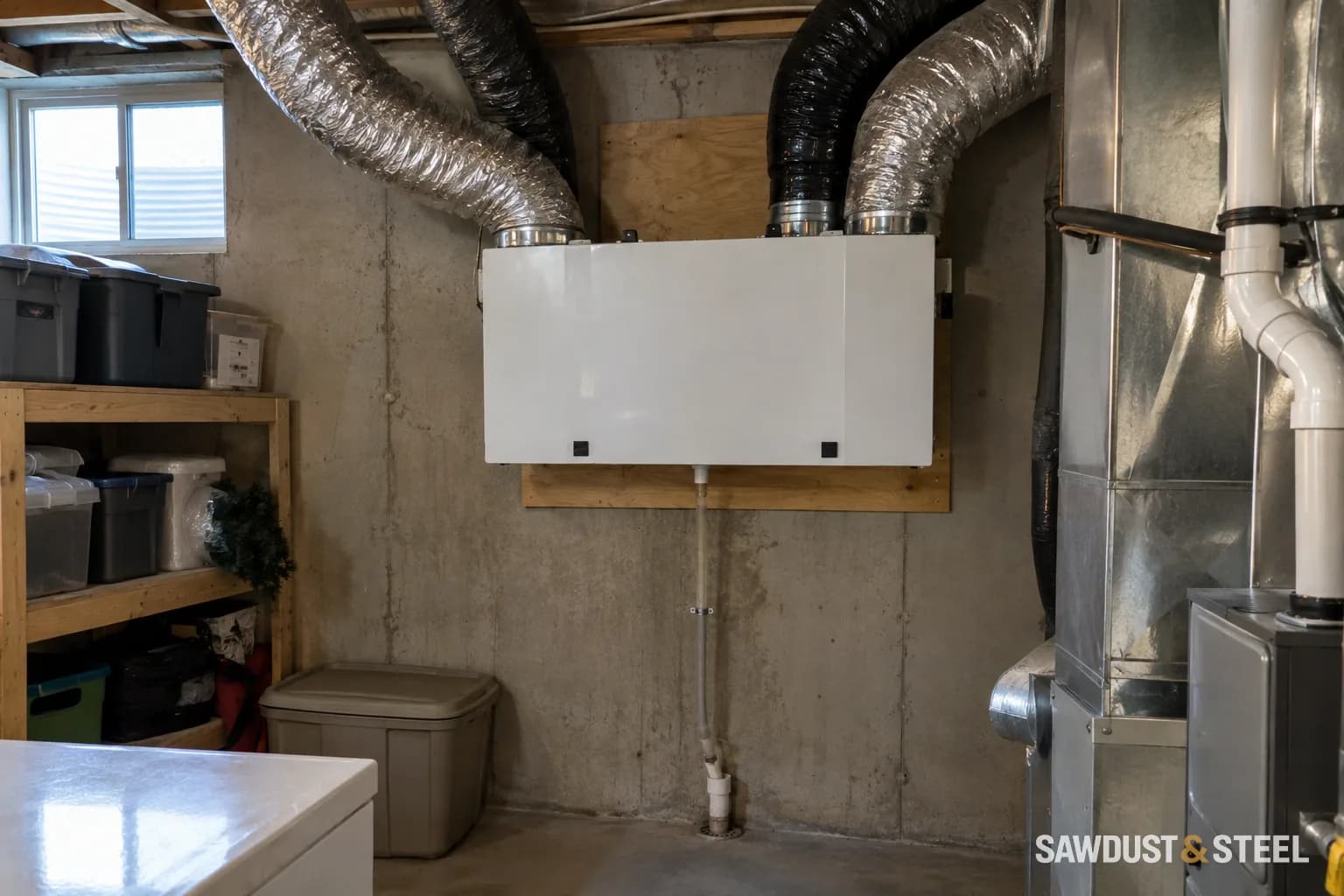
The basement is warmer and quieter after renovation. It also feels stale when the bedroom door stays closed. The old ventilation setting did not receive the renovation drawings.
Treat ventilation as a system
Health Canada's ventilation guidance describes mechanical ventilation and maintenance of heat-recovery equipment. Filters, intakes, exhausts, condensate drainage, and controls all deserve attention. An operating fan does not confirm the intended room-by-room air exchange.
Balance at the unit and delivery to rooms are different checks
A unit can move similar total amounts of incoming and outgoing air while a new bedroom receives poor distribution. Conversely, a room grille can have noticeable airflow while the overall unit balance is wrong. Describe the complaint precisely: which room, what activity, which doors are shut, and whether the furnace fan or a kitchen hood is running. That gives the contractor a condition to reproduce instead of a general request to turn it up.
For example, suppose a handover sheet records fresh-air and exhaust readings at high speed but contains no room measurements or closed-door observation. It may be useful evidence of a unit check. It does not answer the complaint that began only when a partition divided the basement. Ask for the distribution question to remain open until the contractor explains the intended path and verifies the relevant condition.
Ask for evidence you can keep
| Field | What to record |
|---|---|
| Equipment and test | Exact model, manual procedure, contractor and date |
| Operating condition | Speed, furnace-fan state, other exhaust devices and filter condition |
| Unit flows | Measured supply and exhaust values with units, not a control percentage |
| Room check | Changed rooms, relevant grille readings and door positions |
| Handover | Normal and boost settings, maintenance actions and unresolved items |
The Broan HRV150S/HRV190S manual, section 7, requires defined conditions, measured fresh-air and exhaust flows, and a dated label near the unit. Its balancing tolerance belongs to those units and that procedure, not every HRV. Have a ventilation contractor perform the measurements; random adjustment of visible dampers can erase the useful starting condition.
Keep the owner-maintenance steps separate from the measured balancing procedure. The HRV filter, core and drain checklist helps you prepare for service without adjusting the duct settings.
Before the visit, clear storage away from the service door and photograph the existing control settings. List ducts or grilles moved during renovation, even if the change seemed minor. Keep the filter-access area open when the room is refurnished. At handover, operate the wall control yourself while the contractor explains what changes and how to return it to normal. In a secondary suite, coordinate ventilation and fire-separation requirements within the approved design.
Before the next step
- List new rooms and altered ducts for the contractor.
- Check filters and accessible outdoor terminals as instructed.
- Keep airflow and control information with the house records.
Before the contractor leaves, have them show you the normal setting, the boost control, and the maintenance access. Save the checked settings with the house records so next winter's stale room doesn't start another round of guessing. For seasonal operation, check what the HRV summer controls actually do. A bedroom that changes temperature mainly when its door closes also needs a forced-air return-path check, which is a different question from HRV balancing.