
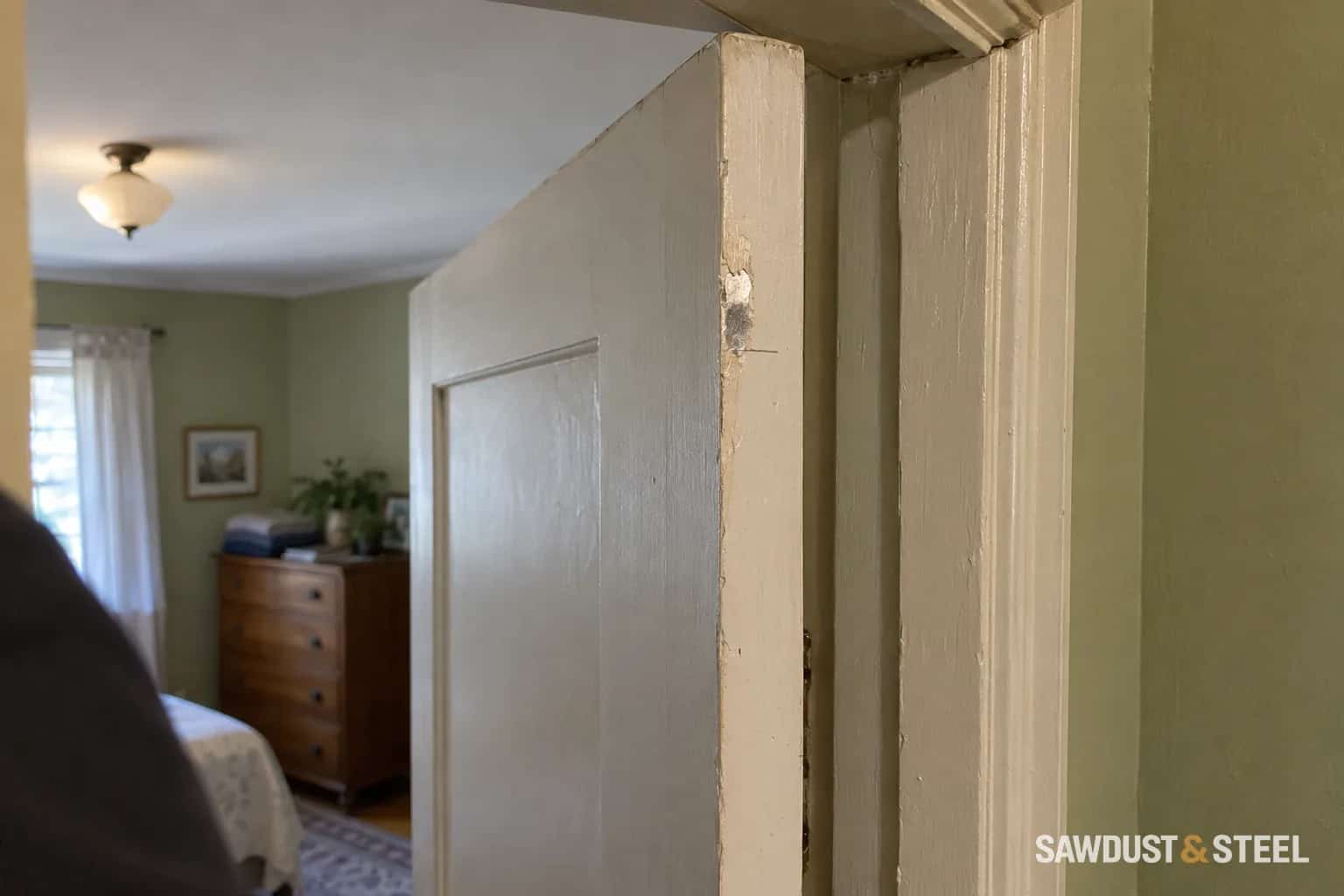
Look for the actual high point
Open slowly and stop when resistance starts. Does the door drag immediately beside the jamb, only near the middle of the swing, or just over a threshold? Mark the locations on a sketch. Check whether a loose rug, folded edge or installation problem is causing a local hump. Have the flooring installer address a defect rather than cutting the door around it.
Carpet and underlay form a combined build-up. The pile may be taller at the wall or compress differently from the sample you held in the shop. Measure on the installed floor without deliberately crushing the pile. A door that brushes the fibres lightly while you force it can still wear a curved mark into the carpet and be difficult for a child to open.
Rule out a dropped door first
Compare the gap above the door from hinge side to latch side. Look for movement at the upper hinge and check whether lifting the handle changes the contact. New flooring may simply reveal a door that was already sagging. Repair loose hinge fastening before calculating the final cut, otherwise you may remove too much and still have poor latching.
Floor
Confirm the carpet, underlay and transition are installed as intended.
Hinges
Restore a stable door position if the slab has dropped.
Swing
Measure the tightest point across the full travel.
Door specification
Compare the required removal with the remaining permitted trim.
The gap has more than one job
A suitable clearance lets the door operate without dragging. In some rooms, the gap may also form part of the planned return-air or ventilation route. Do not choose it solely by appearance or fill it with an aftermarket sweep without considering that function. Where a door belongs to a rated or special assembly, retain its specified clearances and approved components.
JELD-WEN's slab instructions require the fitted door to operate without rubbing the flooring and give product-specific trimming limits JELD-WEN: Interior Door Slabs (JII110).
There is no useful universal instruction to remove a particular amount from every bedroom door. Identify the model and any earlier cuts. Our hollow-core trimming guide explains why a seemingly modest cut can expose the hollow centre when the remaining rail is already thin.
Check more than the first opening
Once the door is correctly shortened and the cut edge finished, check the complete swing with normal room conditions. Close and latch it without lifting. Look for carpet fibres trapped beneath the edge and verify the door stop still protects the wall. If achieving clearance would exceed the product's limits, compare a correctly sized replacement slab with changing the floor transition where appropriate. The goal is an easy-opening door and an intact carpet, not a doorway that needs a hard shove every morning.