
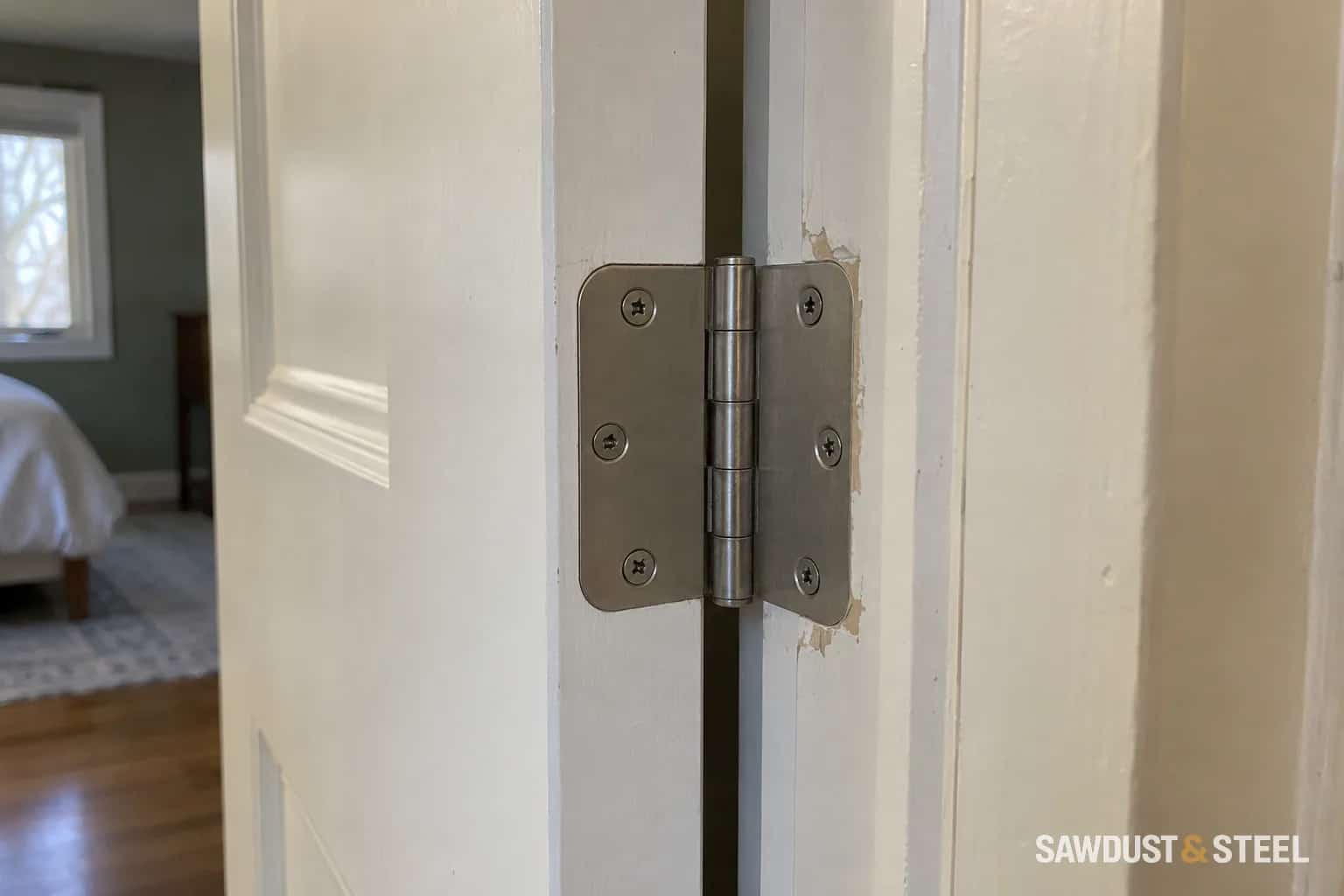
Support the door and identify the material
A loose upper hinge often shows itself as a latch that suddenly needs lifting. Before removing screws, support the door so its weight is not hanging from the remaining fasteners. A heavy solid-core slab can surprise you; arrange a helper or have a carpenter handle removal. Photograph which screws were loose and whether the movement is on the door side or the frame side.
Paint makes solid wood, finger-jointed timber, composite jambs and metal frames look similar. Look at an existing exposed edge or the manufacturer's information. A wood plug is not a repair for a stripped threaded hole in steel. A screw driven into a hollow door skin will not acquire strength simply because it is longer.
Separate a worn hole from damaged material
Firm wood, isolated worn hole
Consider a fitted wood repair, compatible adhesive and correctly sized pilot.
Split or crushed edge
Restore enough sound material for the whole hinge footprint.
Soft wood or damp staining
Investigate moisture and deterioration before fastening.
Metal or composite assembly
Use the frame or door maker's repair method.
For a conventional non-rated wood interior jamb, a carpenter may drill the damaged area clean, glue in a properly fitted wood plug and redrill after the adhesive cures. The purpose is to give the threads sound material, with the hinge back in its original position. A handful of loose splinters jammed into a hole is difficult to inspect and can fail again. Cosmetic putty should not be treated as a structural screw anchor.
A longer screw needs somewhere useful to go
A frame-side screw can sometimes reach sound backing, but first establish the jamb thickness, gap behind it, shims and framing position. Pulling across an unsupported gap may bend the jamb and change the door clearance. Match the head to the hinge countersink so it sits flush; a proud head can make the hinge bind. Do not substitute a brittle or unsuitable screw because it happens to fit the driver.
JELD-WEN recommends pilot holes and a hand screwdriver when fastening hinges to its interior slabs to reduce stripping JELD-WEN: Interior Door Slabs (JII110).
Check the repair under the door's weight
Once the repair is cured and reassembled, open and close the door without lifting the handle. Watch the repaired leaf: it should remain flat and still. Check that the latch enters the strike and that the head gap has not changed. If the latch still misses, investigate that separately rather than tightening every screw harder.
When several holes overlap, the hinge recess is broken away, or repeated repairs have shifted the hinge, replacing a jamb section or using a prehung assembly may be cleaner. For fire-rated, security or shared-building doors, retain the required assembly and use its approved repair route. An improvised fastening repair can affect more than a bedroom door's manners.