
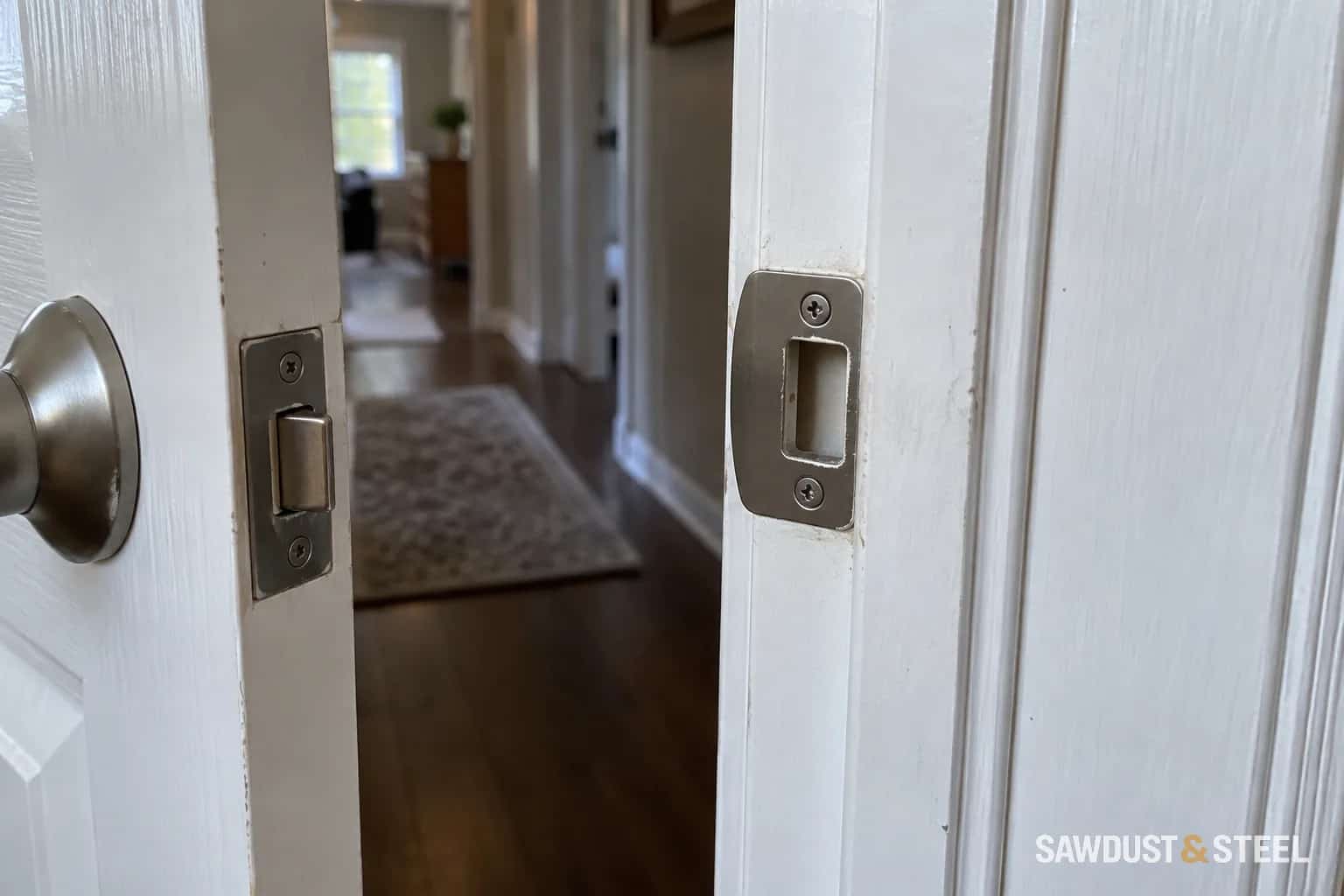
Start with the door open
Turn the handle slowly. The latch should retract into the door edge and spring back when released. If it sticks while the door is open, the frame is not causing that particular problem. Look for loose handle screws, paint on the latch face or a damaged mechanism. Replace failed hardware with a compatible latch rather than changing the jamb to accommodate it.
Now close the door gently while holding the handle down. Notice whether the slab reaches the stop without scraping. Release the handle. A door that reaches its normal resting position but will not catch has a different problem from one that binds before it gets there.
Find the mark, then look at the gaps
Schlage describes finding the point where a latch or bolt catches and checking whether worn or loose hinges have allowed the door to sag Schlage: How to fix a door that will not latch.
Use a small removable transfer mark on the latch face, protecting painted surfaces and testing that the marking material wipes away. Close once without force. A mark below the strike opening suggests the latch sits too low; a mark beside it suggests a depth or sideways mismatch. Photograph it before cleaning it off. The shiny scrape left by weeks of closing may already tell the story.
Latch lands too low
The contact mark crosses the lower edge. Lifting the handle may hide the problem temporarily.
Latch enters the opening
The latch can extend into its pocket without lifting the door.
Face-on alignment sketches, not cutting templates. Check hinge movement and door fit before altering the strike. Schlage alignment guidance.
It catches
Inspect hinge movement and fastening before moving the strike.
No change; slab reaches stop
Compare the latch contact mark with the strike opening.
Slab rubs before closing
Resolve the binding edge or frame distortion first.
A stable door comes before a relocated strike
Watch the upper hinge as someone supports the open door and gently lifts at the handle. Movement between the hinge leaf and wood is evidence worth fixing. A screw that turns without tightening needs a sound fastening point, not another turn of the driver. Our guide to stripped hinge screws separates a repairable hole from a damaged jamb.
If the hinges are secure and the gaps remain consistent, a small strike adjustment may be appropriate. Mark its original position and preserve enough sound wood for its screws. Filing away a large section leaves a sloppy catch and may hide the true misalignment. Stop if repeated repairs have left overlapping screw holes or split timber; the fastening area needs rebuilding.
Test it the way the room is used
Close from several opening angles with an ordinary push. Confirm the latch enters fully, the handle releases it easily, and the door does not rattle. Repeat with the room window closed and open: moving air can make a nearly aligned door seem fixed. If the fit varies by season, record the rubbing edge and timing before removing wood. A door that also swings by itself needs a separate look at the hinge axis.