
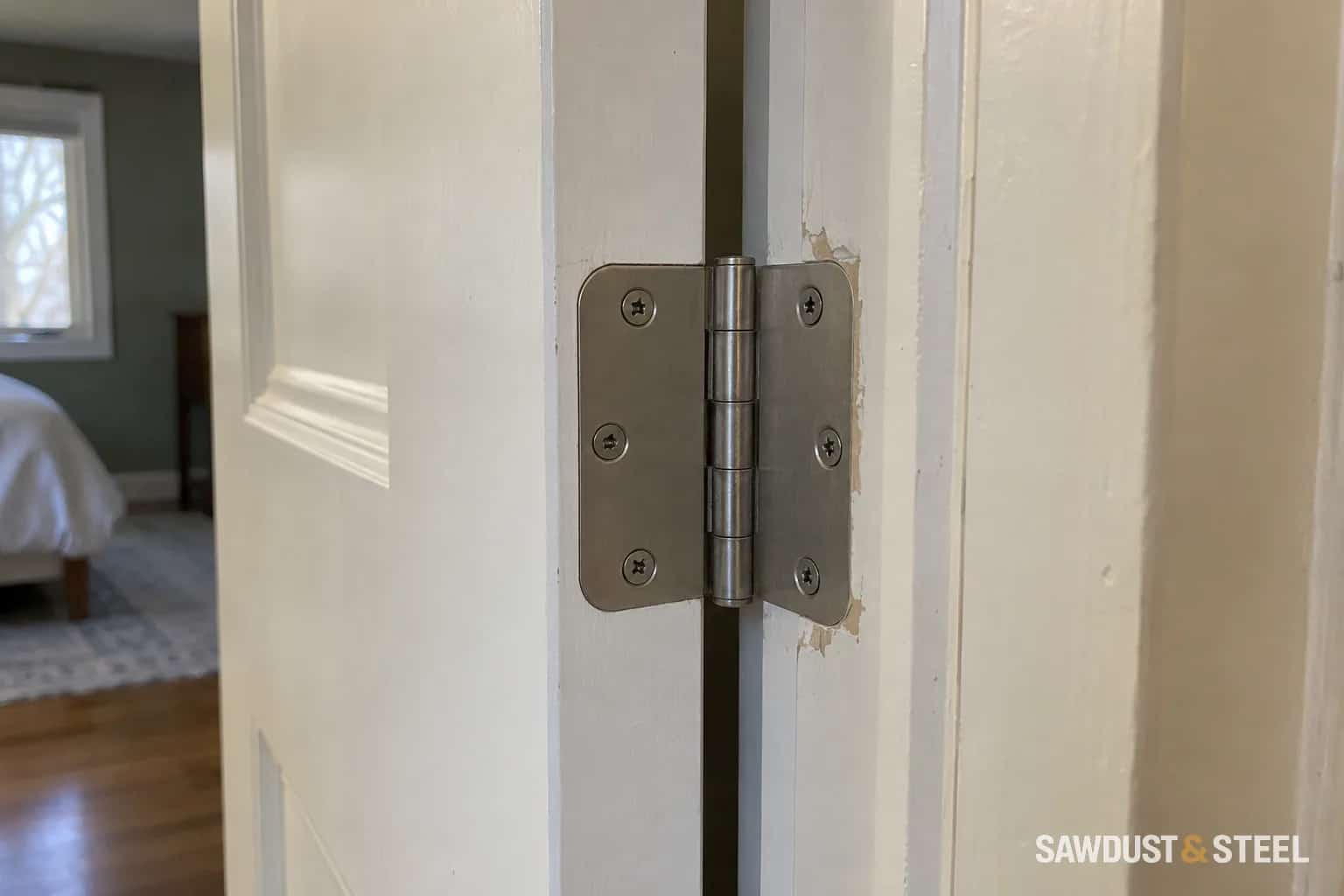
Does it move from half-open, or pop out of the latch?
Leave the door partly open, release it gently and stand clear. Try a second angle. If it moves toward the same resting point each time, note the direction. Then latch it fully and give it a gentle push without turning the handle. If it releases, follow the latch alignment check; hinge friction is not what should keep a closed bedroom door shut.
Repeat the open-door test with nearby windows shut and the ventilation system in its usual state. A bathroom exhaust fan or a cross-breeze can move a light door. Do not tape over vents to investigate. The useful observation is whether ordinary changes in airflow change the behaviour.
Measure the hinge jamb in two directions
Plumb means vertical. Put a reliable long level against the hinge jamb, avoiding paint lumps and hinge leaves. Check the face toward the opening and the face toward the room. A jamb can look straight from the hallway while leaning into the bedroom. Check that the hinge barrels form one straight line rather than assuming the decorative casing tells you where the hinges sit.
JELD-WEN's slab instructions require checking the existing jamb and the vertical alignment of reused hinge locations JELD-WEN: Interior Door Slabs (JII110).
Airflow
Does the swing change when nearby windows or fans change state?
Jamb plumb
Record lean toward the opening and lean toward the room.
Hinge movement
Look for loose leaves, moving screws or bent hardware.
Fix what is moving before adjusting what is fixed
If a hinge leaf shifts on the jamb, address its attachment first. Supporting the door while repairing a loose hinge can restore the original alignment. If the fastening is sound but the jamb leans, correction may involve removing casing, adjusting shims and refastening the jamb. That is more involved than changing a hinge, but it deals with the cause. Do not pull a jamb sideways with a long screw without checking what is behind it and how the surrounding gaps change.
Bending a hinge pin is a familiar shortcut because added friction may keep the door still. It does not make the hinge axis vertical, and it can leave a squeaky, stiff door that still fits badly. A suitable hold-open accessory can be a deliberate convenience, but it should not conceal a loose or damaged installation.
When this is part of a larger change
One old door leaning slightly is not a diagnosis of structural movement. Several doors changing suddenly, fresh cracking, or a visibly displaced frame deserves a broader assessment before cosmetic adjustment. Keep dated photographs and note whether the condition progresses. For a stable old opening, compare the work of correcting the jamb with replacing the slab while keeping the frame. A new door hung on the same tilted axis can repeat the same slow swing.