
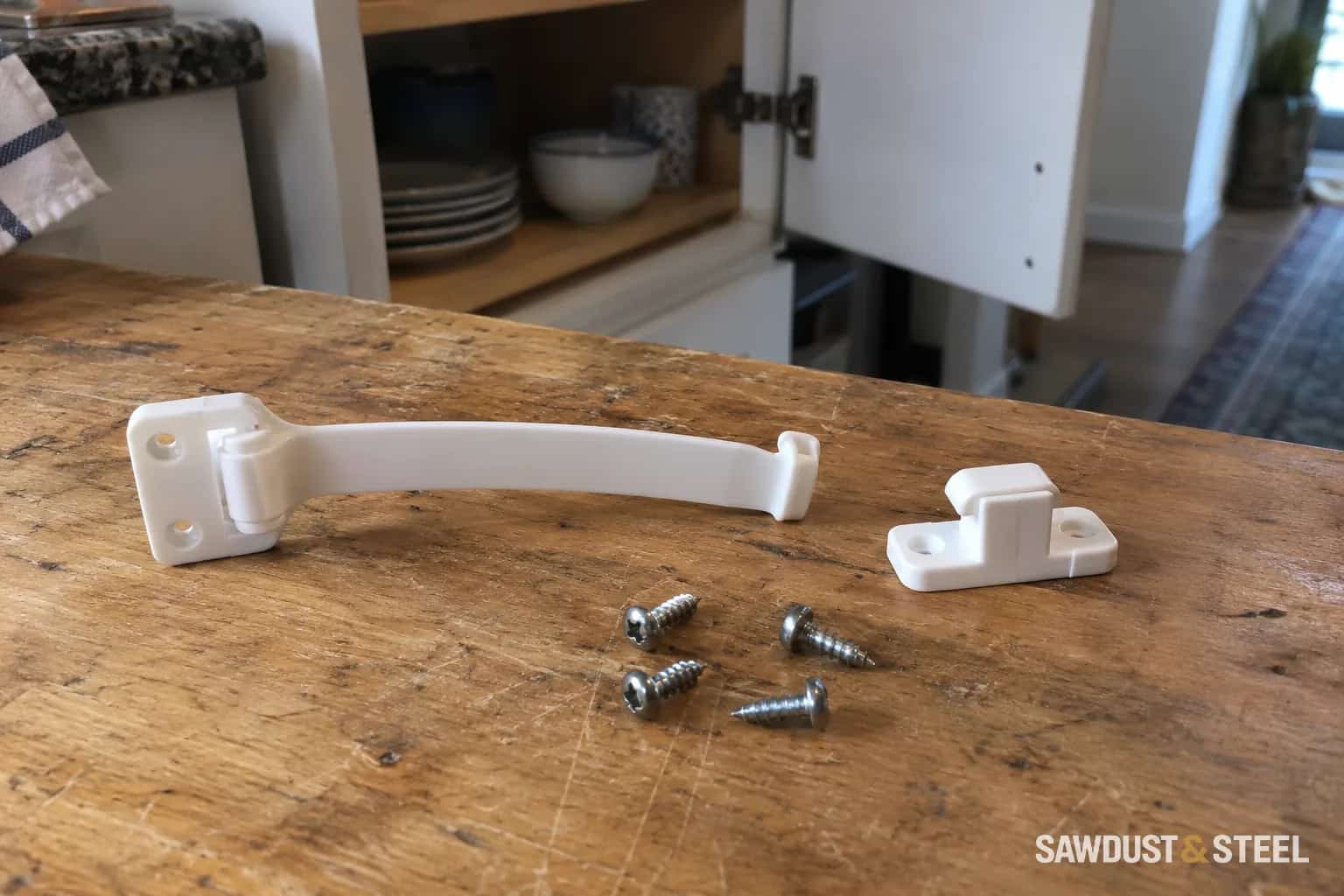
Kitchen cupboards offer a small child an excellent collection of handles at climbing height. The lock that works on one door may be useless on the drawer beside it. Before buying a large multipack, test one suitable device on each type of cabinet you need to secure.
Move the hazards before choosing the hardware
The Public Health Agency of Canada recommends locking household cleaners, medicines and other dangerous chemicals in a high cabinet, and reassessing hazards as a child develops. Start there rather than treating the familiar under-sink cupboard as the only possible place for cleaning products.
Separate access control from cabinet organization. A tidy pull-out full of dangerous products remains a problem if a child can open it. Put the contents somewhere secure while locks are being installed, while adhesive cures, or whenever a device stops working.
Match the lock to the opening
| Lock arrangement | Check before purchase |
|---|---|
| Internal magnetic lock | Door thickness permitted by the maker, flat mounting space, keeper position and access to the key. |
| Internal reach-in latch | Enough opening to release it as designed, but correct keeper engagement and a compatible frame. |
| External paired-handle lock | Handle shape, spacing and whether both doors can still be restrained as intended. |
| Adhesive-mounted device | Compatible finish and mounting surface, preparation method and required cure time. |
| Screw-mounted device | Approved mounting location, sound material and screw length that will not pierce the front. |
Look inside the closed-door position as well as the open cabinet. An inset door, a projecting face frame, a rail above a drawer or an unusually thick front changes where the latch and keeper can meet. Photograph those features and compare them with the product's installation drawing. A latch designed for a cabinet door may not fit a shallow drawer.
Try one device before committing the kitchen
The Safety 1st help centre separates products by item number and explains how mounting position and available space affect engagement. Its guidance for specific adhesive latches includes a curing period and notes that the latch must fit between the drawer and frame. Apply the instructions for the exact item, not another lock from the same brand.
With dangerous contents removed, install the trial device and allow any required cure. Close the door normally, then confirm it is restrained without pressing the front into a special position. Repeat after opening it in the way the household actually uses it. Check both doors of a pair and make sure an adjacent opening does not offer an easy route around the device.
For a magnetic system, test through the actual front material and thickness before relying on it. Store the key out of children's reach, in a place the responsible adults can find. Do not leave the system in its unlocked setting simply because locating the key is inconvenient.
Protect the finish without weakening the installation
Adhesive attachment avoids screw holes, but it does not mean every finish is suitable or that removal will leave no mark. Check both the device maker's preparation instructions and the cabinet maker's cleaning restrictions. If one calls for a solvent the other prohibits, obtain compatible advice instead of guessing.
For screw-mounted hardware, account for front thickness and the actual solid material at the fixing point. Raised panels, thin centres and hollow construction need particular care. Use the specified screws and installation template where applicable; longer screws are not a sensible way to rescue a poor location.
After fitting rollout shelves, recheck lock clearances with the tray loaded and moving. The new hardware must not knock the latch, prevent the door closing fully or offer another route into the cupboard.
Keep checking as the kitchen and child change
A lock that loosens, cracks or no longer engages needs attention immediately. Children also become able to defeat devices that previously stopped them. Follow the manufacturer's age and use limitations, and reassess storage when that happens. No cabinet latch removes the need for supervision or careful placement of hazardous contents.
Tell other caregivers how the locks work and where the key is kept. Make correct closure easy enough that people do it every time. If a device repeatedly frustrates adults or leaves the drawer half shut, choose a better-fitting solution rather than working around it.