
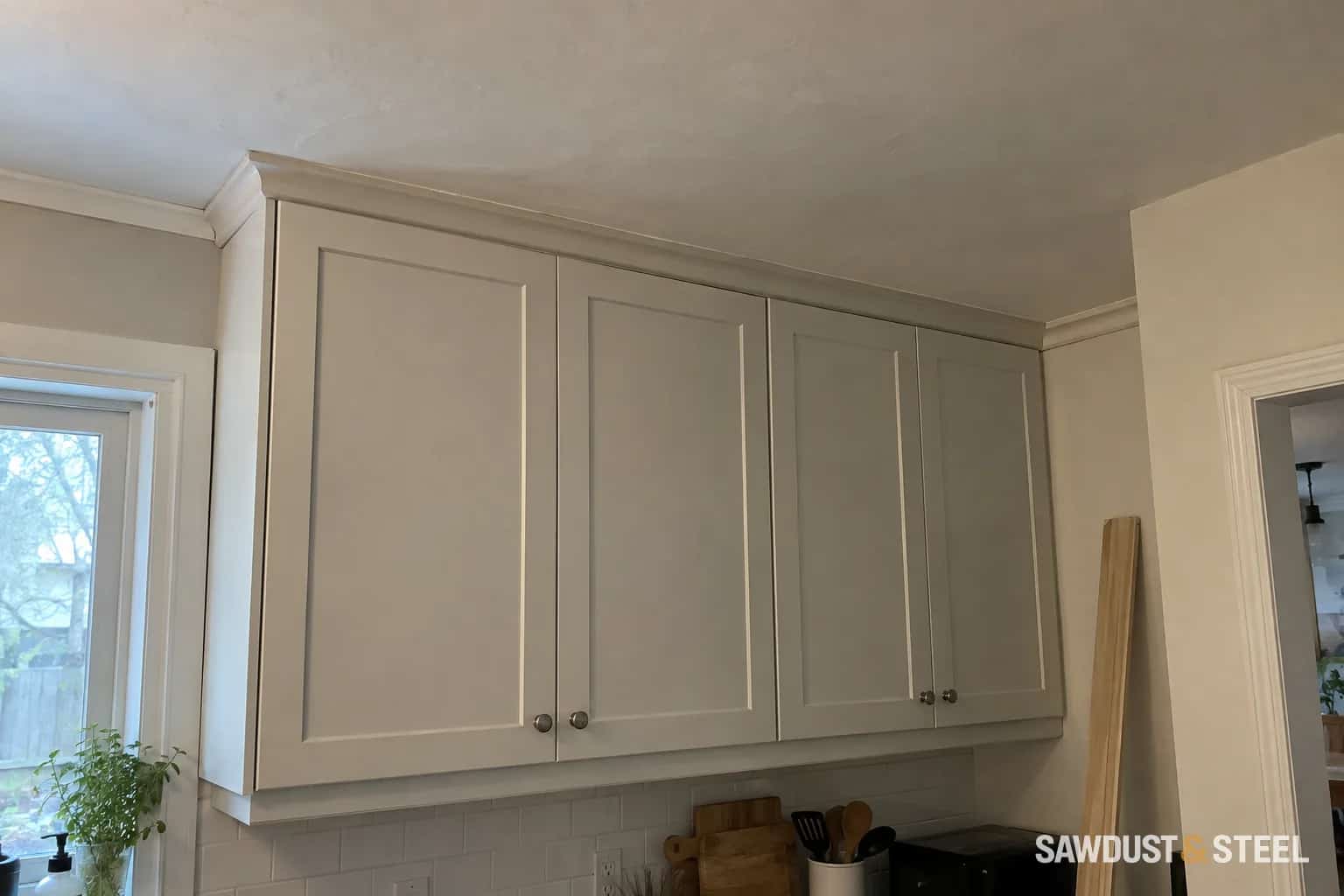
There was nothing wrong with the new cabinets in that east-end Toronto kitchen. The laser agreed. The doors agreed. The ceiling, built by someone with a different relationship to straight lines, did not. A narrow wedge of daylight above the trial crown made the whole thing look worse than it was.
Measure the ceiling before ordering the top detail
Check the variation along the complete cabinet run and at corners, not just at one end. Mark the low and high points relative to a level reference. Include the height of the chosen crown and any filler or riser beneath it.
The cabinets need to be installed properly in their own right. KraftMaid's installation guide describes checking and aligning the cabinet run during installation. An uneven ceiling is a finishing problem to resolve around that stable installation, not a reason to rack the boxes.
Choose where the eye will see the variation
| Approach | Useful when |
|---|---|
| A fitted filler or riser with crown | There is enough height to absorb the ceiling variation while keeping the cabinet line calm. |
| A deliberate open gap | The room suits cabinets that stop clearly below the ceiling, with a gap that looks intentional. |
| Ceiling repair before finishing | The variation is too severe for a convincing trim detail or the ceiling itself needs work. |
Scribing means transferring the irregular surface onto a piece of trim so it can be fitted closely. The profile matters: cutting deeply into decorative crown can distort its shape. A separate plain piece often gives the carpenter a better place to absorb the difference.
A narrow reveal can make a small wave look enormous. Mock up the proposed detail at both ends before approving it. Stand in the doorway and at normal room positions, not only on a ladder with your nose against the joint.
Caulk is the final little adjustment
A suitable paintable sealant can finish a small joint when the materials and product allow it. It should not become a thick substitute for missing wood. Large wedges are difficult to tool neatly and may remain obvious after paint.
For our Toronto kitchen, a taller plain transition piece gave us room to fit the ceiling while keeping the crown's visible profile consistent. It required another careful cut. It did not require an argument with the cabinets.
Look in the light you will live with
Side light from a window and new cabinet lighting can reveal an old plaster ripple that was always there. Check the finished proposal under the room's normal lighting before deciding that a larger moulding will solve everything.
If the ceiling has new cracks, sagging or signs of movement, investigate that condition before concealing it. Longstanding uneven plaster and a changing structural symptom are different conversations.
Read scribing trim in older houses for the fitting approach, cabinet filler strips for the surrounding clearances, and caulking before or after paint for the final sequence.
Once the room was finished, the owner stopped looking at the ceiling. We took that as a good review of the trim.