
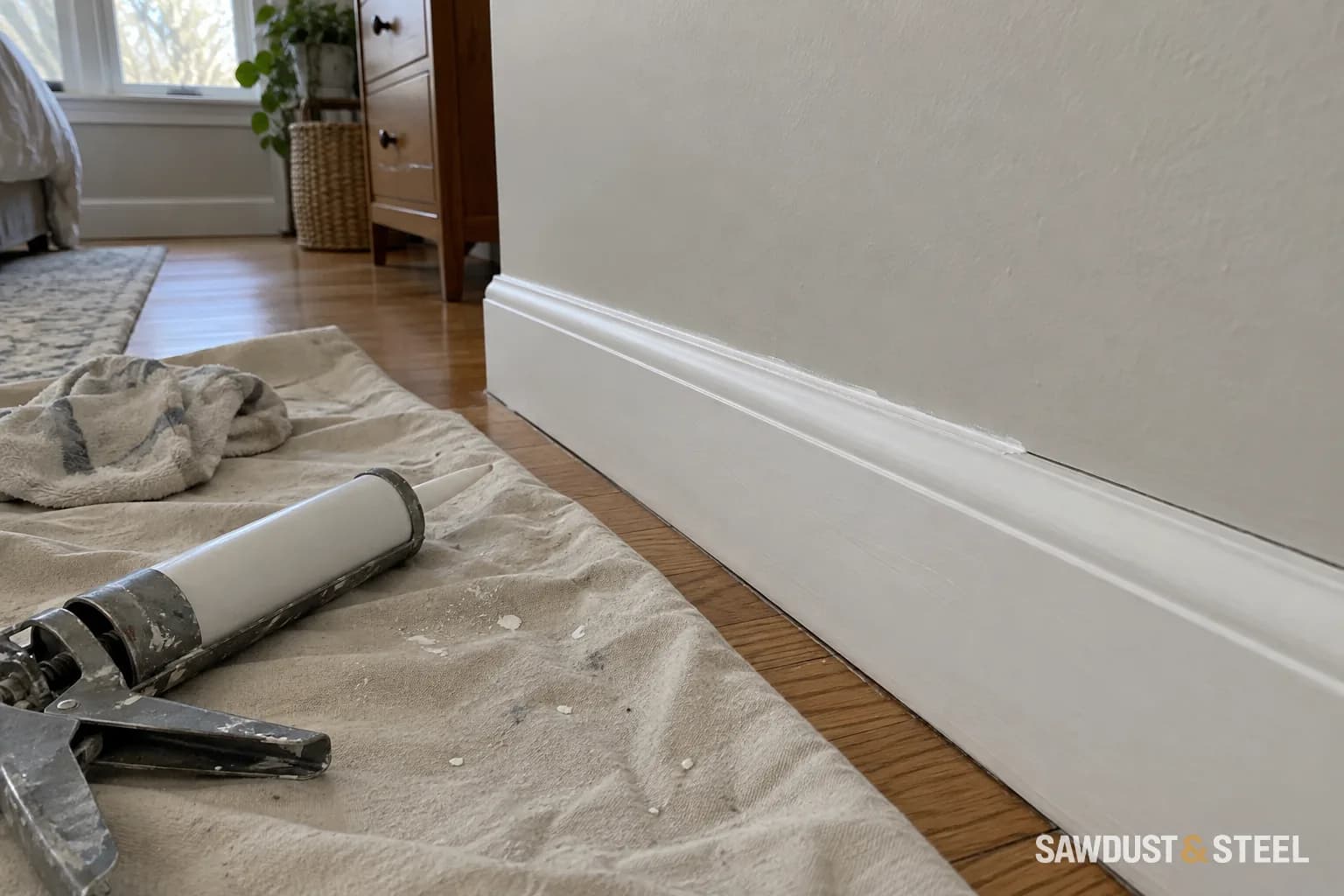
A Saturday project starts well: Nikhil paints the trim, notices a fine shadow at the wall, and finds a half-used tube in the garage. The sealant goes on smoothly. The paint beads over it. He has improved the gap and invented a new finishing problem.
Read the tube before loading the gun
Sherwin-Williams' caulk and paint troubleshooting advises checking that the caulk is paintable and allowing it to dry appropriately. A product suitable for one wet-area joint is not automatically suitable beneath wall paint. Compatibility belongs ahead of colour matching.
Check the substrate preparation, primer requirements, permitted joint size, and recoat time. Temperature, humidity, and bead size can affect readiness. A skin on the surface does not necessarily mean the product is ready for the paint you plan to use.
The word silicone on a tube is not enough to decide. ALEX PLUS is a paintable acrylic latex caulk with silicone additives; it is different from a 100% silicone sealant. DAP's 100% silicone kitchen-and-bath product is not paintable and calls for painting the surface before applying that sealant. For the trim joint you want to paint over, choose a product explicitly labelled paintable.
A simple sequence for a normal painted joint
- Secure the trim and correct poor fit before cosmetic finishing.
- Remove failed material and prepare clean, sound surfaces using methods appropriate to the existing coating.
- Prime where the substrate or product instructions require it.
- Apply the compatible caulk at the specified joint size and tool it neatly.
- Allow the stated drying time, then apply the compatible finish coating.
Already painted the trim? Prepare the joint, remove failed or incompatible caulk, and check that the existing coating is sound before applying the new product. Once it is paint-ready, touch up the finish. With bare or preprimed trim, check the primer requirements first. A factory primer does not settle every product's preparation instructions.
Paintable does not mean ready to paint yet
For a concrete example, DAP's Canadian white ALEX PLUS instructions say to wait at least 30 minutes before latex or oil-based paint, longer in cool or humid conditions. The same brand's clear ALEX PLUS instructions say to wait until it dries clear, approximately 7-14 days. That clear product comes out white, which is an unhelpful little surprise if you picked up the wrong tube.
Those are instructions for two specific Canadian products, not waiting times for every paintable caulk. Match the product and colour on your tube to its current instructions. Paint-ready time and full drying time can differ; surface skin alone does not settle either one.
For older painted trim, assess possible lead or other hazards before sanding or scraping. Our renovation dust guide explains why normal cleanup is not a substitute for appropriate hazard controls.
Before committing to the final colour, test paint samples in the room’s changing light, beside the trim and flooring that will stay.
Some gaps need carpentry
A large wedge beside an uneven wall may need scribing or a better-fitted trim piece. A loose board needs fastening. A floor expansion gap needs its intended movement space. Caulk is good at its own job; asking it to act as a cabinet maker generally produces a wide, soft-looking line.
Nikhil's second attempt starts with removing the incompatible material and preparing the surfaces for the replacement product. DAP's sealant FAQ says paintable latex caulk will not adhere to 100% silicone or its residue: a fresh bead over the old silicone is not a fix. We test a short section before committing to the whole run. Paint adhering to the new bead is the useful result. Sunday disappears into preparation, and the remaining tubes finally get labelled by use.
For recurring movement, check winter baseboard gaps. For fit, read scribing trim in older houses.