
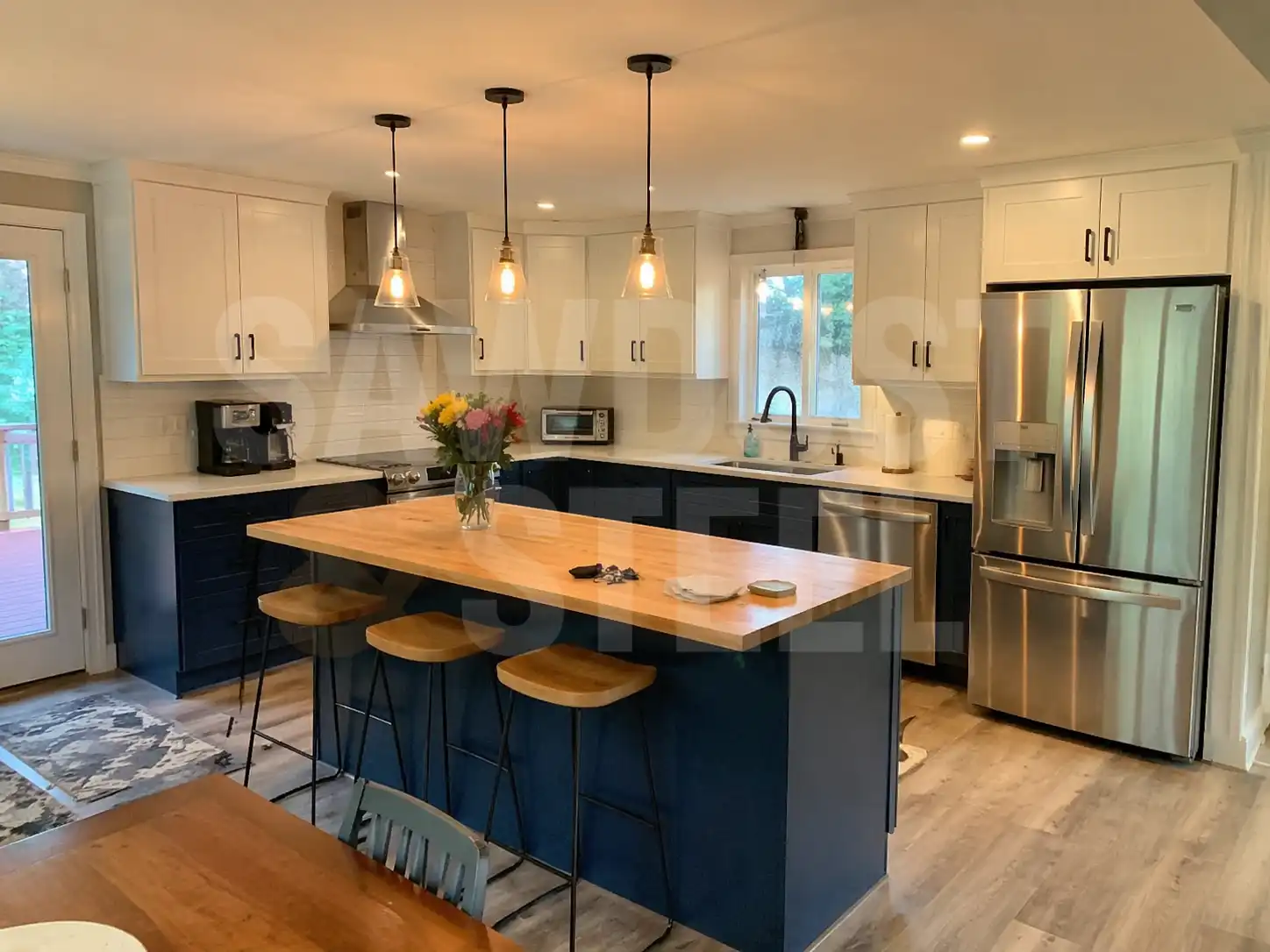
The drawing shows a clean floating edge and three stools. What it may not show is the steel below, the cabinet fixing behind it or the knee that meets a bracket at breakfast. Support and seating need to be designed together.
Get a support drawing, not a verbal span allowance
Tell the fabricator the countertop product, thickness, edge treatment, overhang in each direction and any nearby cutouts or seams. Ask them to identify the support type, location and connection to the base. A thick-looking mitred edge does not necessarily mean the entire slab has that thickness.
Caesarstone Canada: Indoor surfaces warranty, June 2025 excludes failures associated with inadequate overhang support. The warranty is not an engineering table, but it makes the responsibility clear: the finished installation needs the support recommended for the actual product. Do not copy a permitted span from a different material or slab thickness.
Countertop layout
Material, actual thickness, edges, seams and cutouts.
Approved support
Fabricator's bracket or frame locations and cabinet connections.
Occupied seating
Knees, stool legs, footrests and access around people.
Final sign-off
Check the installed support before the countertop conceals it.
Sit at the underside, not just the top edge
Mark support locations on a full-size mock-up. Sit on the intended stool and test moving in, turning and getting out. Include an apron, end panel or waterfall side if the design has one. Those features can reduce usable knee room even when the top projects generously.
A narrow hidden steel plate and a deep decorative corbel affect seating differently. Moving a bracket to clear a knee requires the support designer's agreement; do not let the furniture layout quietly override the approved spacing. Similarly, cabinet attachment must be to a base capable of receiving the specified connection.
The overhang is not a seat or a work platform
Do not test a questionable edge by leaning your full weight on it, and do not sit or stand on the counter. If an existing overhang flexes, has a developing crack or appears unsupported, keep loads off it and have the fabricator inspect it before normal use continues.
Once support is resolved, choose stool seat height from the actual underside and test the occupied footprint. If the island now leaves too little circulation, reducing the seating ambition may be better than narrowing the working aisle. The island-size guide helps check that tradeoff.