
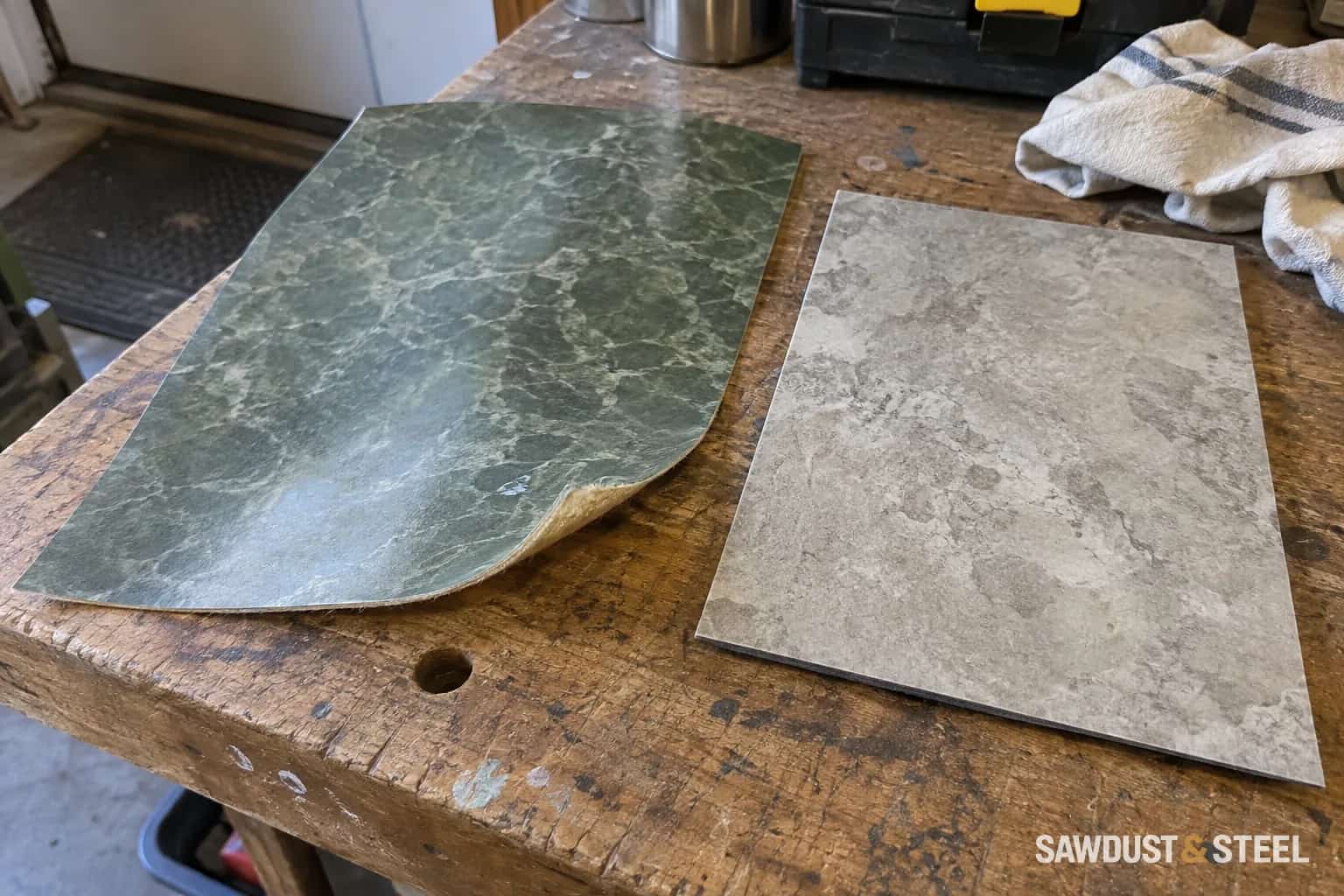
A family calls the old kitchen floor lino, the shop calls the new sample luxury vinyl, and everybody nods as though these are the same material. They are not. The name matters when you choose a cleaner, plan a replacement or decide how the floor will meet the dishwasher.
Start with the product, not the nickname
Linoleum and vinyl are different materials, not two names for sheet flooring. Forbo describes Marmoleum linoleum as using ingredients including linseed oil, wood flour, limestone, rosin and jute. Karndean describes its luxury vinyl as a layered product containing PVC, limestone and pigments, with a photographic design beneath a wear layer. Those named constructions explain why the same cleaning or repair method should not be assumed suitable for both.
Forbo's Marmoleum FAQ identifies its linoleum products and points to their own installation and floor-care guidance. That is the useful starting point: follow the exact floor, rather than a generic routine inherited with the word lino.
Compare the construction you are buying
A glued sheet, a glued tile and a floating plank differ in installation and repair even when the visible colour is similar. Ask what is beneath the wearing surface, how it attaches, and which substrate conditions it needs. A sample board in a showroom often hides all three answers.
Karndean's installation resources separate glue-down, loose-lay and rigid-core systems. Those are product-specific routes within vinyl flooring, not one universal vinyl installation. Compare the complete assembly when a supplier proposes an alternative.
| Decision | Linoleum example | Luxury vinyl example |
|---|---|---|
| Appearance | Marmoleum offers colours and marbled patterns in a linoleum surface. | Karndean uses a photographic layer for wood- and stone-look designs. |
| Construction | Linseed-oil-based material; format and backing still need identification. | Layered PVC-based construction; gluedown, loose-lay and rigid-core arrangements differ. |
| Local repair | Ask about the selected finish and whether a sheet repair would leave visible joins. | A compatible individual tile or plank may be replaceable; access depends on attachment. |
| Care | Use the linoleum maker's approved cleaning and maintenance system. | Use the exact vinyl maker's instructions; do not sand through a printed wear surface. |
Spend time on seams and edges
Ask where sheet seams would land and how they will be treated. Forbo explains that a tight seam can be appropriate for general Marmoleum uses, while particular settings can call for welding. Do not assume every linoleum seam must be welded or that every unwelded joint is wrong.
With tiles or planks, look at the number of joints, the pattern repeat and the connection detail. Check the transition at the hall, beneath the closed door and beside the cabinets. A floor that looks continuous in a large sample may need breaks or profiles in your room. Use the doorway transition guide to plan the visible stopping point.
Read the cleaning sheet before choosing a colour
Compare the daily cleaner, spill response and any periodic maintenance. Do not apply a vinyl-care product to linoleum simply because both surfaces are resilient. Equally, avoid assuming a natural-material description means every household cleaner is harmless.
Choose a finish whose care routine fits the household. Someone who wants a simple maintenance routine should ask exactly what is required, rather than being promised that nothing needs looking after. If the existing floor feels sticky, establish the material before using the cleaner-residue troubleshooting guide.
Check the kitchen around the new floor
Measure the finished build-up, including any substrate preparation and underlay where specified. Check the dishwasher removal path, fridge clearance, doors and floor transitions. A few additional layers can affect equipment access even if the new surface itself seems thin.
Ask whether cabinetry sits over or beside the selected floor and follow that product's installation requirements. The cabinet-and-floor sequence guide helps resolve the order. Do not use an old installation as proof that the replacement should be trapped the same way.
Which would we shortlist?
Choose a linoleum shortlist when you want its material composition and a coloured or marbled floor rather than a photographic timber imitation. Compare sheet and modular options before assuming the installation must look like the old lino. Choose an LVT shortlist when a wood- or stone-look print and individual tile or plank layout are the main attraction. If a future local repair matters most, favour a documented replaceable format with retained spare pieces, whichever material you choose.
For a busy kitchen, neither label settles the water question. Compare the actual joint, backing, adhesive and perimeter instructions. A surface that tolerates a spill does not protect the subfloor from a leaking dishwasher connection. Likewise, choose from complete installed prices rather than treating either material family as automatically the budget option.
Compare two complete quotes
Imagine replacing a tired sheet floor with either new sheet linoleum or rigid-core vinyl. One quote may include more substrate preparation while the other adds height and transition work. Compare removal, hazard assessment where needed, subfloor correction, seams, trim, appliance movement and future repair access, not just square-foot material prices.
Take samples home and place them flat in daylight and evening light. Ask for a larger view of pattern variation. Keep the chosen product code and a suitable repair supply. The better choice is the floor whose installation, appearance and upkeep suit your kitchen, rather than the name everyone used for the old one.