
The homeowner who let me write this post — we'll call them the Dhaliwals — bought a 1,100 square foot post-war bungalow in Richmond Hill in 2022 for what looked like a reasonable number. Three years later, with two kids and a third on the way, the bungalow had run out of bedrooms. They called us for a second-storey addition in summer 2025, signed in September, and moved back in late March 2026. Six and a half months door-to-door, four months of actual living-through-it. This is that story, month by month.
We've already written what a second-storey addition actually costs in the GTA in 2026 — real numbers, line by line. This post is the companion piece. It's not about the money. It's about what it feels like to stand in your kitchen at 8am when the roof of your own house is sitting in the driveway on a Friday in October and the rain is coming in by Sunday. The worst week of the whole thing. And the weeks before and after that, and how the project actually unfolded in real time.
Month 0 (September): discovery, engineer, and the foundation check
Month 0 is the month before anything visible happens. We came to the Dhaliwals' house on a Tuesday evening in early September, walked the bungalow with a tape measure and a flashlight, and wrote a scope that started with the hardest question: can this foundation actually carry a second floor? About a third of post-war GTA bungalows can't, at least not without underpinning, and the answer shapes everything that follows.
Week two was the structural engineer site visit. We use a PEng firm out of Vaughan that does 60+ second-storey additions a year — they come with a laser level, a calibrated probe, and in some cases an electromagnetic rebar scanner to check the condition and reinforcement of the existing foundation wall. The Dhaliwals' foundation was poured concrete from 1956, in reasonable shape, with enough bearing capacity to take the new floor load once we added a continuous LVL rim beam to redistribute the point loads from the new exterior walls. No underpinning required. That call saved them roughly $38,000.
Week three and four were the design freeze — floor plan, window sizes, roof pitch, mechanicals layout, stair location. This is the month where every decision costs nothing and every indecision costs weeks later. The Dhaliwals locked the plans on September 28. We submitted for permit on October 1. Nothing happens faster than the week you freeze the drawings.
- Week 1: Scope walk, bearing check, preliminary pricing.
- Week 2: Engineer site visit, foundation probe, load calc.
- Week 3: Floor plan finalization with architect/designer.
- Week 4: Permit submission, material long-leads ordered (windows, front door, stair components).
Month 1 (October): permit review and the dead month
October was the month where nothing visible happened and every week felt like it was crawling. Richmond Hill's permit review on a second-storey addition runs 4 to 6 weeks in our experience, which means the Dhaliwals were staring at the same bungalow for most of October while we were trading emails with the plans examiner about a beam-post detail and a question about the tempered glass requirement on the new stairwell window.
The permit came back with comments on October 22. Comments are normal. The examiner wanted clarification on the attachment schedule between the new floor joists and the existing top plate, and wanted the engineer to add a note about shear bracing at the new second-floor rim. We had both resolved and resubmitted inside four days, and the permit was issued on November 3. Total permit window: 33 days. Within the range we'd quoted the Dhaliwals on day one.
During the dead month we also ordered windows. Jeld-Wen Siteline vinyl-clad wood windows were on an 8-week lead time in October 2025 — the longest lead item in the whole project. We ordered them the same day we submitted for permit because a delayed window is a delayed weather-tight building, and weather-tight is the single most important milestone in a second-storey build in an Ontario fall. The Dhaliwals also used the month to pack. Which brings us to move-out.
Month 2 (November): demo, the first structural surprise, and the interior strip
Demo week started on Monday, November 10. Day one was the roof prep — tarp staging, scaffold up on all four sides of the house, dumpster in the driveway, interior prep for the dust that was coming. Day two and three were interior strip: the old ceiling came down, the old attic insulation went out, any wiring in the top plate got traced back to the panel, and we got our first clear look at the bones of the bungalow. This is when the first surprise arrived.
The existing centre-load-bearing wall down the middle of the bungalow — the wall we were planning to leave in place as the shear spine of the first floor — turned out to be balloon-framed with two-by-four studs running full-height through the attic. Balloon framing in a 1950s house is neither unusual nor a crisis, but it's a different structural situation than the stacked-platform framing we'd assumed, and it changed how the new second-floor rim beam had to tie into the existing walls. Our engineer came back out on Thursday, revised the connection detail, and we kept moving. Cost of the surprise: a day of standing still and $1,200 in engineer fees. That's what surprises should cost. Big surprises are ten grand and a week.
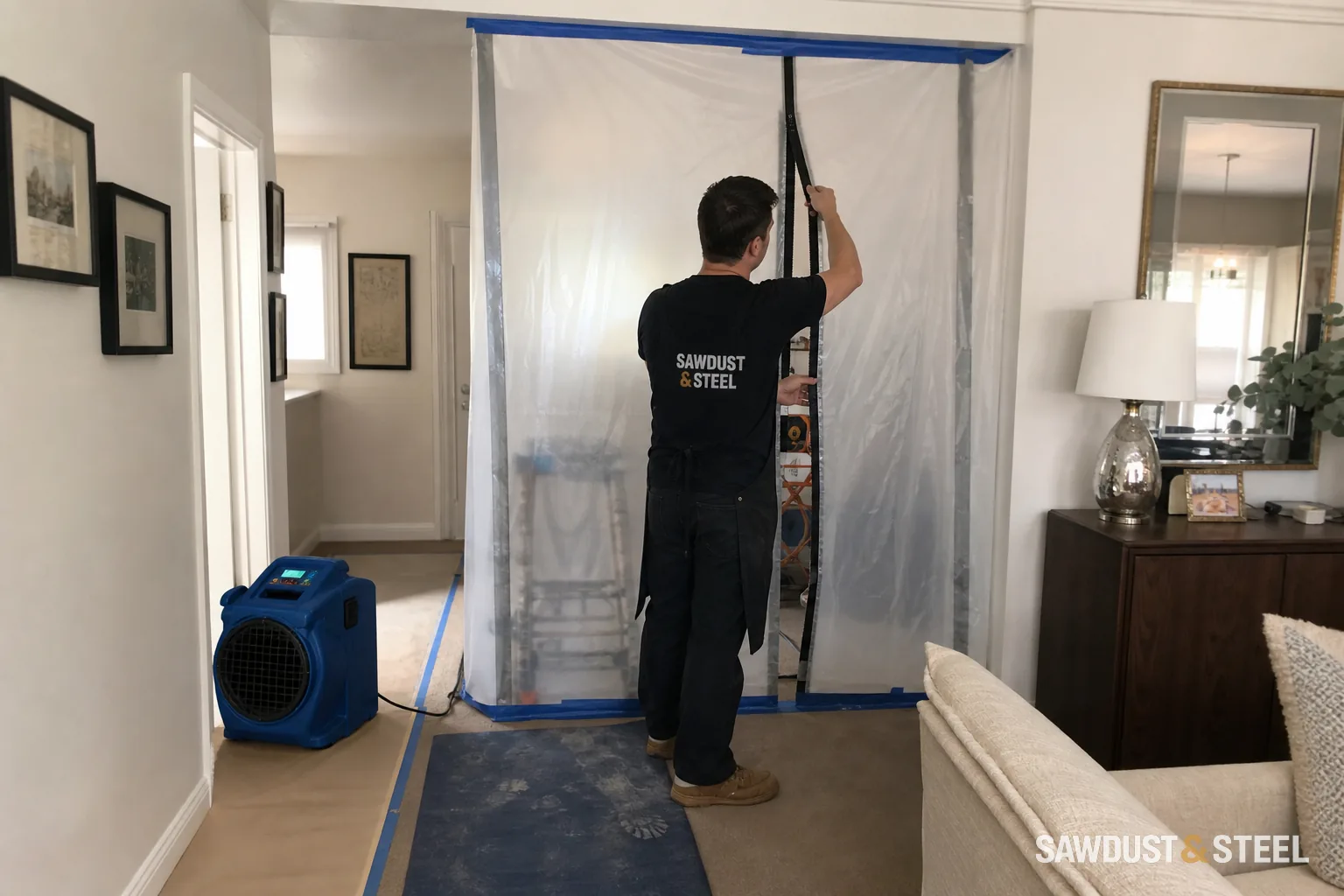
The rest of month 2 was mechanical strip-out and rough framing prep. The old electrical panel came out. The old forced-air ductwork in the attic came out. Plumbing stacks that were going to be relocated got capped. The foundation wall got a water sealant application on the exterior where we were going to be loading it heavier. We wrapped the interior in plastic and vapor barrier to get ready for the week every homeowner dreads: the week the roof comes off.

Month 3 (late November to mid December): the bad week
Roof tear-off started on Saturday, November 22. We chose a Saturday because the four-day forecast was the clearest window we had in the whole month of November, and we needed 48 hours of dry weather to get the old roof off, the old top plate prepped, and a temporary vapor barrier stretched over the first floor before anything could arrive from the sky. Saturday morning was 8°C and overcast. Twenty-seven bundles of old three-tab asphalt shingles came off in four hours, the sheathing came off in two, and by Saturday night the bungalow was an open box with a vapor barrier stretched across the joist bay like a trampoline.
Sunday it rained. Not the soft rain we'd braced for. The forecast was 60% POP with 3mm expected, and what we actually got was a full-bore 18mm overnight event that the Environment Canada overnight radar didn't pick up until 10pm Saturday. The vapor barrier held across about 80% of the first-floor footprint. The other 20% — the footprint of the old kitchen and one corner of the dining room — is where water got through. We had crew on site at 5am Sunday with shop vacs and squeegees and a heater. The living room carpet was fine. The kitchen subfloor took about two hours of standing water and needed replacement. That was the moment of the project.
By Monday morning we'd replaced the wet section of subfloor, re-tarped with heavier material, and started setting the new second-floor joists. 2x10 LSL joists at 16" OC spanning 14 feet, ledger-hung off a fresh LVL rim that replaced the old top plate. The LVL sizing decision — why LVL and not steel, why not glulam — is covered in our LVL vs steel vs glulam beam comparison post. By Wednesday we had a floor deck on the second floor and you could walk around where the new bedrooms were going to be.
I texted the Dhaliwals a photo from the new second floor on Wednesday afternoon, standing in what was going to be the primary bedroom. Priya wrote back: "Is it weird that this is the first photo of the project that made me feel better?" It wasn't weird. After the rain day, every progress photo is the medicine. The bad week ends when you can see the second floor existing, not when the actual badness is over.
- Saturday: Roof tear-off, sheathing removal, temporary VB installed.
- Sunday (the bad day): Unexpected 18mm rain event, 20% of first floor got wet, kitchen subfloor written off.
- Monday: Subfloor replacement, heavier tarping, new LVL rim beam set.
- Tuesday-Wednesday: Second-floor joists installed, floor deck complete.
- Thursday-Friday: Exterior wall framing for second floor started.
Month 4 (December): framing, weather-tight, and the first heat
Month 4 was exterior framing week and the race to weather-tight. Exterior walls for the new second floor went up over the first week of December — 2x6 walls at 16" OC with R-22 mineral wool cavities (the Dhaliwals opted for a slightly higher spec than code because they're paying the heating bill for the next 30 years). The new roof trusses went up on December 8. Sheathing went on December 9 and 10. Ice and water shield at the eaves, synthetic underlayment on the field, shingles on December 12. The windows showed up from Jeld-Wen on December 11 (on schedule — week 8 from the October 1 order).
December 14 was weather-tight day. That's the milestone that matters most on a winter build in Ontario — the day the building is sealed to the outside, the house is at grade temperature, and we can run temporary heat without watching every BTU fly out a hole. We ran a pair of propane construction heaters inside the dried-in shell starting December 14, and the interior temp came up from 4°C ambient to 16°C within about 18 hours. From that point forward the inside of the building was a controlled environment instead of an outdoor job site.
The Dhaliwals drove by on December 18 — first time they'd been to the house since November 7. Priya told me later that she almost cried when she saw the new second-floor windows in. Not because they were beautiful, she said, but because the house finally looked like a house again instead of a hole with tarps. I think about that description a lot. The moment a second-storey build stops feeling like destruction is the moment the windows go in.
December 20-January 5 was the holiday break. Trades off. No crew on site. We left the heaters running on propane with a site check every two days, made sure the temporary roof vents were working, and let the framing acclimate while every trade in the chain spent Christmas with their families. The Dhaliwals did the same in Markham. The pause is awkward but it's necessary and everybody who pretends otherwise is lying.
Month 5 (January): rough-ins, the inspector, and the first drywall
Month 5 kicked off January 6 with rough-ins. This is the month the project looks most like construction and least like a renovation. Plumber on site January 6-9 running DWV, supply lines, and the new second-floor bathroom group. Electrician on site January 8-15 pulling a new 200-amp service, running second-floor circuits, and installing recessed pot lights in all the new rooms (the Dhaliwals went with 22 LED recessed cans across the new footprint). HVAC on site January 12-14 extending the forced-air trunk up into the second floor and adding three new supply runs.
Rough-in inspection on January 19. In a second-storey build there are usually three permit inspections: footing/foundation (we skipped this one because the existing foundation was in use), framing, and pre-drywall. Framing inspection happened December 18 (just before the break); pre-drywall rough-in inspection happened January 19. Both passed clean. The inspector flagged one note about a smoke detector location in the new hallway which we fixed in 20 minutes. Clean inspections are the reward for doing the work right when nobody is looking.
Insulation went in January 20-22 (R-22 mineral wool in the walls, R-60 blown cellulose in the new attic, spray foam at the knee walls and rim joists), and drywall started January 24. Hanging drywall on a 1,100 sq ft addition takes 2-3 days, taping and mudding takes another week. By January 31 the second floor had textured drywall ceilings and primer on the walls, and the Dhaliwals came by for the first walkthrough of the new space that felt like rooms instead of a jobsite. The kids got to see their future bedrooms for the first time. That was a good day.

Month 6 (February-March): finishes, trim, paint, and move-back
Month 6 was the finish month, and it was the month where the project stopped being a construction site and started being a house. Primer and paint first two weeks of February. Flooring (engineered white oak) landed on February 14 and took four days to install across the whole second floor. Interior doors went in the following week — solid-core MDF shaker doors on concealed hinges, a small upgrade the Dhaliwals paid about $1,800 for over hollow core and that I'd recommend to any homeowner doing a second-storey add.
Bathroom tile and plumbing trim ran February 24 through March 6. The new en-suite was a mid-tier scope — curbless walk-in shower, double vanity, heated floor — and we'd intentionally slotted it into late February instead of January because the tile setter we use was booked solid the first three weeks of January on other jobs. Trim carpentry followed tile — baseboards, casing, crown in the primary bedroom, stair risers and treads installed March 9-13. The stair was the hardest single finish element in the whole project because the rise calculation was 0.25" tight and we had to shim the landing into code height.
Final inspection on March 18. Everything passed. Fire separation, stair geometry, guard height on the upper landing, electrical panel label, GFCI locations, smoke and CO detector placement, HVAC supply count, egress window sizing on both new second-floor bedrooms. The inspector signed off in 45 minutes. The permit file closed on March 19. Move-back on March 22. The Dhaliwals were in their old-now-new house with their kids the same night. The third baby arrived on April 4. Thirteen days of slack on a schedule that started in September. That's a win.
A scope-related note for anybody planning something similar: the Dhaliwals did not remove a load-bearing wall downstairs during this job, but plenty of second-storey projects combine the addition with a first-floor open-concept change, and that adds its own timeline on top. Our writeup on removing a load-bearing wall in Richmond Hill covers that scope and it's a companion decision you want to make during the Month 0 design freeze, not after framing starts.
The dust line, the noise, and what surprised the homeowners most
A second-storey build is loud and dusty in a specific way. Dust follows the joist bays — when we opened up the ceiling for tear-off, the dust that had been sitting in the attic for 70 years came down in every room simultaneously. The Dhaliwals had moved out, but their furniture was still in place under heavy plastic, and we pulled the plastic on March 21 to find a fine brown layer on every horizontal surface anyway. We came back with HEPA vacs and Swiffers for an extra day before handover. Every second-storey build needs an extra dust day at the end. Build it into the schedule.
The noise is worse than a kitchen reno and worse than a bathroom reno because of the framing gun and the circular saw on a sheet of sheathing. We had a noise complaint in week 2 from a neighbor two houses down — legitimate and polite — and we responded by holding the heavy-framing hours between 8am and 5:30pm and skipping Sundays entirely. Second-storey adds generate legitimate neighborhood friction. Introduce yourselves to the neighbors before demo. The Dhaliwals delivered a card and a bottle of wine to the two closest neighbors the week before demo and the goodwill lasted the entire job.
The thing that surprised the Dhaliwals most wasn't the cost (we'd walked them through every line — the number was boring by the time the invoice landed). It wasn't the rain day either, even though that's what this post keeps coming back to. It was how long the permit window felt in October. Five weeks of staring at an unchanged bungalow while the examiner read drawings is psychologically the longest month of a renovation. Longer than the four months they were out of the house. The waiting before the waiting is the hardest part.
The other thing the Dhaliwals asked us to mention: the roof itself was a full replacement on the old footprint, not just the new second-floor roof. We strip the existing roof as part of any second-storey addition because you can't flash a new wall intersection into an old roof and call it watertight. That added about $9,000 to the total that the Dhaliwals had budgeted as a separate line. If you're curious about what a standalone roof replacement costs in the GTA, we wrote that one up in detail separately — the pricing is useful to know even if you're bundling it into a bigger job.
“The rain day was the worst day of our lives. Marcus called me at 6am on the Sunday and told me what had happened, and I sat in the rental in Markham and just cried for twenty minutes. Then he texted me a photo at 9am with the subfloor already coming up and the crew on it, and I realized the contractor was the reason the rain day was survivable instead of catastrophic. By Wednesday there was a second floor. The rain day is still the story we tell at dinner parties — but only because we got to the other side of it.”
What we'd tell the next family doing this
First: budget for the rental, not just the build. The Dhaliwals spent roughly $14,800 on four and a half months of furnished rental in Markham, and that number caught them slightly off guard even though we'd flagged it in month 0. It's not a renovation cost, but it's a renovation-adjacent cost you can't avoid unless you have family with a spare floor. Plan for it on day one.
Second: freeze the design in month zero and do not touch it. Every change to the floor plan after permit submission costs real weeks. The Dhaliwals changed one thing after permit submission — a window swap on the west elevation — and it cost them 11 days on the permit re-queue. They knew the risk and accepted it, but they'd tell you they wouldn't do it twice.
Third: build the schedule around the weather-tight day, not the finish day. The number that matters most on a second-storey build in Ontario is the date the building goes dried-in. That's the day the project stops fighting the sky. Our internal schedule on the Dhaliwal job targeted December 14 for weather-tight, and we hit it by 12 hours. Every other milestone bent around that one date. If you're booking a second-storey addition, ask your contractor what their target weather-tight date is, and whether their framing crew hit that date on their last three jobs.
And finally: the rain day was survivable because the crew showed up at 5am on a Sunday with shop vacs. Your contractor's character is the single most important variable in a second-storey build, and you don't see character on the first consultation. You see it in month 3 when the unexpected happens and somebody has to decide whether to drive to Richmond Hill at 5am. If you're interviewing contractors for a scope this big, our framing and structural service page is where our own work lives — but more importantly, ask every contractor you interview what the worst day of their last second-storey job was and what they did about it. The answer tells you everything.
The Dhaliwals are back in their house. The third baby has her own room. The kitchen subfloor that got soaked on November 23 is now under engineered white oak and you would never know anything happened. And in the garage, in a cardboard box on a shelf, is the piece of original 1956 top plate we pulled out during demo — with a pencil signature from the original framer dated June 1956. We signed our own names next to his before we set the new LVL and closed it up. That piece is the part of the project that'll outlast all of us.


