
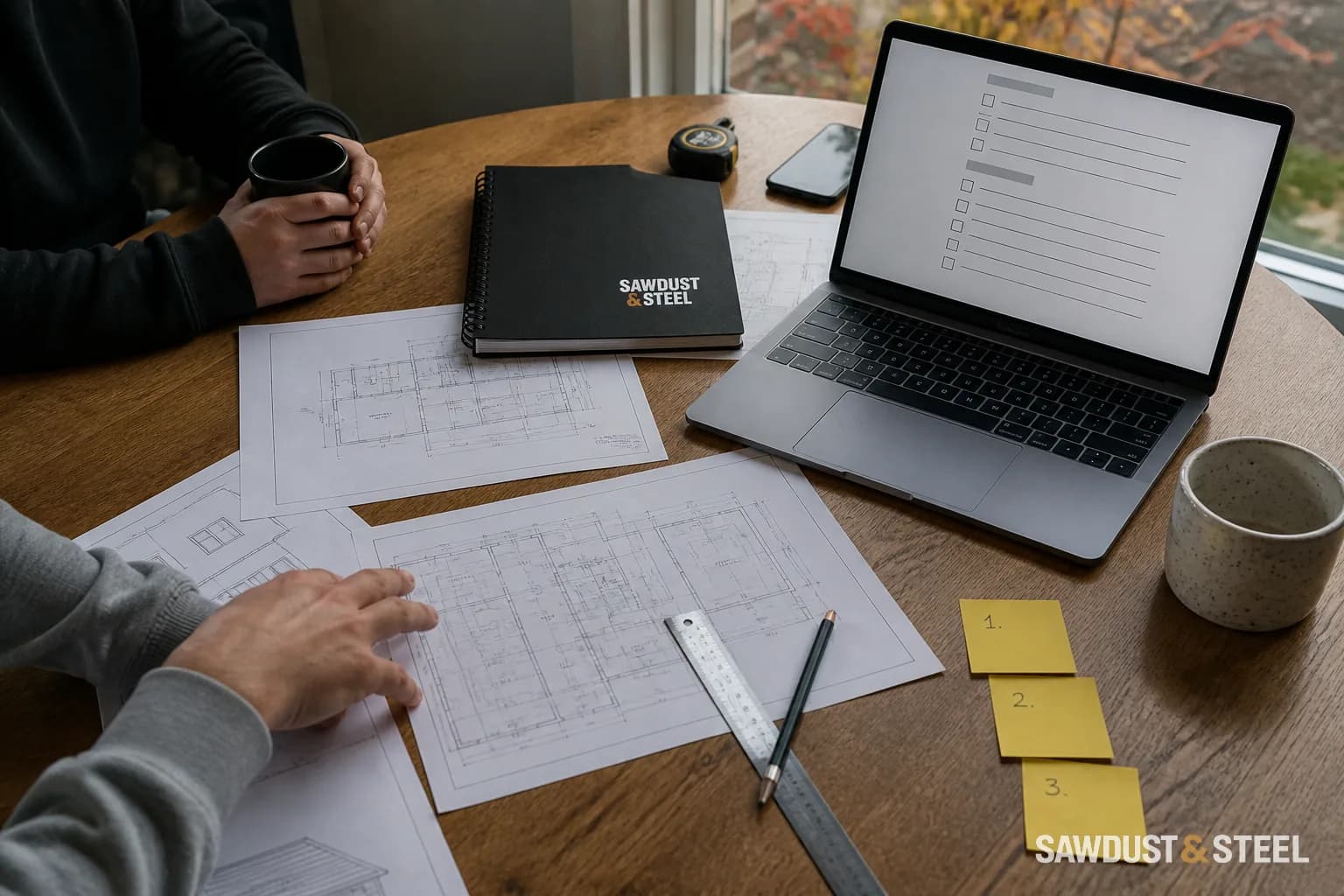
The new bedrooms are upstairs. A surprising amount of the budget conversation happens downstairs: foundations, supporting walls, the stair opening and services that have to reach another floor. Before comparing a price per square foot, find out what your existing house needs to carry the addition. Work through those questions here and you can ask for estimates that cover the same job.
The useful question is: what has to be true for this addition to work on this property? Answer that first. The budget becomes clearer, the estimates become comparable, and unresolved conditions become easier to investigate.
Can the property support the addition you want?
Start with zoning, not finishes. Height, setbacks, lot coverage, floor area, parking, angular planes, and neighbourhood-specific exceptions can change the size or shape of the addition. Toronto explains that its zoning rules control building height, density, location, and setbacks. Other GTA municipalities apply their own bylaws. A design that needs a minor variance has a different approval path from one that complies as drawn.
Then comes structure. An engineer may need existing drawings, measurements, selective investigation, and information about the foundation, walls, beams, roof, and soil before deciding what can remain and what must change. There is no honest rule that says a bungalow of a certain age will carry another floor.
Our structural engineer guide explains who decides the load path and what should appear on the structural documents. Beam sizes, posts, connections, and foundation work belong in that project-specific design, not in a generic cost article.
What actually moves the budget?
| Question | Why it changes cost | Evidence to request |
|---|---|---|
| Does the concept comply with zoning? | A redesign or variance can change area, roof form, schedule, and professional fees. | Property survey, zoning review, and a measured concept plan |
| What can the existing house carry? | Foundation, wall, beam, and connection work may be limited or substantial. | Existing-condition review and project-specific structural design |
| Where will the stair fit? | A stair consumes floor area and may force changes on both levels. | Dimensioned plans showing headroom, landings, and affected rooms |
| Can the building systems serve the new floor? | Heating, cooling, electrical service, plumbing, and ventilation may need extensions or upgrades. | Trade assessments and the required calculations, not a guess from the driveway |
| How will the old house stay protected? | Roof removal, temporary protection, demolition, access, storage, and cleanup all carry real labour and risk. | A written logistics and weather-protection plan |
| What finish level is actually specified? | Window, cladding, roofing, bathroom, flooring, trim, and stair choices can make two similar plans price very differently. | A selection schedule with named products or clear allowances |
What approvals and drawings are usually involved?
Ontario's building-permit guide says a permit is required when adding to a building and notes that zoning, heritage, conservation-authority, and other approvals may also apply. A complete house-permit application has a statutory review timeframe, but that clock is not the entire project schedule. Design, investigation, revisions, incomplete submissions, variances, and outside approvals happen around it.
Submission requirements are property- and municipality-specific. Mississauga's residential permit document guide lists an addition as its own project type and recommends working with an architect, professional engineer, or qualified designer. Use the municipality's current checklist, not a set of drawings borrowed from a neighbour whose house merely looks similar from the sidewalk.
Before hiring someone to prepare permit plans, Ontario also tells homeowners to confirm the person's registration in the provincial QuARTS registry where registration is required. Our guide to who can draw renovation plans in Ontario covers the roles without pretending every project needs the same team.
How do you get estimates that can be compared?
Give each bidder the same current drawings, structural information, finish assumptions, and known site conditions. Ask them to separate design and permits, demolition and protection, structure, envelope, building systems, interior work, project management, taxes, allowances, and exclusions. Separate these categories so differences in scope are visible.
Pay attention to allowances. An allowance is not a fixed price; it is a placeholder for something not yet selected or fully investigated. On an addition estimate, we laid the window schedule beside the quote and found that the owner was comparing standard units with the darker exterior finish they actually wanted. Installation trim and the affected siding needed spelling out too. We got the same selections priced before comparing totals. Ask what quantity, product level and labour each allowance covers, and how changes are charged. 'Windows included' sounds reassuring until everyone discovers they pictured different windows.
How much contingency should you carry?
Contingency should follow uncertainty. A house with incomplete records, concealed structure, an unresolved foundation question, and several provisional selections needs more room than a property with completed investigation and coordinated drawings. Do not hide elective upgrades inside contingency; keep them on a separate wish list. Our renovation contingency guide shows how to connect the reserve to unresolved risk instead of choosing a comforting round percentage.
Build the budget from a scope worksheet
| Budget line | Evidence before a firm commitment |
|---|---|
| Design and approvals | Written professional scope and current municipal fee calculation |
| Existing-house investigation | Defined openings, surveys and assessments |
| Structure and envelope | Priced coordinated drawings and named materials |
| Services and interiors | Trade scope, selections and quantities |
| Temporary accommodation | Actual dates, rental terms, storage and moving quotes |
| Contingency | Specific unresolved risks, separate from elective upgrades |
Ask each bidder to fill the same schedule. A blank line should mean excluded or unresolved, not silently included somewhere else. If one quotation includes a bathroom and another provides only future plumbing provisions, compare those scopes before comparing totals. Keep tax treatment explicit and have the contract professional resolve the terms rather than guessing from a subtotal.
Use current property-specific proposals and the renovation contingency worksheet to turn uncertainty into a decision list. Record which allowances remain provisional and the next investigation or selection needed to firm up each one.
Before signing, reconcile the chosen estimate against every drawing revision. Mark who carries temporary roof protection, existing-floor repairs, service upgrades and the move-back conditions. A dated, complete scope is more useful than a low headline number that changes when the roof comes off.
What should be settled before you sign?
At minimum, settle the design basis, permit responsibility, structural scope, allowances, exclusions, payment milestones, change-order method, insurance, site protection, cleanup, inspection responsibility, and the rules for schedule changes. If the contract relies on a future conversation for half of those items, resolve those terms before signing.
One budget line is easy to miss while you are choosing rooms: where you will live during the work. Read our guide to living through a second-storey addition before booking accommodation. It covers the move-out trigger and the conditions for coming home, both of which belong in the budget conversation.