
You have probably stood in the kitchen doorway and thought, 'If this wall were gone.' We like that conversation. The next one is about what holds up the house when it is gone, and where the new supports land downstairs. A beam is only part of the answer. In Richmond Hill, settle the load path and permit before demolition, then plan the services and finishes so the room works as well as you pictured.
Do you need a permit to remove a load-bearing wall in Richmond Hill?
Yes. Richmond Hill's building-permit guidance lists renovations and material alterations as permit work; removing a load-bearing wall is a structural alteration. Its permit FAQ explains the information needed to show compliance. Confirm the exact submission requirements, then obtain the permit before demolition.
Apply and obtain the required permit before structural demolition. Keep the issued permit and approved plans available during construction. It establishes the accepted design and the inspection stages that must remain visible. Ontario's building-permit guide also makes the permit holder responsible for requesting inspections at the required construction stages.
How do you confirm whether the wall is load-bearing?
Joist direction, walls stacked above, posts or beams below, and roof geometry are useful clues. None is a complete diagnosis by itself. Renovations, concealed beams, unusual framing, and additions can make an apparently simple wall load-bearing.
Have the responsible designer assess the full load path and coordinate any investigative openings. If professional engineering is required, ask for final documents carrying a signed and dated seal. Professional Engineers Ontario explains that a proper seal identifies the licensed professional taking responsibility for the document. The design needs enough detail to cover the complete load path.
What must the structural design resolve?
| Question | What the project documents should settle |
|---|---|
| What is being carried? | Existing floor, wall and roof loads, plus any planned changes above or beside the opening. |
| What replaces the wall? | The selected beam, posts, connections, bearing conditions and installation requirements. |
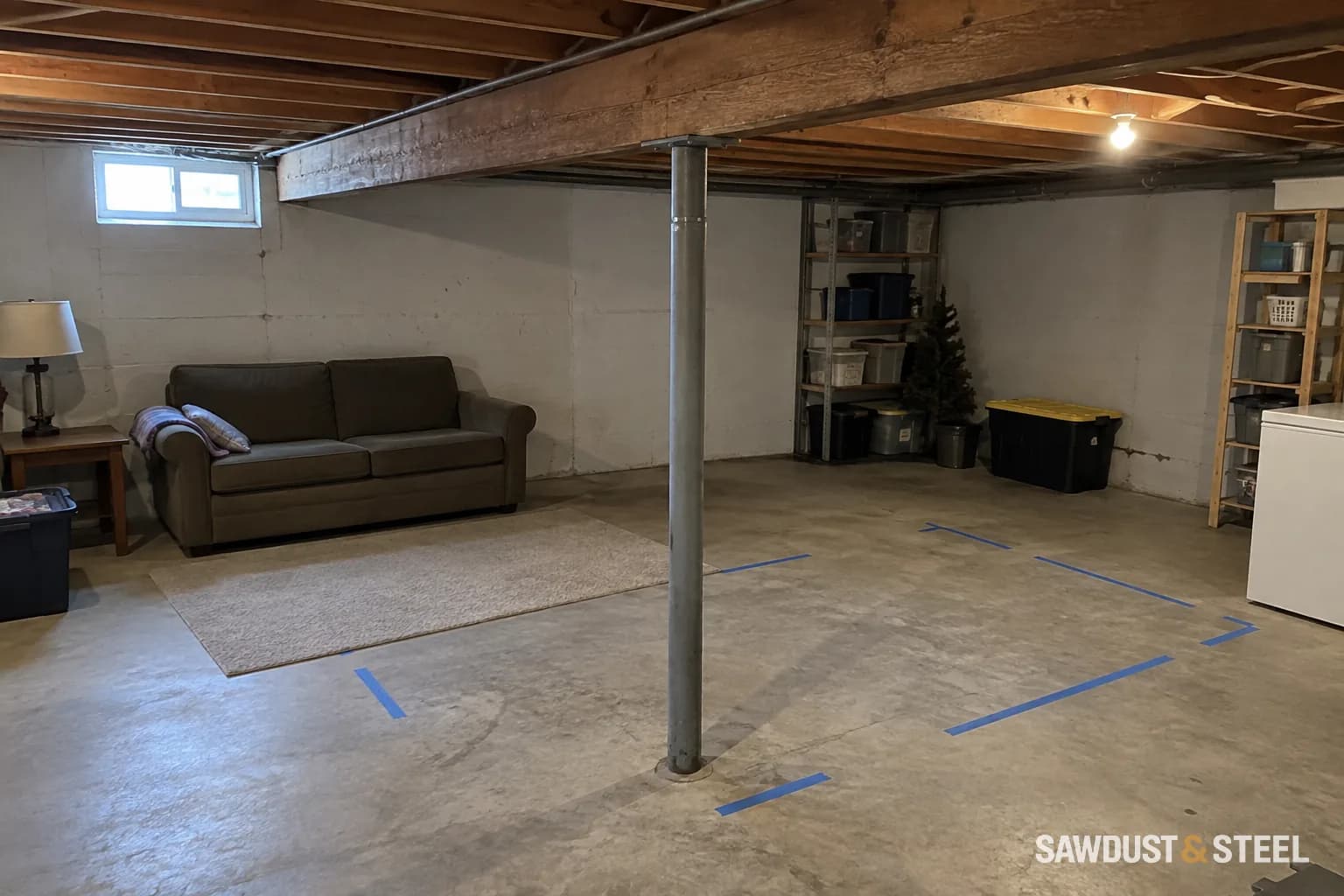
| Where do the posts land? | A continuous path to adequate framing, foundation or new support below, not merely the finished floor. |
| What shares the wall? | Electrical, plumbing, gas, HVAC, fire separation and finish work that must be rerouted or restored. A return-air duct inside the wall needs its own route in the plan. |
| What stays visible? | The required municipal and professional review stages before framing or finishes conceal the work. |
This is why span charts and internet beam recipes are not enough. Two openings of the same width can carry very different loads and land on very different foundations. Our LVL, steel, and glulam comparison explains the material tradeoffs, but the project design chooses the member and every connection around it. If the plan includes removing a chimney breast while keeping the stack above, read the chimney-removal guide for that scope.
What happens from design to final inspection?
First, the existing structure and proposed opening are documented. Next, the qualified designer completes the structural details and the permit submission is reviewed. Only after the required permit is issued should the contractor protect the home, install the temporary support described for the project, and open the wall. The permanent beam, posts, connections, and support below are then installed to the accepted documents and left visible for the required inspection or field review.
After acceptance, the temporary support can be removed as directed and the surrounding systems restored. Electrical changes follow the separate ESA notification and inspection process. Plumbing, gas, HVAC, and fire-separation work also need the right trade and approval path. Confirm each approval separately.
What should the contractor's quote include?
On a Richmond Hill kitchen opening, the structural work was only part of the finish conversation. The old partition had flooring on either side and none beneath it. Once the opening was made, a narrow bare strip would run straight through the room. We found a close board match, laid out the repair with the owner and agreed which colour difference they could live with before demolition. Ask the quote to cover investigation, design, permits, temporary support, beam and posts, support below, service moves, inspections and final records. Then follow the former wall across the floor and ceiling: patching, trim and painting need an agreed extent too. 'Make good' leaves a lot for two people to interpret differently.
Plan supports, services and finish repairs together. Our structural-engineer guide helps prepare the first design conversation.
Compare a wide opening with full wall removal
Start with the household problem: a blocked view, an awkward route or conversation that stops at the kitchen door. Draw the smallest opening that improves it, then compare full removal. Include the sideboard, kitchen storage, switches and furniture that currently use the wall.
| Choice | Useful gain | Tradeoff to test |
|---|---|---|
| Wide cased opening | Connection between rooms while retaining useful wall ends | Remaining returns still constrain routes and views |
| Full removal | One continuous space and broader sightlines | Storage, furniture backs, switches and room boundaries need new homes |
| Retain a closable separation | Keeps a way to separate activities | Less continuous openness |
Put a dishwasher, television and home-office call into the same imagined evening. A wide opening retains room definition but does not provide acoustic isolation. In a furnished drawing, show the actual sideboard width and chair pull-back area. Do not buy a larger structural opening only to rebuild a storage wall somewhere less useful.
Here is a paper comparison for the same dining room: 5,000 mm along the shared wall and 4,200 mm deep, with a 1,600 × 900 mm table, a 1,400 × 450 mm sideboard and a 900 mm chair pull-back envelope measured from each table edge. These are assumed furniture-planning dimensions, not minimum clearances or a beam design. Centre the table across the room depth, leaving 1,650 mm between each long table edge and the wall, and keep its position unchanged in both options.
| Same room and furniture | 3,000 mm cased opening | Full shared-wall removal |
|---|---|---|
| Shared wall | Retain a 1,600 mm wall end for the sideboard and a 400 mm return at the other end. Position the table opposite the opening. | Remove the shared wall; move the same sideboard to the opposite wall behind the table. |
| Sideboard fit | The 1,400 mm sideboard fits the 1,600 mm retained end with 200 mm total spare width. Its 450 mm depth stays outside the opening. | The sideboard fits the opposite wall, but its depth consumes part of the space behind the dining chairs. |
| Chair and route check | The 900 mm chair envelope leaves 750 mm to the opposite bare wall: 1,650 minus 900. Test that remaining route with the household. | The same chair envelope leaves only 300 mm before the sideboard: 1,650 minus 900 minus 450. That is a squeeze, not a useful passing route. |
| Practical choice | Keeps the existing storage and the table position while connecting the rooms. | Needs another sideboard location or a revised table layout before the larger opening solves the daily-use problem. |
In this layout, the partial opening earns its keep: the sideboard stays on a useful wall and the route behind the occupied chairs remains more workable. Full removal could still win if another wall can take the sideboard without blocking a door, radiator or route, but draw that revised location first. Tape out the actual chair movement and walk it carrying a plate; the 900 mm envelope is an assumption to test, not a promise. The designer must separately determine whether either opening, its retained ends and its supports are feasible.
Non-load-bearing wall removal still has hidden work
Once the structural role has been established, inspect services and finishes separately. A non-bearing wall can carry switches, receptacles, a return-air route, plumbing and cabinetry. Ask each trade where those functions will move. Do not abandon an air path simply because it looks like an empty cavity.
| Hidden scope | Decision before demolition |
|---|---|
| Electrical and controls | New locations and the separate electrical approval path |
| Plumbing or air route | Designed replacement route and access |
| Floor gap | Matching repair, deliberate transition or larger replacement |
| Ceiling line | Patch extent, texture and repainting boundary |
| Old materials | Assessment before disturbing suspect finishes or insulation |
Health Canada's renovation guidance identifies older materials that can contain asbestos. Establish the investigation scope before demolition. For finishes, put an actual spare board beside the aged floor and check its profile; matching discontinued flooring may determine how wide the finish work becomes.
Where two floors differ in level or material, a deliberate transition can preserve both rooms without pretending the former wall never existed. Agree its location and profile before cutting. A close match approved on a sample is a clearer scope than 'make good.' Keep the return-air route on the plan even when no structural beam is needed.