
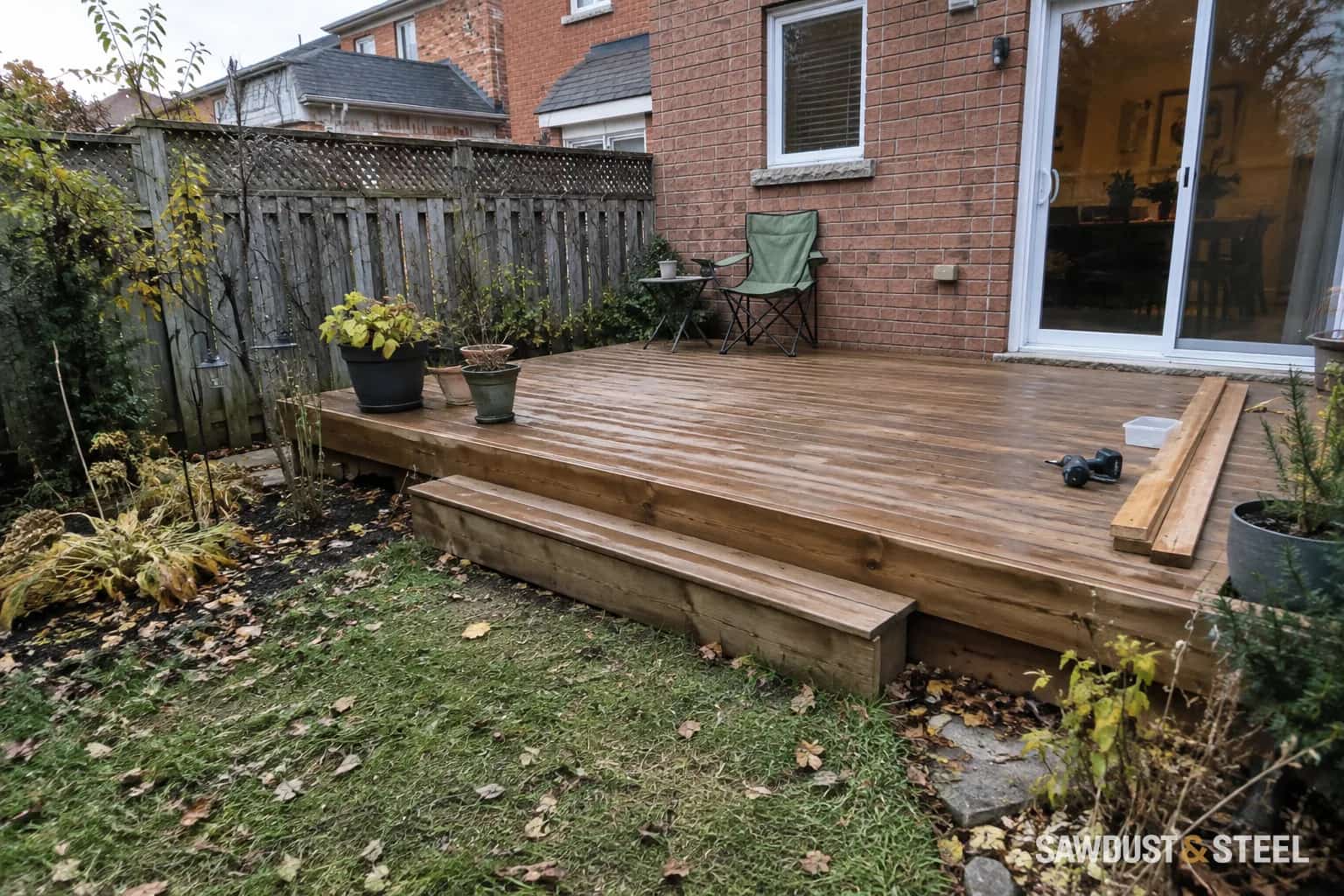
The cut is square. The board fits. You are finally making visible progress on the deck. It is tempting to fasten it down immediately, especially when the remaining daylight has started negotiating with you. First, check what the fresh cut needs.
Pressure-treated does not mean treated identically throughout
Wood Preservation Canada explains field treating: cutting and drilling can expose wood that was not protected by the original treatment, giving decay organisms an opportunity. Field treatment helps restore protection at those interruptions.
The colour of the cut is not a complete test of its treatment. Keep the lumber’s product information and ask the supplier which end-cut treatment belongs with it. The intended exposure matters, including whether the component is above ground or in a more demanding use.
The stain tin may be the wrong tin
A decorative coating is selected partly for appearance and weathering. An end-cut preservative is selected for the wood-protection task described on its label. Do not assume a product does both because it is brown and lives in the same aisle.
The Canadian Wood Council’s end-cut treatment guide distinguishes field treatments by the original preservative and exposure. Use that distinction to ask the right question, then follow the current lumber and product directions, including permitted use, preparation, handling, and application.
Make it part of the cutting routine
- Identify the lumber product and required treatment before starting the cut list.
- Keep the correct field-cut product available where cutting is happening.
- Treat the required exposed cuts and holes before joints or boards hide them.
- Allow the application and drying conditions specified on the label.
- Include the remaining cut ends and site alterations in the final inspection.
This is easier when it is planned than when someone remembers it after the last board covers the framing. Do not apply a product where its label does not permit use, or improvise a preservative from leftover chemicals.
Treatment does not fix the wrong detail
Field treatment does not turn unsuitable lumber into the right ground-contact product, repair rotten wood, or make trapped water disappear. The deck still needs appropriate materials, drainage, connections, and a sound structure. A coating is not a substitute for those decisions.
If you are replacing a few boards, inspect the supporting frame before covering it again. If previously hidden cuts look deteriorated, have the condition assessed instead of brushing preservative over soft wood and hoping it becomes structural.
The same distinction helps at finishing time: first get the wood and construction details right, then choose the visible coating. Your future self would probably prefer an extra pause beside the saw to another deck repair beside the same saw.