
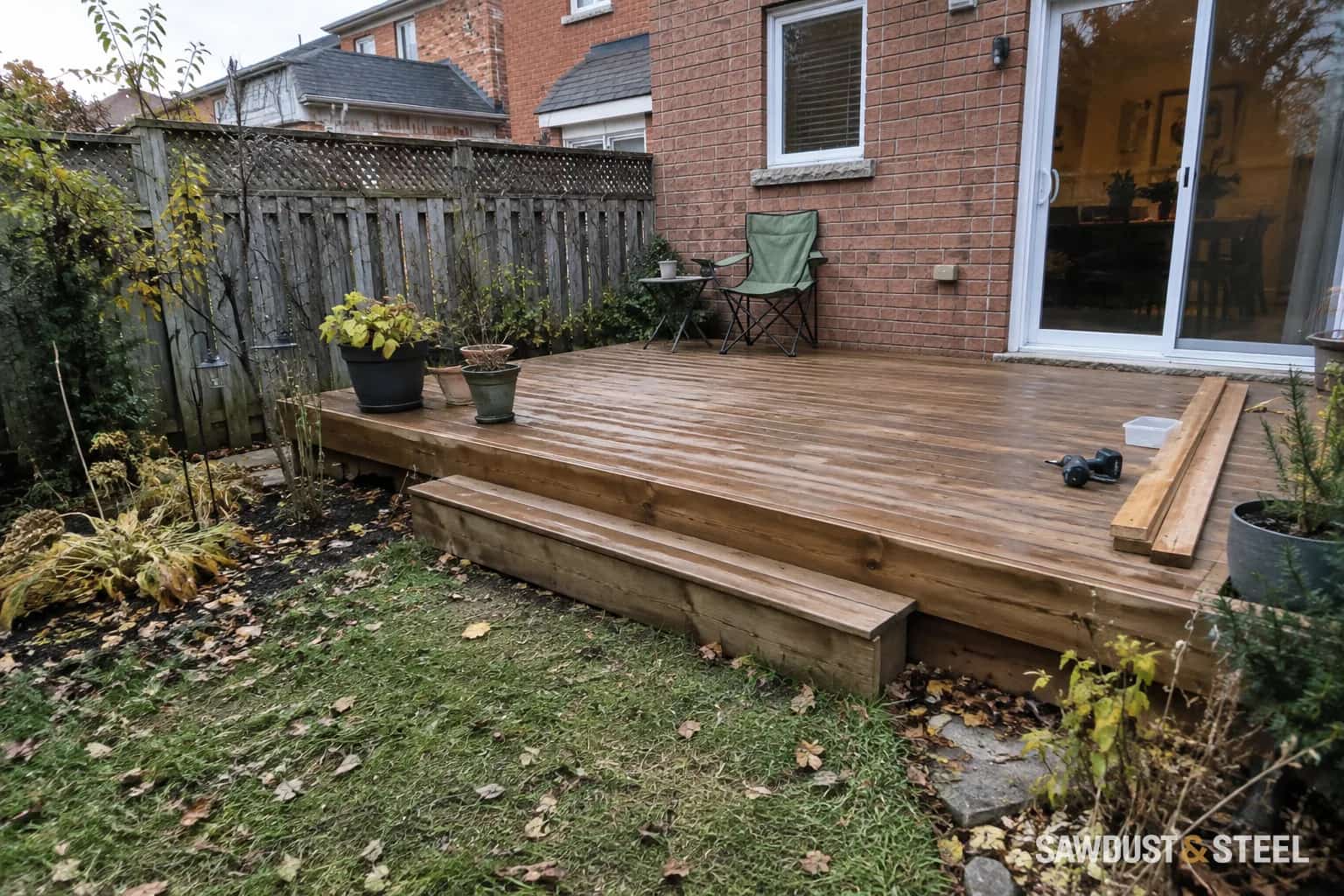
You went out for a few herbs and came back imagining a miniature forest beside the barbecue. It happens. Before the forest moves onto the deck, plan what happens underneath it when the watering can comes out.
Write down the weight you will actually install
The pot’s own weight is only the beginning. Include the growing medium, retained water, plant, and any reservoir or decorative stone. Then consider how that weight reaches the deck: a broad base and a few small feet create different contact patterns.
For a large permanent planter or raised bed, ask the deck designer or a qualified structural professional to assess its location and support. Do not spread a general deck-load figure across the surface and treat the result as permission for any heavy object in any corner. Rail-mounted planters also need a suitable attachment and an assessment of the railing system.
Let water leave the planter and the deck
TimberTech’s planter guidance includes drainage openings as part of the container detail. Follow the requirements for your planter and decking, then look beyond the hole: where does that water actually go?
A pot sitting over its own outlet can keep the base wet. A saucer can protect against drips but also hold water if it overflows or is never emptied. Suitable feet or a designed stand may improve clearance, provided they are stable, compatible with the deck surface, and appropriate for the loaded planter.
- Keep the spaces between deck boards free of soil and leaves.
- Avoid directing runoff toward a door, wall junction, or stair tread.
- Leave enough access to clean and inspect beneath and behind containers.
- Check saucers and reservoirs after heavy rain, not just after hand watering.
- Keep bulky planters out of the route to stairs, gates, and equipment.
Do not solve a wet patch with a mystery mat
Trex’s care and cleaning guidance varies by decking family and addresses dirt, debris, staining, and water management. Use the guidance for the actual boards before choosing pads, cleaners, or a protective layer.
If a mark appears under a pot, move the container safely and identify what caused it before scrubbing aggressively. Wet organic debris, mineral deposits, a reacting pad, and uneven weathering are different possibilities. Photograph the area and ask the decking supplier about a compatible cleaning method.
Plan how you will move it in October
A planter that requires four people to shift is effectively part of the layout. Leave a maintenance route from the start. Do not drag a loaded container across the boards or assume wheels make a heavy load harmless.
When winter approaches, follow the container and plant requirements and check that drainage still works. The nicest planter is one you can enjoy from a chair, not one that makes every deck-cleaning day a small relocation project.