
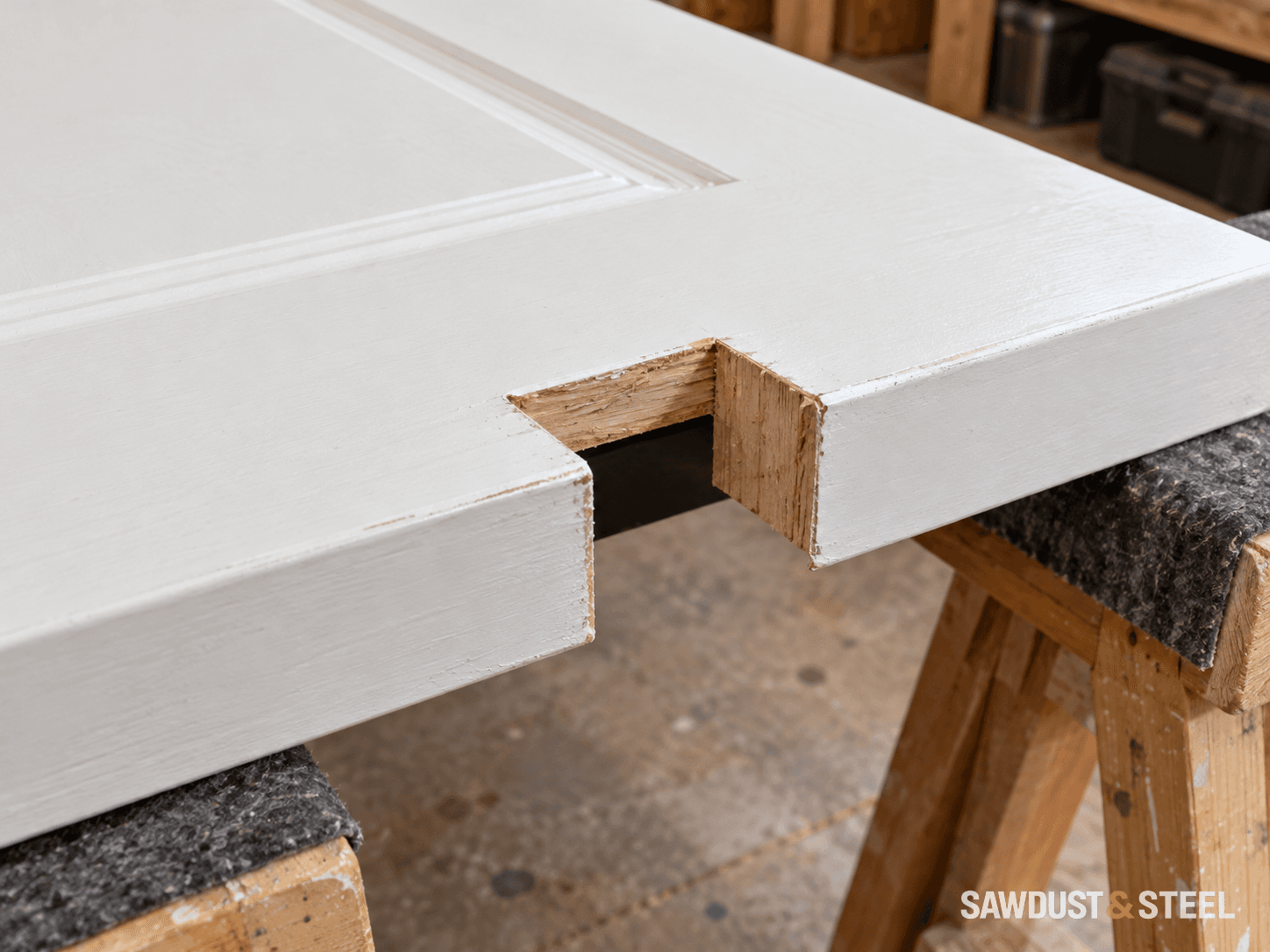
The old pocket-door pull is tired, the new one is handsome, and the screw holes have never met. This is a common result of shopping by the shape of the visible plate. The more useful shopping list begins with what has been cut out of the door.
Photograph the hardware before taking it apart
With the door accessible and unable to disappear into the pocket, photograph both faces, the leading edge and the receiving strike. Look for a maker and model. Record whether it is a passage pull or a privacy lock, how the edge pull emerges and how the outside release operates.
Keep the removed hardware and fasteners together. If removal requires taking the slab out, follow the pocket system's service procedure or use a carpenter. A door left without its edge pull can be surprisingly difficult to retrieve once someone helpfully slides it out of the way.
Distinguish a notch from a bore
Some traditional pulls wrap around a rectangular notch cut through the leading edge. Others fit a round face bore with a separate edge opening. A deeper mortised lock is another arrangement. Measure the actual preparation after the hardware is removed; the cover plate can conceal an oversized hole or an earlier repair.
The Deltana SDP/SDL installation drawing shows an edge-notch arrangement. The Weiser contemporary pocket-lock specification shows a square exterior plate around hardware for a 2-1/8-inch round cross bore and a 2-3/8-inch backset. These are examples of different preparations, not interchangeable drilling instructions.
| Record | Why it matters |
|---|---|
| Door thickness and construction | The lock must clamp or mount to the actual slab correctly |
| Notch height/depth, or bore diameter/backset | The body needs the right opening and remaining material |
| Edge faceplate and screw positions | Existing cuts may be exposed or lack sound fastening material |
| Strike size, depth and location | The locking part must meet its proper receiver |
| Projection on both faces | Hardware must clear the pocket entrance and trim |
A larger plate does not restore missing wood
A cover can hide an old paint outline without making an incompatible opening suitable. Check that the body fits, the fastening points land in sound material and both sides sit as instructed. Hollow-core doors have limited internal material in some areas; enlarging a cutout can remove the part intended to hold the lock.
If the new system requires material where the old notch is empty, compare a compatible replacement with a proper slab repair or replacement. Do not build the lock's mounting area from cosmetic filler. Ask the supplier to confirm compatibility using the measurements and photographs before ordering, and verify any printed template's scale before marking a cut.
Make the door run properly before aligning the lock
A sagging or rubbing slab can make a good lock seem faulty. Slide the unlocked door gently through its normal travel and watch its alignment with the receiving jamb. Use the pocket-door rubbing guide if the slab is catching or moving sideways. Do not move the strike repeatedly to follow a door that has not been adjusted correctly.
Use the lock's matching strike and preparation. Kwikset's round pocket-lock drilling instructions show that the receiver requires its own positioning and recess. An old plate with a convenient-looking opening is not automatically the right receiver for a different locking mechanism.
Try the pull and privacy controls with the door open
Check whether everyone who needs the room can use the recessed pull, edge pull and inside turn piece. Small flush controls can be harder to grip than a hinged-door lever. Also confirm that the hardware clears the pocket entrance throughout travel and that the door can be retrieved from its intended fully open position.
Operate the privacy mechanism and documented outside release with the door open first. Then test closed operation with another person available and the release tool outside. Follow the bathroom privacy-release guide for the household routine. Stop using a lock that binds or fails to release; a new finish does not compensate for an unreliable exit.
Keep the model number and instructions with the house records. The next replacement is easier when the note says which preparation and function fit, rather than 'the square brass one.'