
A flat ceiling is the goal. Scraping is only one possible route to it. Before buying a long-handled scraper, find out what the texture contains and what surface will remain when it comes off.
Test the material before a trial patch
Health Canada: asbestos and your health advises avoiding disturbance of suspect material and arranging professional assessment. That includes a 'tiny test scrape'. Identify the ceiling areas, repairs and layers that the planned work will affect before testing is commissioned.
Keep the pre-demolition assessment with the scope. If a previous owner patched half the room, tell the assessor. Different-looking areas may require different consideration; a single convenient sample should not become a promise about every ceiling.
Remove the finish
Assessment first; allow for the substrate repairs revealed underneath.
Overboard appropriately
Check fastening, retained materials, fixture extensions and ceiling assembly.
Replace affected construction
Define support, services and required assembly before demolition.
Ask what the smooth finish includes
Removal can reveal rough joints, damaged paper, old repairs and uneven transitions. Specify whether the price includes substrate repairs, full skim coating where needed, primer and the final paint. 'Texture removed' does not describe the appearance under the evening light from a nearby window.
Discuss the room with the lights on. Recessed fittings and strong side lighting make small waves more visible. Choose the finish expectation before work starts, and agree how a representative repaired area will be reviewed.
Compare the whole ceiling assembly
Overboarding may be worth considering where an appropriate design can retain material safely, but it changes thickness and fixings. Fixtures, boxes, vents, crown moulding and doors near the ceiling need checking. It is not an automatic shortcut around hazardous-material assessment because drilling and fixing can still disturb the existing assembly.
If the ceiling forms part of a required fire or sound separation, keep the assembly requirements in the design. Do not replace specified layers with whatever board happens to be in stock. The substitution checklist helps keep those decisions explicit.
Prepare for a room that cannot be used normally
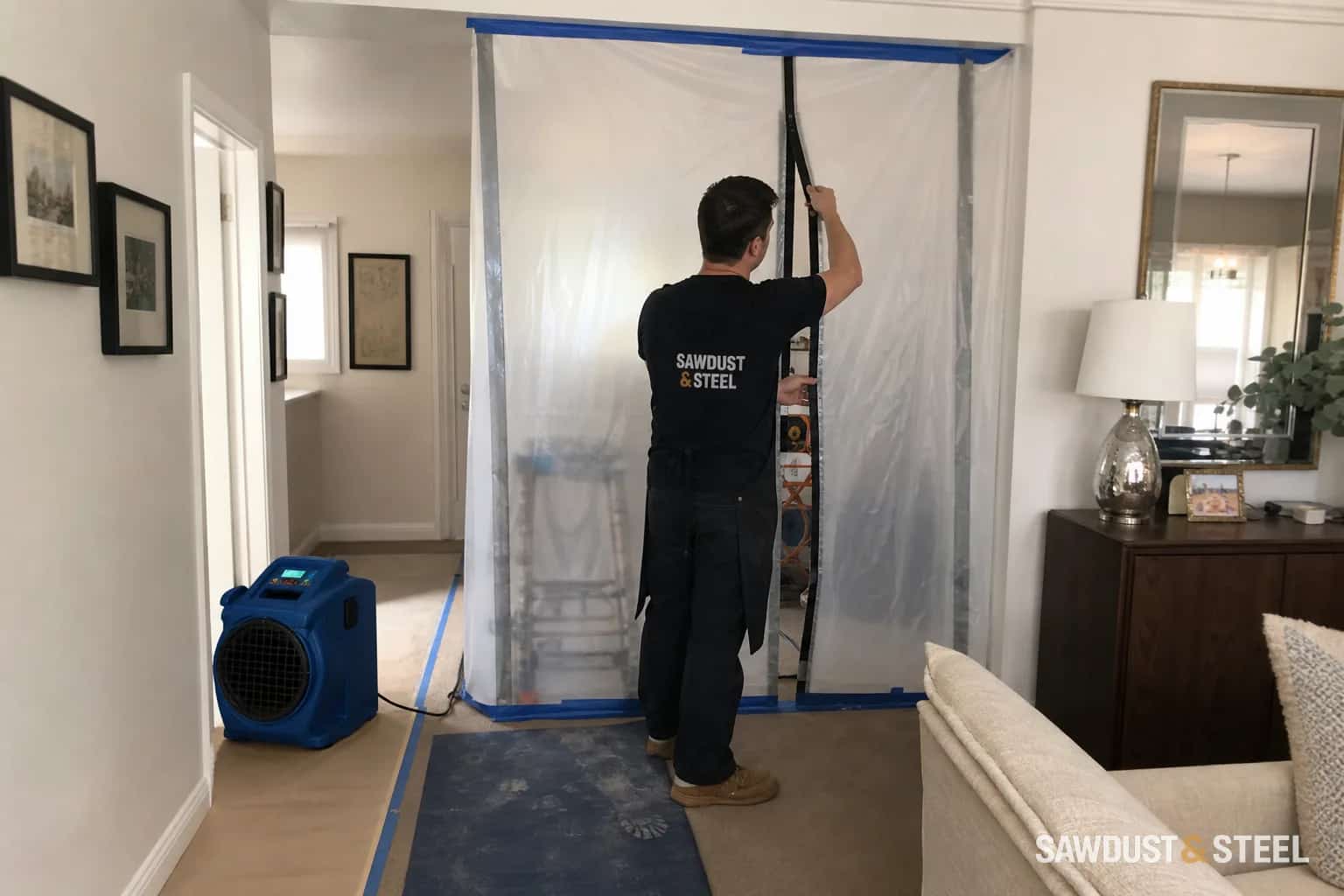
Remove furniture where practical and plan containment, cleanup and time for finishing materials to dry under their specified conditions. A bed under a plastic sheet is not a good working platform or a dependable plan for sleeping there that night.
Get the fixtures and smoke-alarm arrangements coordinated by the appropriate trades. Confirm the return-to-use condition, then inspect the finish before the room fills with furniture again. Keep a record of any material left in place for future work.