
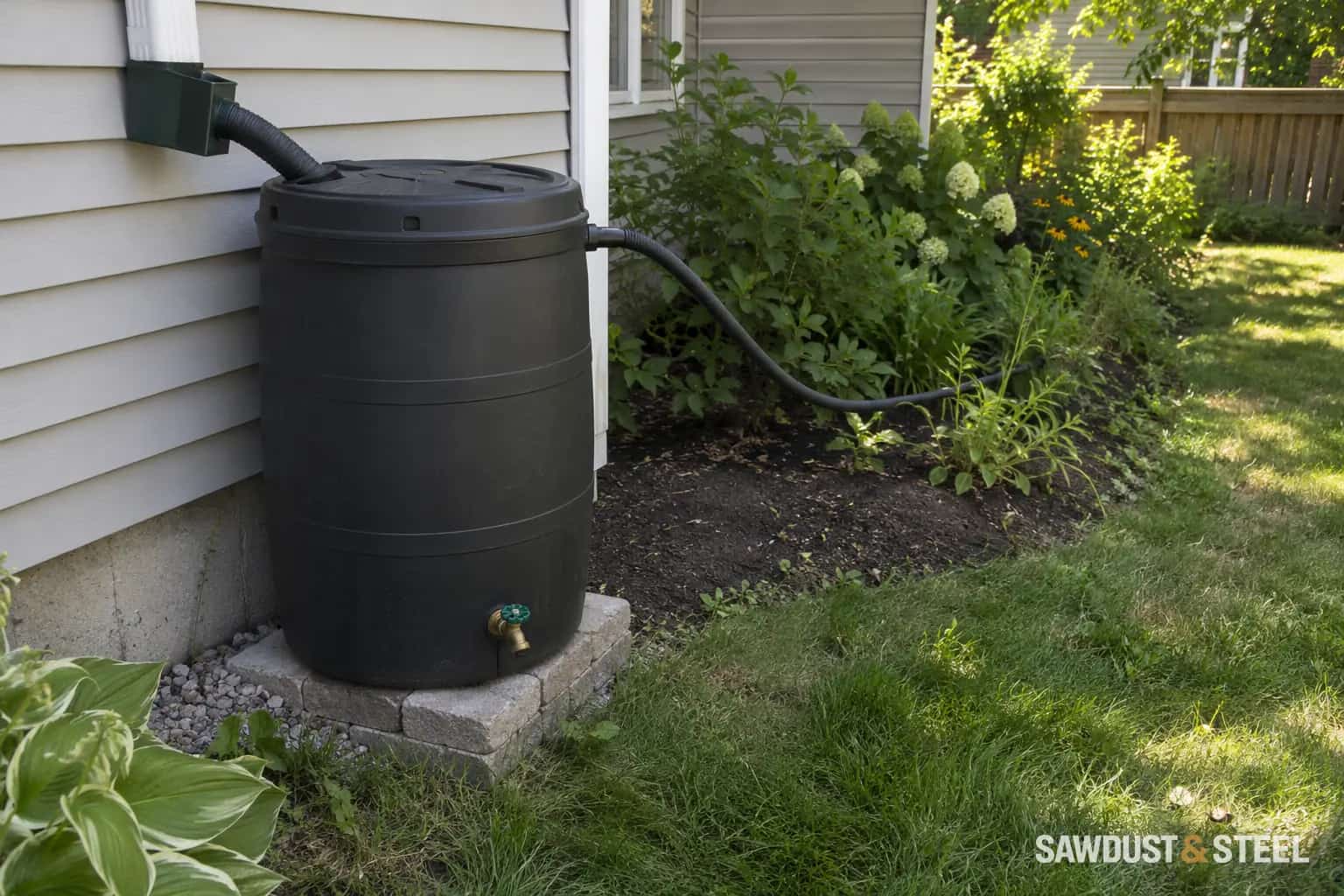
A rain barrel is easy to picture on a dry day: a neat container, a watering can and fewer trips to the tap. The more useful picture is the next downpour after the barrel is already full. Every litre arriving after that still needs a route away from the house.
Draw the three operating states
Collecting
Roof runoff enters the barrel while storage is available.
Full
The designed overflow or diverter sends additional water to a suitable discharge route.
Winter bypass
The barrel is disconnected or bypassed and roof runoff follows a restored downspout route.
Check which arrangement the product uses. Some barrels receive a downspout directly and discharge through an overflow connection. Some diverters send water back down the downspout when the barrel reaches its intended level. The latter only helps if the rest of that downspout already has a suitable destination. A hose fitting on a barrel is not, by itself, a complete drainage plan.
TRCA's rain-barrel guidance directs overflow to a suitable downhill location such as a garden or grassed area. It also notes that a barrel can fill during a single storm. Do not count a full barrel as available storage when judging what will happen in the next storm.
Check the destination before buying the connector
- Start at the proposed overflow outlet and follow the whole route, including where water spreads after leaving a hose.
- Keep the route away from the foundation and away from a window well or low basement opening.
- Check whether it would discharge onto a walkway, a neighbouring property or a surface that drains back to the house.
- Make sure the chosen barrel base is stable and suitable for the full container, following its instructions.
- Leave the lid, inlet screen, overflow and tap reachable for the product's maintenance routine.
For a narrow side yard, the challenge may be the destination rather than the barrel size. If there is no suitable place to release water, resolve the site drainage with the appropriate professional or municipality before connecting a barrel. A longer hose laid across a path introduces another problem; review downspout extensions across walkways.
Apply local rules to the actual property
Toronto's downspout-disconnection guidance covers suitable drainage, rain barrels and circumstances where disconnection may not be feasible. Toronto requirements and exemption processes apply within Toronto. Elsewhere in the GTA, check the relevant municipality instead of borrowing a Toronto detail as a universal rule.
Do not reconnect a winter downspout to a sewer simply because the old connection is still visible. Likewise, do not redirect runoff to the next property to keep your own path dry. The barrel is a change to an existing roof-water route, so assess the entire route rather than only the attractive section beside the garden.
Winterize the route as well as the container
| Part | Question to settle before freezing weather |
|---|---|
| Barrel | How does this model need to be drained, disconnected and stored? |
| Diverter | Is there a specified winter position, plug or bypass fitting? |
| Downspout | What replaces the missing barrel connection and where does it discharge? |
| Overflow hose | Can trapped water remain, and how should it be stored? |
| Spring return | Are the screen, fittings and base ready before reconnection? |
TRCA recommends disconnecting as temperatures approach freezing and adding an extension to a suitable downhill location. Its storage advice protects the barrel against refilling and freezing. Use your product's instructions for the exact storage position and fittings; decorative barrels and diverter kits are not all identical.
Before calling the winter task finished, stand back and look at the downspout without the barrel. Water should not simply drop beside the foundation from a shortened pipe. Check that the replacement route is secured and that snow storage will not immediately obstruct it.
Check it in actual rain
Observe the route from a safe ground-level position during ordinary rain, especially when the barrel is full. Look for overflow at joints, water pooling at the base and discharge returning towards the house. Correct the arrangement before relying on it through a storm. Keep your backwater-valve operating plan separate: a barrel does not prevent sewer backup, and a sewer valve does not solve roof runoff at the wall.