
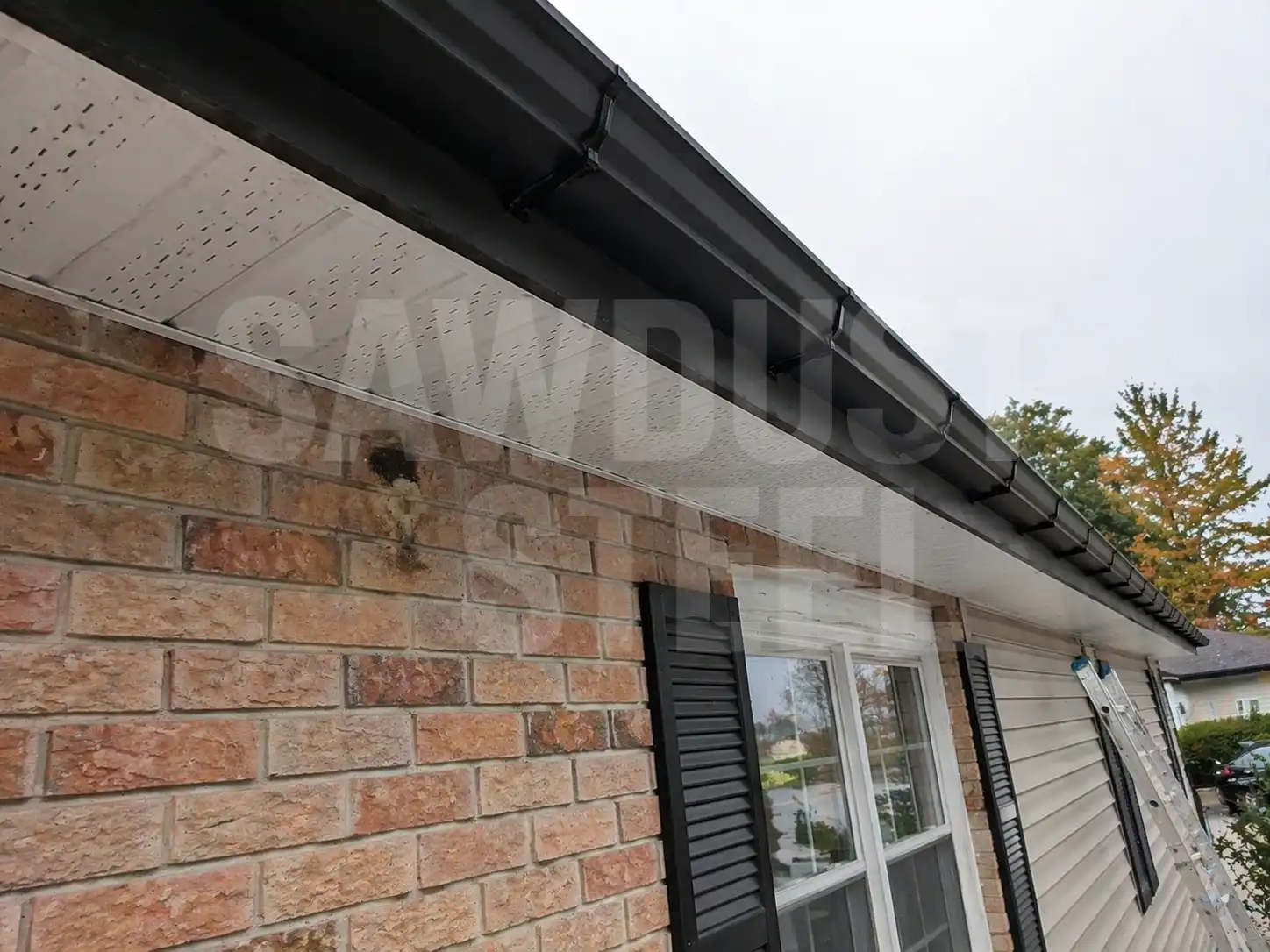
That tapping under the eave tends to start just when the wind makes a ladder least inviting. Observe from the ground and keep people away from a panel that could fall. A short video helps an installer locate an intermittent rattle without waiting for the next gust.
Identify what is moving
Photograph the loose panel, both ends and the surrounding fascia from a safe position. Does one end hang below its channel, or does the channel itself move with several panels? Record any staining, visible damaged timber or evidence of animal entry.
One panel edge loose
Check panel condition, engagement and suitability for the span.
Several panels moving together
Check receiving channels and their supporting material.
Staining or damaged timber
Investigate water entry before reclosing the soffit.
Preserve the intended air path
Vinyl Siding Institute installation manual includes different soffit details for open and enclosed eaves. The repair must match the existing system and its ventilation arrangement. A solid replacement panel is not an automatic substitute for a perforated one.
Ask the installer to identify the panel product, channel detail and any damaged backing before specifying the fix. Caulk, expanding foam and a patch over the opening may stop the noise while leaving the original attachment problem unresolved.
Include access and pest handling in the scope
The quotation should include safe work access, removal of unstable material and matching replacement components. If animals are actively using the opening, coordinate appropriate wildlife handling before closing it. Do not reach into an unknown cavity from a ladder.
Where the panel is near a sagging gutter or stained fascia, combine the inspections. Rot behind the gutter can change what the soffit repair needs to attach to. A separate ventilation problem may require attic assessment even after the exterior looks tidy.
Check more than the noise
At completion, compare the repair with the adjacent panels. Look for straight edges, matching vented areas and unobstructed channels. Ask for photographs of the repaired backing before it was covered. The useful result is a secure, compatible assembly, not merely one quiet windy evening.