
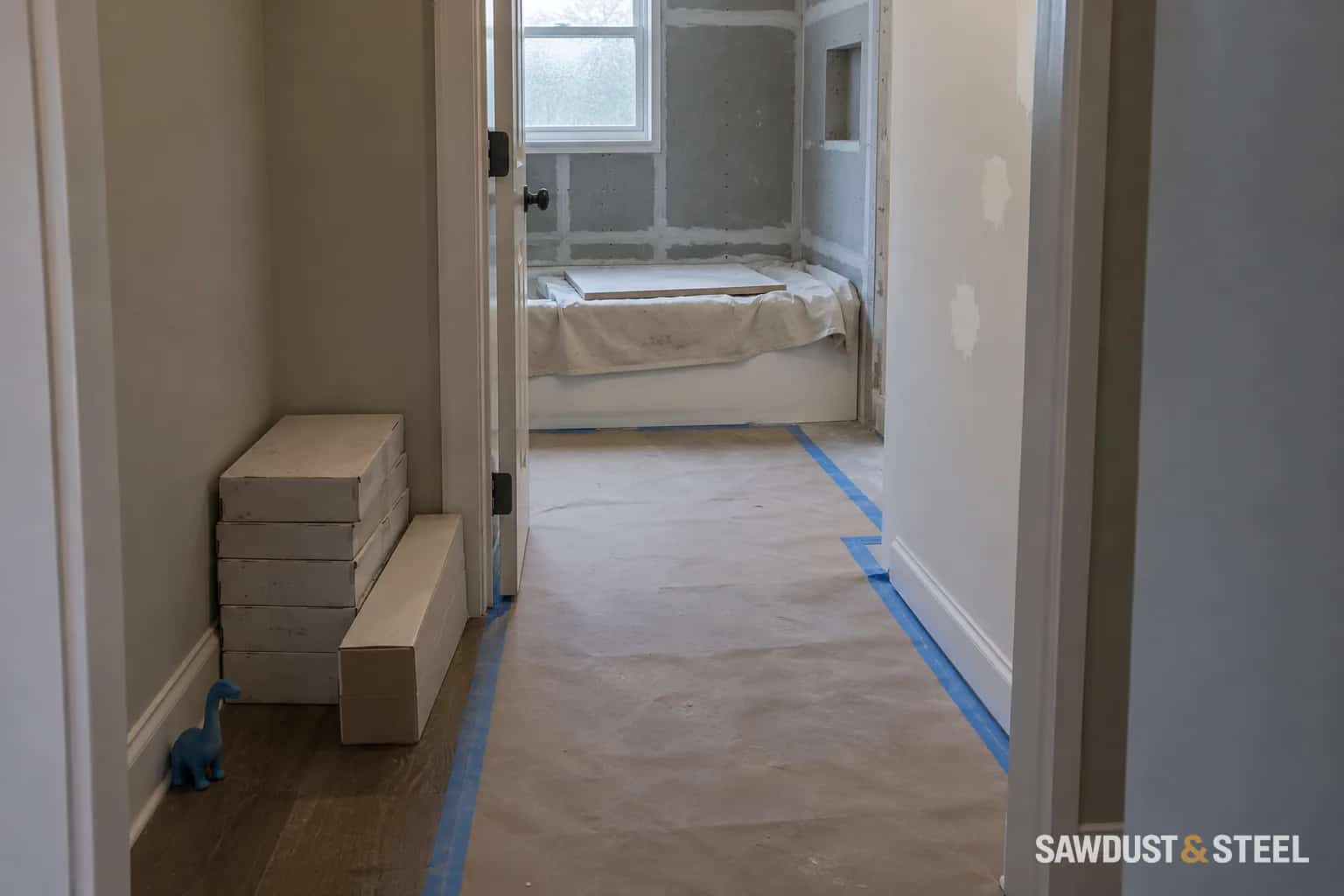
You can make coffee in a temporary kitchen. The only bathroom requires a more specific plan. 'We will put the toilet back most nights' needs dates, conditions and a workable answer for the nights when that cannot happen.
Map facilities, not just trades
Ask for a stage-by-stage plan showing when the toilet, basin, bath or shower will be unavailable. Include demolition, plumbing changes, inspections, waterproofing, tiling and product cure periods. The room looking nearly finished does not mean its shower is ready for use.
Canadian Home Builders' Association: renovation process recommends agreeing on bathroom access and household arrangements before work starts. For a one-bathroom home, make that conversation concrete: who needs access, at what hours, and what happens if the planned temporary arrangement fails?
Before demolition
Confirm deliveries, approvals and the alternative bathroom plan.
During service changes
Know exactly which fixtures and water supplies are unavailable.
During finishing
Respect installation, testing and product cure requirements.
If the schedule slips
Extend the fallback rather than improvising unsafe facilities.
Decide whether staying is practical
Consider nighttime toilet use, children, mobility needs, illness and the ability to reach alternative facilities. A nearby relative who is available during the day may not solve a 3 a.m. problem. Price a realistic temporary stay into the plan if reliable facilities cannot be maintained.
Any temporary plumbing arrangement must be installed and managed appropriately. Do not improvise a connection or leave an open drain as part of a household workaround. Ask the plumber what can safely remain in service and when it must be disconnected.
Reduce avoidable gaps before demolition
Confirm the critical fixtures and materials have arrived and passed delivery inspection. Check that the selected toilet, vanity and shower components suit the approved layout. A missing valve part can delay useful facilities even when all the visible finishes are on site.
Resolve material hazards, approvals and the demolition scope before the start. Keep the household route separate from the work and establish a clean place for toiletries, medicines and towels outside the bathroom.
Plan for a longer interruption
Choose a fallback that can extend if concealed damage or a delayed inspection changes the schedule. Agree who communicates shutdowns and how much notice the household receives. Keep water and power interruption information specific to the affected services.
The bathroom timeline guide explains the larger sequence, but ask the contractor to translate it into actual usable facilities. At handover, have the installer confirm when each surface and fixture can be used and how it should be cleaned. A properly finished bathroom is worth using at the right time, rather than damaging it during the final wait.