
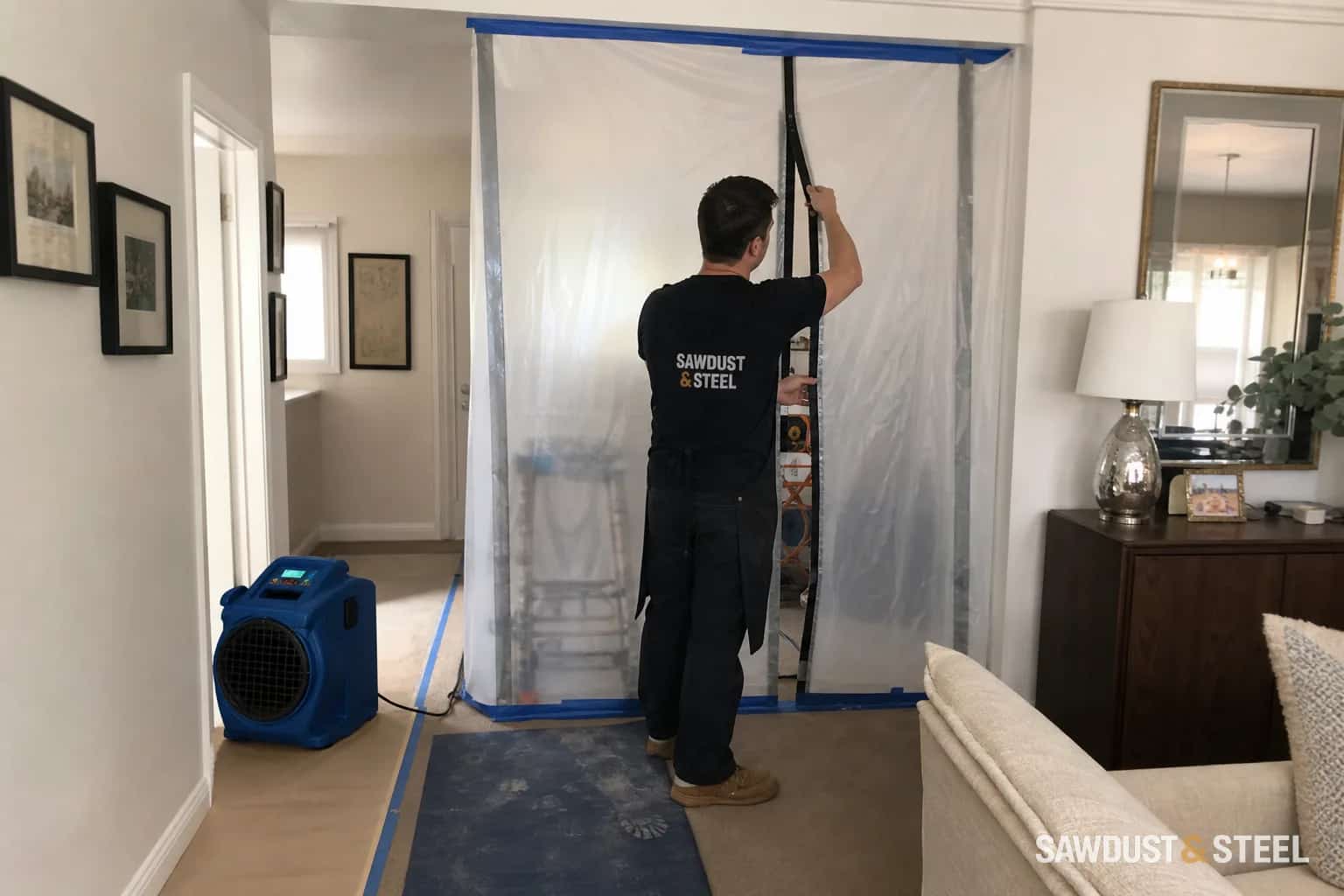
You expect dust in the room being renovated. Finding it on the breakfast table is a different matter. Before demolition, agree how the work will be separated from daily life, how dust will be captured, and who handles cleanup. Check for hazardous materials first. Plastic across a doorway is one part of that plan, not the whole plan.
What must be checked before demolition?
| Possible hazard | Common locations | Before disturbance |
|---|---|---|
| Asbestos | Older insulation, plaster, tiles, compounds, cement products, and other legacy materials | Leave suspect material intact and arrange qualified assessment or testing |
| Lead paint | Older trim, windows, doors, stairs, walls, and exterior coatings | Assess before sanding, scraping, heating, or demolition |
| Silica | Concrete, mortar, masonry, tile, grout, stone, and engineered stone | Plan compliant wet methods or local exhaust, isolation, worker protection, and cleanup |
| Mould | Water-damaged drywall, cabinets, subfloor, insulation, and framing | Stop the moisture source and assess extent before opening the assembly |
Health Canada says asbestos may be present in many pre-1990 building materials and recommends professional testing before renovation when it is suspected. Its asbestos guidance and Ontario's asbestos regulation should inform the plan before demolition. A poly wall and air scrubber do not turn unidentified material into ordinary dust.
Health Canada's lead-paint advice also warns against ordinary sanding and high-heat removal methods that create toxic dust or fumes. Age is a clue, not a laboratory result. If a suspect material appears, stop and identify it before disturbance spreads it.
How should an occupied home be divided?
Use three zones. The work zone contains demolition and dusty tools. A transition zone handles footwear, sealed waste, tool cleaning and the controlled entrance. The clean zone is the occupied home. On a main-floor renovation, our first barrier layout looked tidy until we walked the bin route: every load would pass the family's temporary breakfast area. We changed the worker entrance and moved the transition space before demolition. Draw the route a person actually takes with a full bag, not just the line where the plastic hangs. The clean side should not double as tool storage or a shortcut to the back door.
Empty the work area where practical, seal durable barriers at their edges, provide a closable entry, protect the debris route, and keep household traffic separate. Seal work-zone supply and return registers when the mechanical and safety plan permits. Do not disable heat, ventilation, pipe protection, or combustion-safety equipment by reflex. Unprotected return ducts can distribute dust throughout the house.
How should dust be captured and airflow controlled?
Catch dust at the tool before asking a room air scrubber to chase it. Use suitable tool-connected HEPA extraction, wet methods for compatible mineral work, and outdoor cutting where practical. Ontario's silica-control guidance puts engineering controls such as wet methods, enclosure, isolation, and local exhaust ahead of cleanup.
For ordinary dust, a designed pressure setup should move air from clean space toward the work zone, so small leaks pull inward. A HEPA scrubber recirculates filtered air unless it is deliberately ducted outdoors; owning one does not automatically create negative pressure. Exhaust location, outdoor conditions, neighbouring properties, security, makeup air, and fuel-burning appliances all matter. Powerful exhaust should not be allowed to backdraft a fireplace or natural-draft appliance.
The U.S. EPA's remodelling air-quality guidance is not Ontario law, but its practical sequence is sound: isolate dusty work, protect HVAC openings, capture or exhaust contaminants appropriately, and keep occupants away until cleanup is complete.
Can the family stay home during the work?
Often yes, when the work can be fully isolated, the clean route remains usable, essential services continue, and no uncontrolled hazardous material is present. Keep children, pets, pregnant people, and anyone with asthma or other respiratory vulnerability away from dust-generating work, with medical advice where appropriate. A failed barrier, hazardous-material work, major mould remediation, large open demolition, or loss of a safe bathroom or exit can make temporary relocation the sensible answer.
Agree on working hours, the worker and debris entrance, the usable bathroom, food plan, and stop-work triggers before demolition. If the kitchen will be offline, the lived-in kitchen renovation guide covers the household setup. Plan how pets will be kept out of the work zone.
If pets are staying home, coordinate their quiet area with the containment and delivery routes. Our daily renovation plan for pets covers doors, care, and the stages that may need time away.
How should cleanup and handover work?
Bag or wrap debris inside the work zone and clean containers before they cross the boundary. After dusty work ends, clean high surfaces downward with a sealed HEPA vacuum, damp-wipe compatible surfaces with fresh cloths and water, then wet-mop suitable floors. Do not dry sweep or use compressed air. Those methods put settled dust back into the air.
Complete any hazard-specific clearance required by the work before barriers come down. A clean white cloth wiped across several surfaces is useful for finding ordinary residue; it is not an asbestos, lead, mould, or silica clearance test. Clean first, remove containment inward with the dirty face folded onto itself, then clean the boundary again.
What should the contract say about dust control?
The scope should name the materials being disturbed, required assessments, zone layout, HVAC plan, source controls, air equipment, worker and waste route, daily cleaning, final verification, and conditions that stop work. ‘Put up plastic’ is not a complete method. For structural demolition, start with the framing and structural service; room-specific planning continues through kitchen renovations and bathroom remodels.
For the steps before a wall is opened, use the asbestos testing guide. If the work removes the only usable bathroom, make the one-bathroom household plan before agreeing to demolition day.