
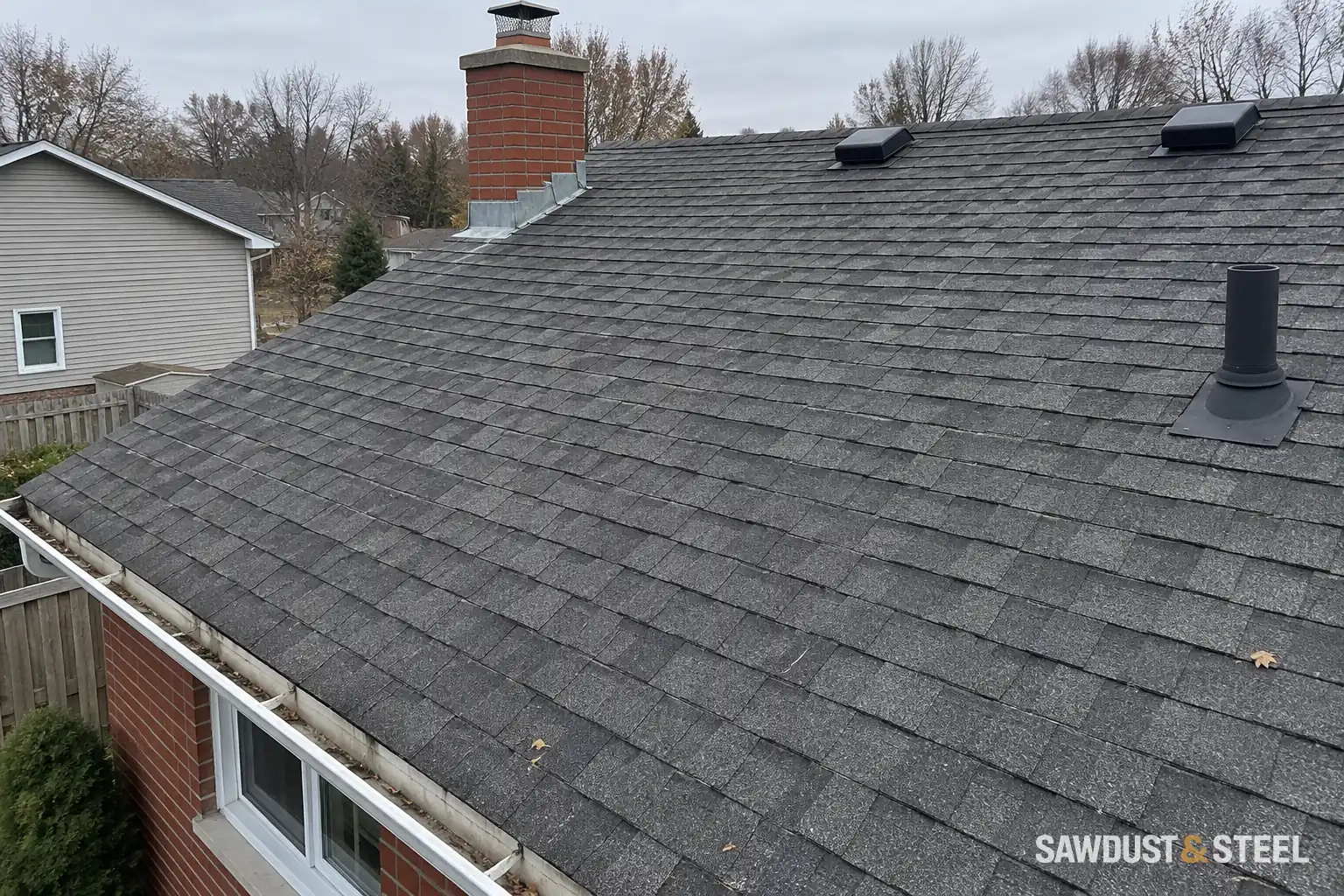
A homeowner, Grace, receives two opinions about the same roof photo. One says to tap the nail down. The other says the roof is finished. Neither has seen the whole roof. Grace has learned that a tiny silver dot can support a surprisingly large argument.
Ask for the pattern
A raised fastener can lift or damage the shingle above it. The important questions are whether the issue is isolated, whether the surrounding shingles remain serviceable, and what caused the fastener to lose its intended position. A repair should address that cause rather than simply flattening the visible bump.
IKO's raised-nails technical bulletin notes that raised nails do not necessarily require shingle replacement in every case. That is product guidance, not a diagnosis of your roof. The roofer should match the repair to the affected materials and their condition.
| Finding | What the assessment should resolve |
|---|---|
| A few local raised fasteners | Shingle damage and a suitable manufacturer-consistent repair. |
| Repeated problems across roof areas | Installation pattern, fastener suitability, and roof-deck condition. |
| Brittle, torn, or heavily deteriorated shingles | Whether local repair can be completed without causing wider damage. |
| Water staining or an active leak | The actual entry route, which may not be the nail visible in the photo. |
Request photographs that explain the scope
- Ask for overview photographs as well as close-ups.
- Have the roofer identify affected slopes and the approximate extent of defects.
- Separate local repair, any deck repairs, and replacement recommendations in writing.
- Ask why the proposed repair suits the roof's present condition and product instructions.
Observe from the ground or arrange a professional inspection. Do not climb onto a wet, icy, or steep roof to count nails. If there is an active leak, protect the interior only where safe and arrange prompt assessment; keep clear of wet electrical equipment and visibly sagging ceilings.
A repair can be right without being permanent
At Grace's house, the raised fasteners were concentrated near one section of the rear slope. We checked the surrounding shingles and accessible decking, marked the repair area on a wide photo, and explained which shingles would need replacement because they were already damaged. The rest of the roof was ageing but serviceable. She approved the local repair and kept the inspection photos for her eventual replacement quote. The repaired area still looks a little different in low sun; we discussed that before ordering the shingles.
If the nail photo has you questioning the rest of the roof, use the roof replacement warning signs to put it in context and identify what needs prompt attention. If the first clue was water indoors, check attic condensation versus a roof leak before assuming the visible nail caused it.