
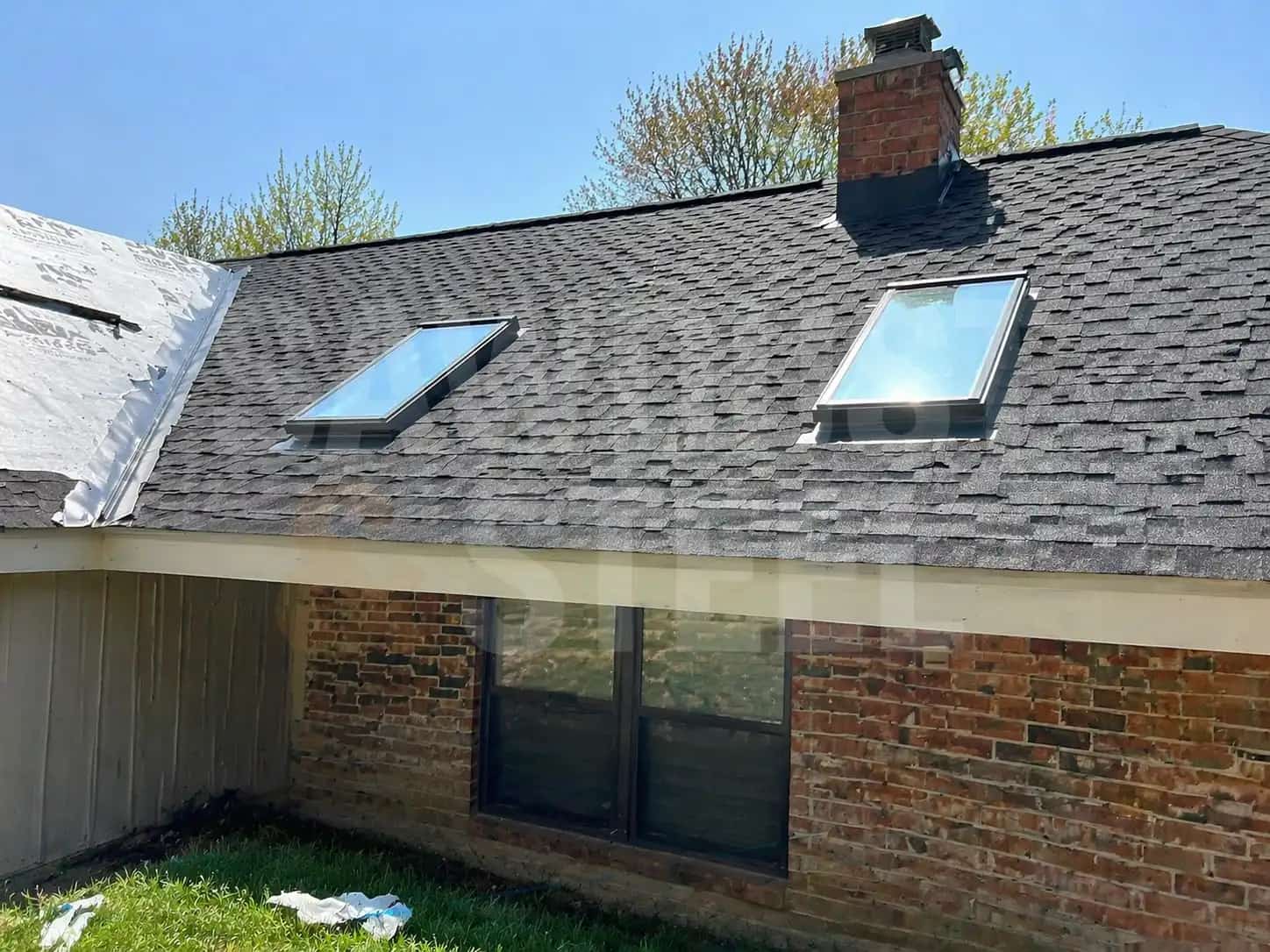
That small ceiling mark has been on the autumn to-do list for weeks. Before snow hides the roof, find out whether it's one failed detail or a wider problem. Active leaks, loose roofing, and exposed areas need attention; a sound roof with one defect may still be a focused repair. Here's what moves to the top of the list.
What should not wait
- Active water entering the attic, ceiling, wall, light fixture, or electrical equipment.
- Missing, torn, or loose shingles and exposed underlayment or sheathing.
- Open or failed flashing at a chimney, wall, valley, skylight, plumbing vent, or roof edge.
- Soft, rotten, or visibly deflected decking, fascia, rafters, or trusses.
- A sagging ridge or roof plane, new movement, or cracking associated with the roof structure.
- Loose material that could fall or blow from the roof during a storm.
Canada's current winter-storm guidance tells homeowners to winterize the house and check the roof for damage. If water is near wiring or a saturated ceiling is bulging, keep people away and call the appropriate emergency professional.
Check from the dry side
Natural Resources Canada's attic inspection guidance recommends checking framing, sheathing, soffits, and fascia for leaks, stains, mould, flaking, and rot. Water marks below valleys, chimneys, vents, and skylights can narrow the exterior inspection. Daylight at an unintended opening needs investigation too; light through an intended vent is a different matter. On a small autumn leak, the fresh wet trail ran along a rafter before dropping above the bedroom. We followed it back toward the penetration instead of opening the roof directly above the ceiling stain. That narrowed the repair, but we still checked the nearby decking before closing it.
From outside, stay on the ground and use binoculars or a qualified inspection. Look for missing tabs, lifted edges, cracked flashing, damaged vents, debris in valleys, sagging gutters, and uneven roof lines. Our Ontario roof warning-sign guide gives the longer visual checklist, while a drone roof survey can document inaccessible slopes from a safe position.
Repair or replace?
| More likely a repair | More likely a replacement discussion |
|---|---|
| One local defect on a generally sound, younger roof | Widespread curling, cracking, granule loss, or brittle shingles |
| A serviceable roof with one failed boot or flashing detail | Repeated leaks at several details or slopes |
| Sound decking and framing around the defect | Soft decking, rot, sagging, or broader structural damage |
| Matching material and a repair that preserves drainage | A patchwork plan that costs repeatedly without restoring the assembly |
What to put in the repair quote
Ask for the diagnosed water path, photographs, exact repair area, materials, flashing details, decking allowance, disposal, weather conditions, warranty, and what would trigger a stop or expanded scope. If the roof is too worn for a durable local repair, compare the full GTA roof replacement cost guide and the cold-weather replacement checklist before deciding. If the concern is a solid-fuel chimney rather than its flashing, the WETT inspection versus chimney-sweep guide separates those jobs.