
A shade sail can look almost weightless. Four corners, a little fabric, a few hooks. Then the turnbuckles are tightened and the afternoon wind arrives. The important part of the project is no longer the fabric colour; it is what those corners are pulling on.
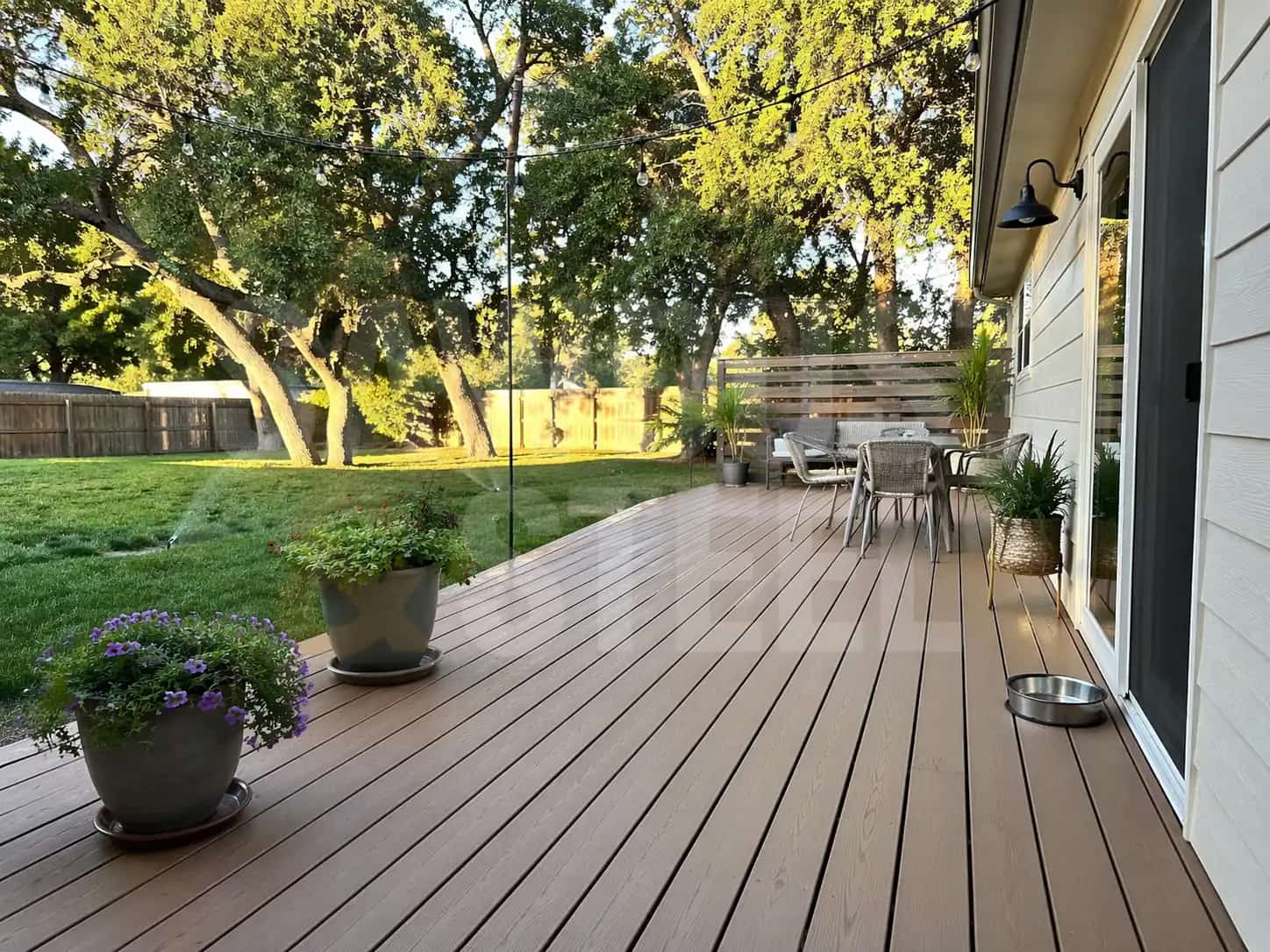
Start with the patch of shade you want, not the points that happen to be convenient. Mark where the afternoon sun falls across the table at the hours you actually use it. A sail placed neatly over the deck may cast its useful shadow somewhere else when dinner begins.
Leave room for the tensioning hardware
Measure between the proposed structural anchor points. The fabric cannot occupy that entire distance because the installation needs connectors and adjustment space. Coolaroo's shade-sail FAQ specifically directs buyers to account for tensioning hardware and the chosen mounting arrangement.
Position
Useful shadow and anchor location
Support
Structure behind the visible fixing
Adjustment
Space for specified tensioning hardware
Removal
Safe access before severe weather
Use these checks with the site and product details described below.
Make a simple plan with corner positions, heights, fabric dimensions and the direction each connection pulls. A larger sail is not necessarily an improvement if it leaves no room to tension it correctly. Nor should you shorten the hardware arrangement by omitting components from the specified kit.
Follow the force into something substantial
House siding, fascia and decorative trim are finishes, not evidence of a suitable structural anchorage. A fixing into the house needs a designed connection to adequate structure and a weatherproof penetration detail. The visible hook tells you very little about what is behind it.
An existing deck guard post was not necessarily designed for a tall extension carrying a sail. Attaching an extra post above the rail changes both the force and its leverage. Do not borrow a detail from a photograph of somebody else's deck. The Coolaroo planning guide treats fixing points and support selection as part of the installation, not an afterthought.
For a permanent installation, have the support arrangement assessed for the sail, exposure and site. That may mean independent posts with designed foundations rather than extending the deck railing. Locate utilities and private services before excavation. If a proposed anchor is a tree, consider its condition, movement and protection rather than wrapping hardware around the nearest trunk.
Keep the sail separate from other loads
Do not hang a chair, swing or light fitting from a sail connection simply because it looks substantial. Those loads need their own assessment. Our guide to hanging chairs and pergola supports explains why an attractive overhead structure is not automatically a suspension point.
Likewise, adding a sail to a deck that already moves is not a way to stiffen it. If the platform sways, resolve the deck's lateral movement first. A new tensioned surface can add forces to a structure whose existing load path is already uncertain.
Decide how it will come down
Coolaroo recommends removing its sails in severe storms or high winds. Build that task into the arrangement: safe access, a practical release sequence and somewhere to store dry fabric. A setup that requires balancing on a dining chair beside the deck edge is unlikely to get taken down promptly.
Ask how the particular fabric handles rain and what slope or shape the manufacturer requires. Breathable shade fabric is not automatically a rain roof. Do not tighten a sagging, water-filled sail while standing beneath it; investigate the product, tension and support arrangement after it is safely unloaded.
Before ordering, compare the whole installation with a suitable freestanding shade option. The sail itself may be inexpensive while structural posts, foundations and house connections make the project substantial. That can still be worthwhile, especially where the shadow lands exactly where you want it. Buy the complete shade solution rather than a piece of fabric that obliges you to improvise the rest.