
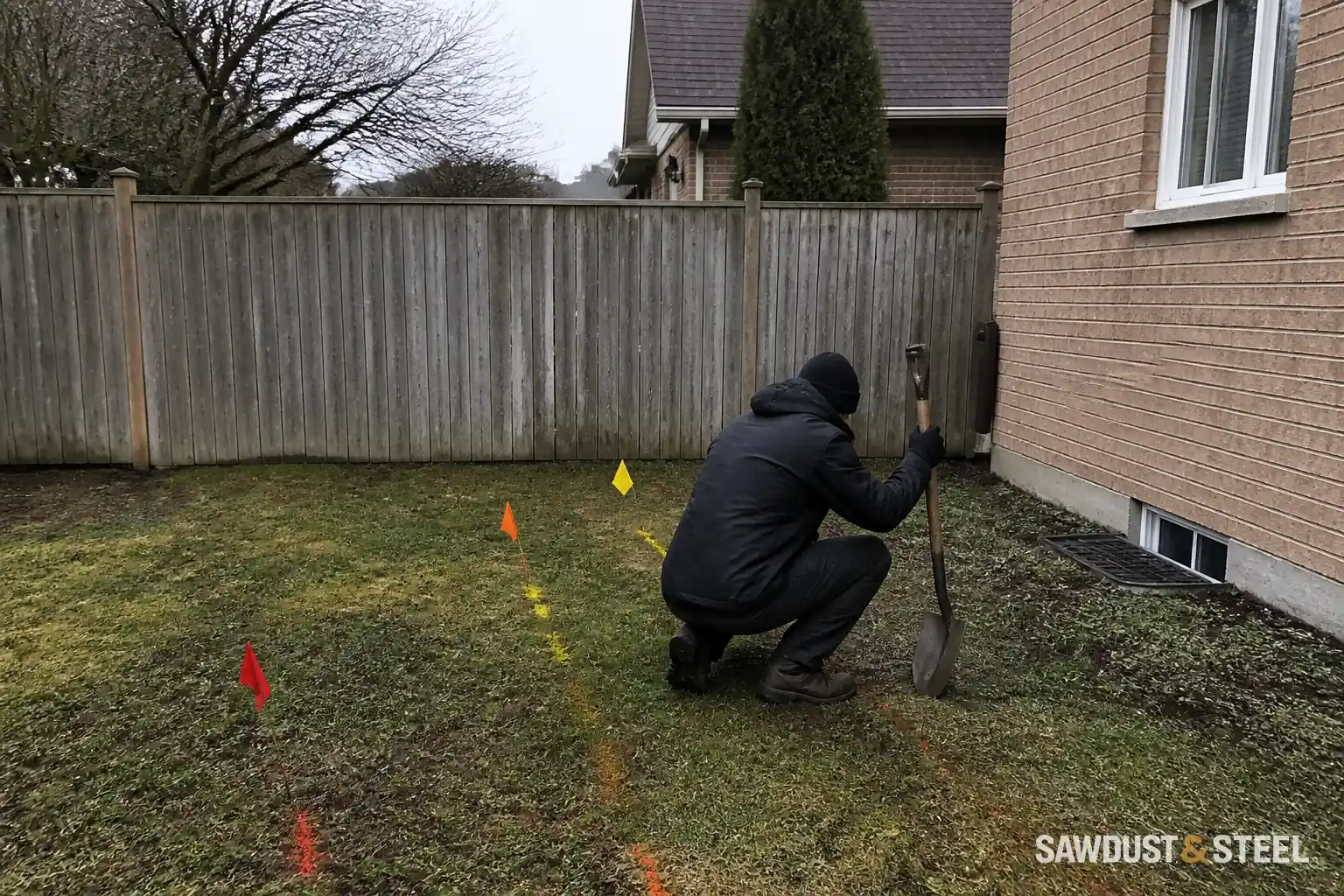
At a fence replacement, the old posts made the digging look straightforward. Then the owner remembered power had been run to a shed after the fence went in. We left the post-hole tools in the truck until the public responses and the separate private-line check covered the work. Request locates before you dig, even beside an old hole. Ontario One Call now operates as Ontario Dig Authority; its current locate guidance calls for at least five business days for a single-address project, or ten for a multi-address or large project. Public locates are free. Wait for every required response.
What happens after the request
Ontario One Call is the notification hub. It sends your proposed dig information to owners of buried public infrastructure. Those owners or their locate providers respond with a clearance or a completed locate with markings and paperwork. Ontario One Call does not drive out and paint every line itself.
- Describe the exact address, work type, dig area, depth, method, and planned date.
- Mark the proposed excavation area in white when instructed so the locator can identify the work area.
- Track every utility response through the request record.
- Do not start until all notified owners have responded with paperwork.
- Read the drawings, validity period, field markings, and special instructions before touching soil.
A response that says clear still comes with limits. It applies to the project area and details you submitted. Move the deck six feet, deepen the trench, or change from hand digging to machinery and you may no longer be working within that response.
Public locates do not cover every line on your property
This is the detail homeowners miss most. Ontario One Call covers the infrastructure owned by its public-utility members, generally up to the ownership or demarcation point. It says homeowners must separately arrange a competent private locator for privately owned buried infrastructure.
| Private line | Typical example | Why it gets missed |
|---|---|---|
| Gas | House to barbecue, pool heater, fire feature, or detached building | Installed after the utility service |
| Electrical | House to shed, detached garage, landscape lights, or gate | Owner-side wiring |
| Water and drainage | Irrigation, septic piping, private sewer, or yard drains | Not always owned by the municipality |
| Communications | Security camera, gate control, or private data cable | Small cable, large inconvenience |
Tell the locator about old outbuildings, capped services, pool equipment, yard lighting, and anything else that suggests later private work. Mention older private services even if the structures they served are gone.
Flags, paint, and the instructions that matter
Ontario One Call identifies the common colour system: red electrical, yellow gas or oil, orange communications, green sewer or storm, blue water, purple irrigation or slurry, pink temporary survey markings, and white proposed excavation. Colour tells you the utility type. It does not tell you permission to dig directly on the mark.
Follow the tolerance-zone and excavation instructions in the complete locate package. The tolerance zone is the area beside a marked service where special excavation precautions apply; the infrastructure owner's instructions define the work there. A flag doesn't tell you the depth, and a hand shovel can still damage a line. Clarify the instructions before starting, expose services only by the permitted method and support them where required.
How long a locate lasts
Ontario Dig Authority's locate guidance says responses are valid for at least 60 days. Read the expiry and conditions on each owner's paperwork; responses can arrive on different days. If marks disappear, the scope changes, the paperwork expires or the site no longer matches the drawing, arrange the appropriate remark or new locate before continuing.
Protect the markings during the work, but do not repaint a utility route from memory. Ask for the appropriate remark if the markings are no longer visible.
Who makes the request when you hire a contractor
The person doing the excavation should submit the locate request and have a valid package for the actual work. Put responsibility in the contract and ask for the request number and complete responses. We compare the final footing or post layout with the marked dig area before unloading equipment. If the owner has moved the garden gate since the request, that small design change still needs to be checked against the package.
For deck work, the locate comes after a realistic layout and before footings. Next, check the Ontario deck permit guide, then compare helical piles and concrete footings. Safe digging and good structure are different jobs. If you want one team to plan both, see our deck and patio service.