
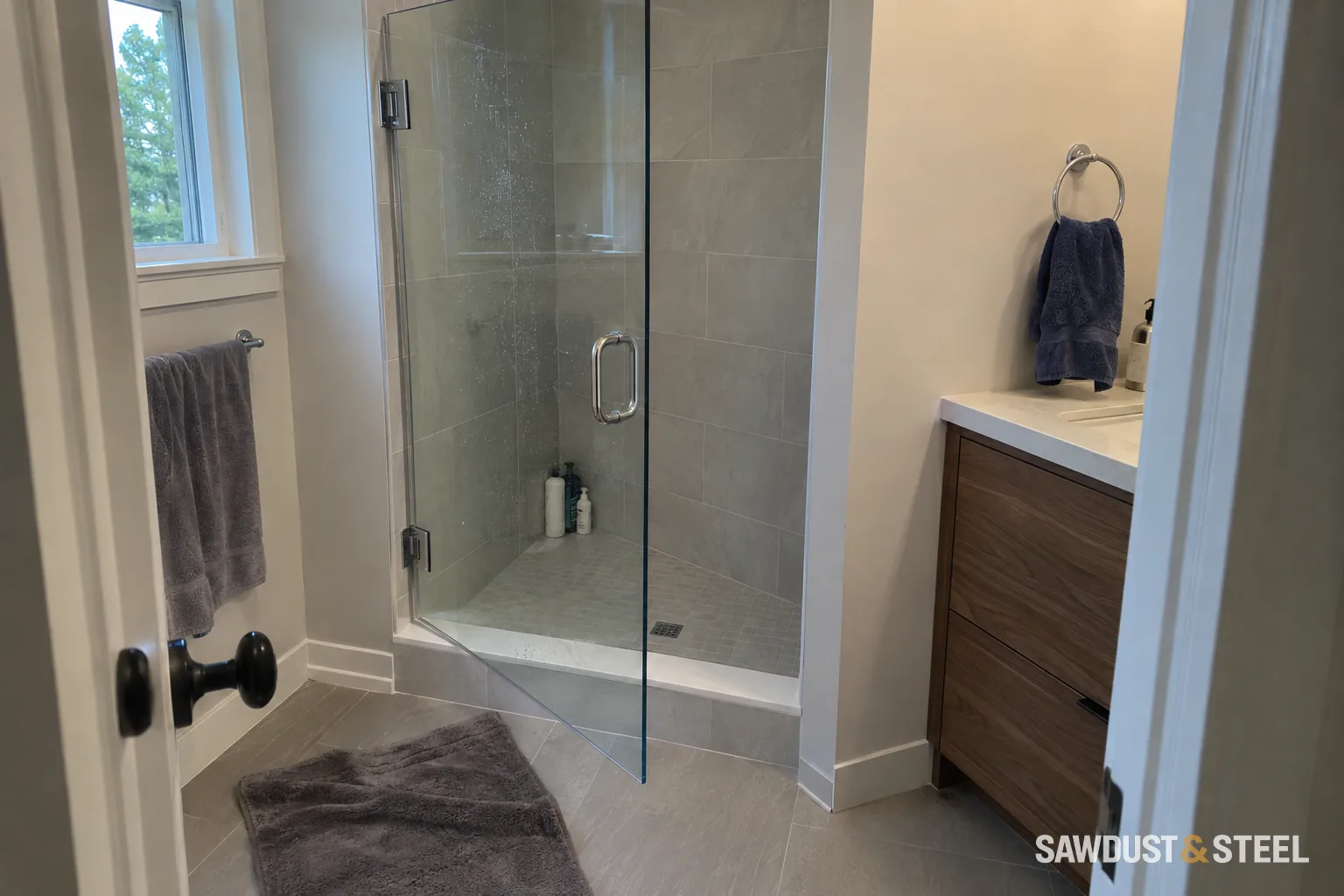
A bathroom, two repair visits, one stubborn line: Maya keeps a spare bag of grout under the sink because the shower corner opens every winter. By the third repair, the bag has started to feel less like maintenance supplies and more like a subscription.
Where the crack lives matters
| Crack pattern | What to investigate |
|---|---|
| Straight line where two planes meet | Missing or unsuitable movement-joint detail. |
| Cracks through the middle of tiles | Movement or a problem in the supporting assembly. |
| Loose tile, staining, or damp finishes nearby | Possible bond failure or water damage requiring a closer assessment. |
Schluter's perimeter movement-joint profiles separate tile from adjoining fixed elements while allowing movement. Depending on the assembly, a specified flexible sealant joint or suitable profile can do that job. The product, joint size, and preparation need to suit the location.
The replacement needs a joint, not a surface patch
Ask what will be removed and what the new sealant will bond to. Smearing silicone over the cracked grout leaves the rigid material in the movement space. The repair needs clean bonding faces, the specified joint width and depth, and preparation that protects the waterproofing behind the tile.
For example, LATICRETE's LATASIL instructions call for removing old sealant and contaminants, and using foam backer rod in deep joints or bond-breaker tape where the joint is too shallow for rod. That backing lets the sealant stretch between the tile edges instead of sticking to the back of the gap too. Follow the selected product's joint dimensions, primer requirements and cure period; colour matching is only one part of choosing it.
A sealant joint is not the waterproofing system
The visible joint and the waterproofing behind the tile have different jobs. A fresh bead cannot prove that the membrane, corners, or tub connection are intact. If water is appearing outside the shower, the repair needs to find its route rather than merely improve the line you can see.
- Photograph the dry joint before removing material, including the surrounding tiles.
- Ask whether the proposed repair matches the shower system's change-of-plane detail.
- Have old material removed without damaging the waterproofing behind it.
- Follow the sealant's preparation and cure instructions before using the shower again.
The fix still needs looking after
At Maya's shower, we checked the surrounding tile and moisture symptoms before treating the corner as a joint repair. The old rigid material came out carefully so the waterproofing behind it was not cut. The replacement joint followed the selected sealant's preparation and cure instructions, which meant using the other bathroom while it cured. The colour is close rather than invisible, and she still needs to inspect it. She no longer needs an annual bag of grout.
For the underlying assembly, read the shower waterproofing comparison. If tiles are changing too, check large tile in small bathrooms and the bathroom work sequence.