
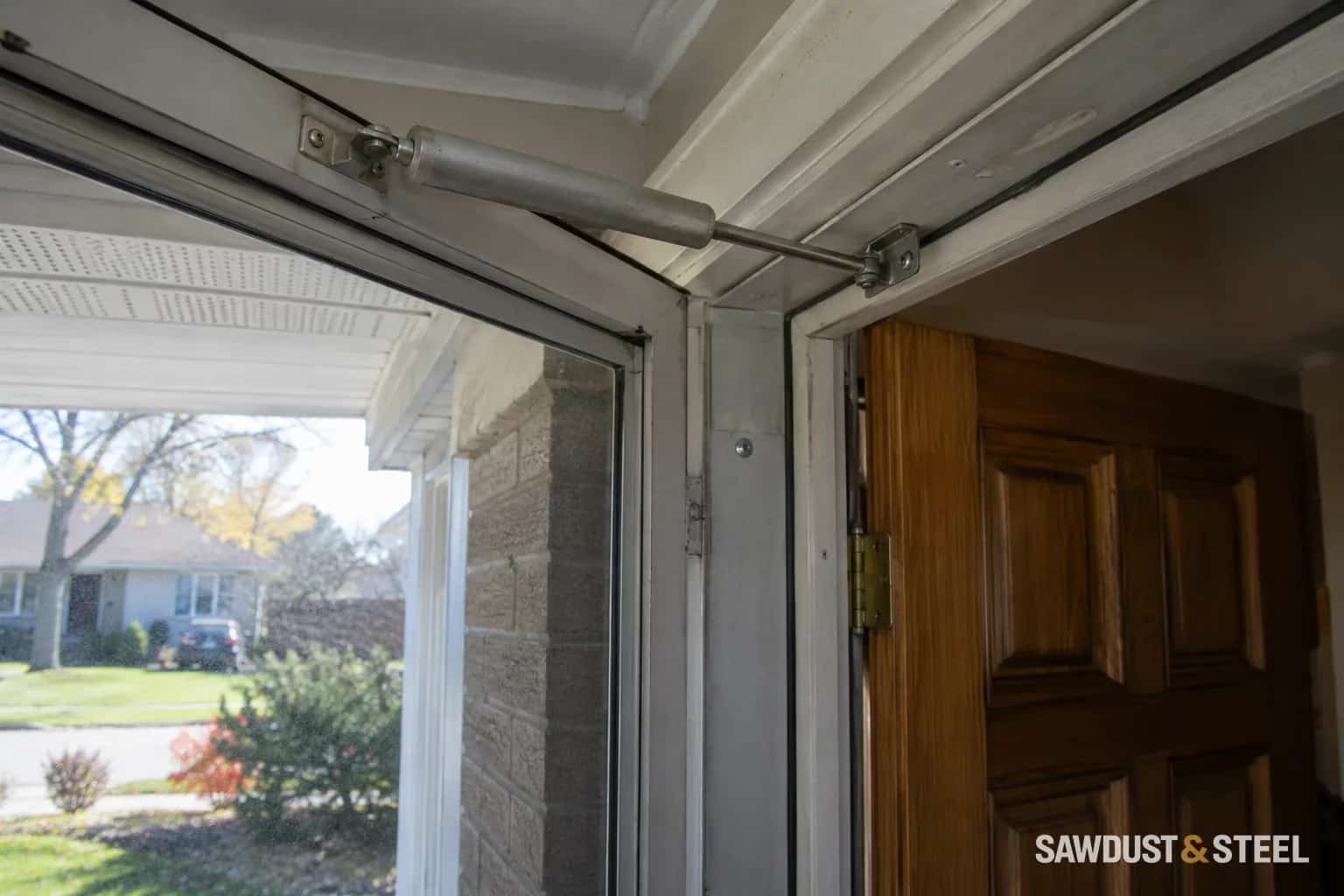
Compare the same swing with the entry door open and closed
Keep hands and feet out of the closing path and control the door if it is slamming. On a calm day, observe how it moves from an ordinary opening angle with the main door open. Repeat with the main door closed. Note whether it moves too fast throughout, slows near the latch, or physically rubs against the frame.
Andersen's Fullview installation guide calls for checking safe closing speed with the entry door both open and closed, because the storm door closes faster with the entry open Andersen: Fullview storm-door installation and closer adjustment.
If the behaviour changes markedly between the two conditions, account for that before increasing closing force. You want a door that operates acceptably in both conditions. A setting that works only when the main door is shut may slam when someone opens the entry door to carry groceries inside.
Check the brackets and sweep
Rubbing at the sill or frame
Resolve physical interference before changing closer speed.
Loose or bent bracket
Repair the attachment or replace damaged parts.
Only stops short with main door closed
Check the maker's trapped-air guidance.
Fast swing with sound hardware
Use the correct closer adjustment procedure.
Look for loose fasteners, split mounting material, a bent closer rod, a displaced hold-open washer or a sweep dragging on the sill. A door caught by wind may have damaged more than the closer. Do not keep tightening a bracket into a hole that no longer grips. If the frame or door is distorted, speed adjustment is not the repair.
One screw does not mean one universal adjustment
Find the door and closer model. Some systems use two closers or concealed mechanisms, and their setup differs from a single exposed cylinder. Follow the maker's stated direction and adjustment limits, make a small change and retest. Do not back an adjustment screw out completely. If it will not respond within the permitted range, investigate a failed closer rather than continuing to turn.
Replace with a compatible closer and brackets specified for the door, not simply a cylinder of similar length. Door weight, geometry and mounting positions matter. Keep any required safety hardware and stops in place. A chain or wind restraint is not a substitute for a sound closer attachment.
Test the last few inches as well as the big swing
Check that the latch engages without a slam, the handle releases normally and the door does not rebound. Repeat with the entry door open and closed, and check the manufacturer's seasonal guidance if the screen or glass configuration changes. Keep watching during the next windy spell. If a recent entry-door seal repair changed the behaviour, that is useful information for the service technician, not a reason to remove the new seals indiscriminately.