
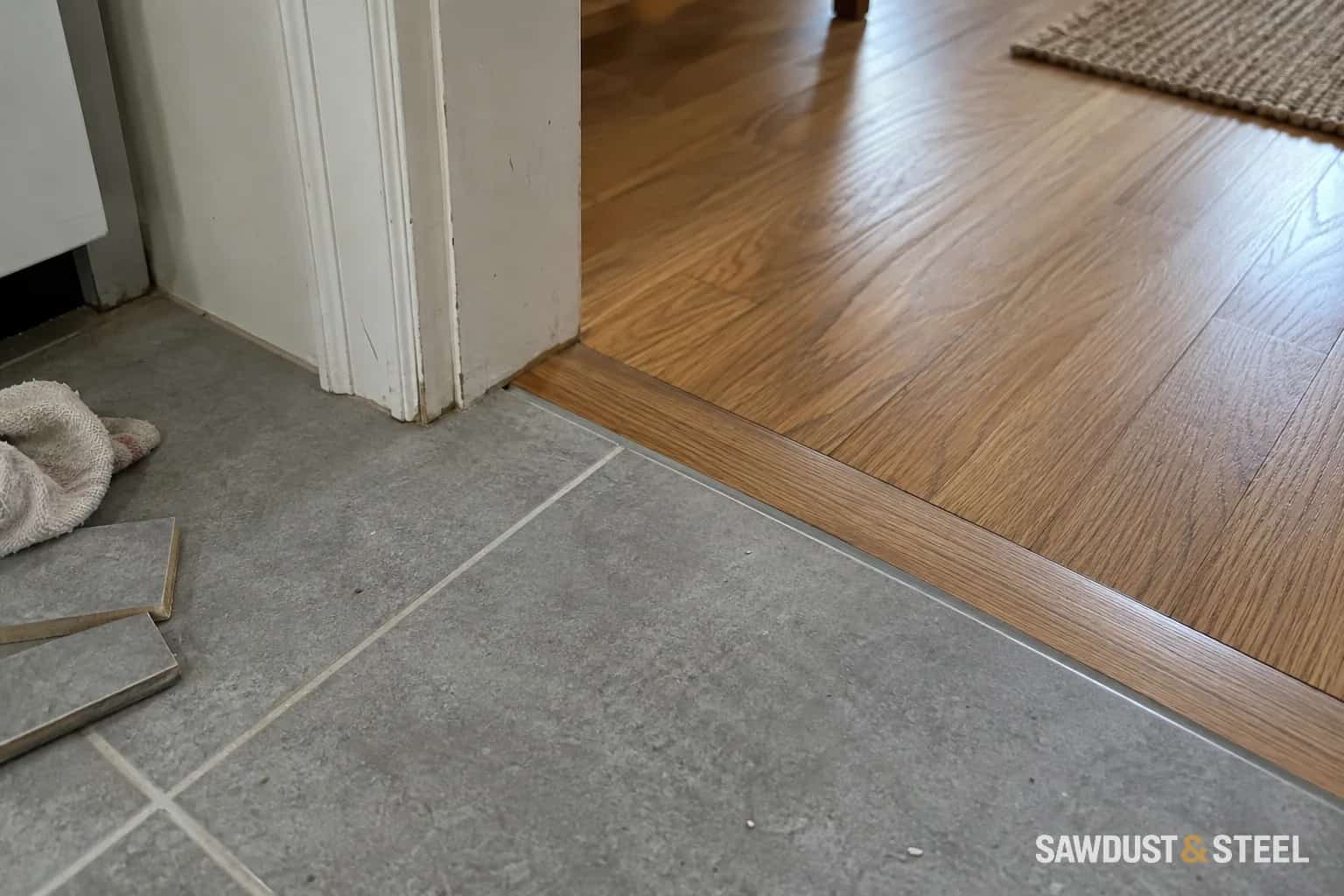
You tap one tile and it sounds different from the others. It is tempting to work across the room with a coin and label every hollow note a failure. Use a light check to map the area if needed, but do not strike tiles hard enough to create the damage you are trying to find.
Sound is one clue, not the diagnosis
TCNA: hollow and loose tile explains that some well-bonded tiles can sound hollow because of the underlying assembly. It also lists several causes of real loss of bond. The useful distinction is whether the floor only sounds different or also moves, cracks or loses grout during ordinary use. An on-site assessment is needed to establish the cause.
Different sound only
Map the area and identify the installation assembly.
Cracks or loose grout
Record the pattern and whether it is spreading.
Tile movement
Avoid loading the area and arrange assessment.
Recent water or substrate work
Include that history before a repair method is chosen.
Photograph the joints as well as the tile
Look for cracks that continue across several pieces, gaps at room edges and recurring grout failure. Note whether the floor is over a wood-framed structure or concrete if you know. Keep old installation photographs, product names and any waterproofing records. Do not lift trim or drill through the floor just to answer those questions; the inspection can establish what is missing.
Do not buy an injection repair before finding the cause
An advertised rebonding product may sound attractive because it avoids demolition. Ask what evidence supports its use on this particular assembly and how membranes or heating will be protected. A local treatment does not necessarily correct movement elsewhere. Also ask how success will be judged: a quieter tap is not the same thing as proving the whole supporting system is sound.
Plan a local opening carefully if it is needed
If the installer recommends removing a tile, agree on the diagnostic purpose, protection of hidden layers and a reinstatement plan. Locate spare tiles and check their dimensions and shade before removal. A discontinued tile can make a small repair visually awkward, especially in a doorway where the joint layout is obvious.
If replacement changes the adjoining edge, revisit the floor transition profile. For a damaged wood or vinyl board instead, plank replacement has different access choices.