
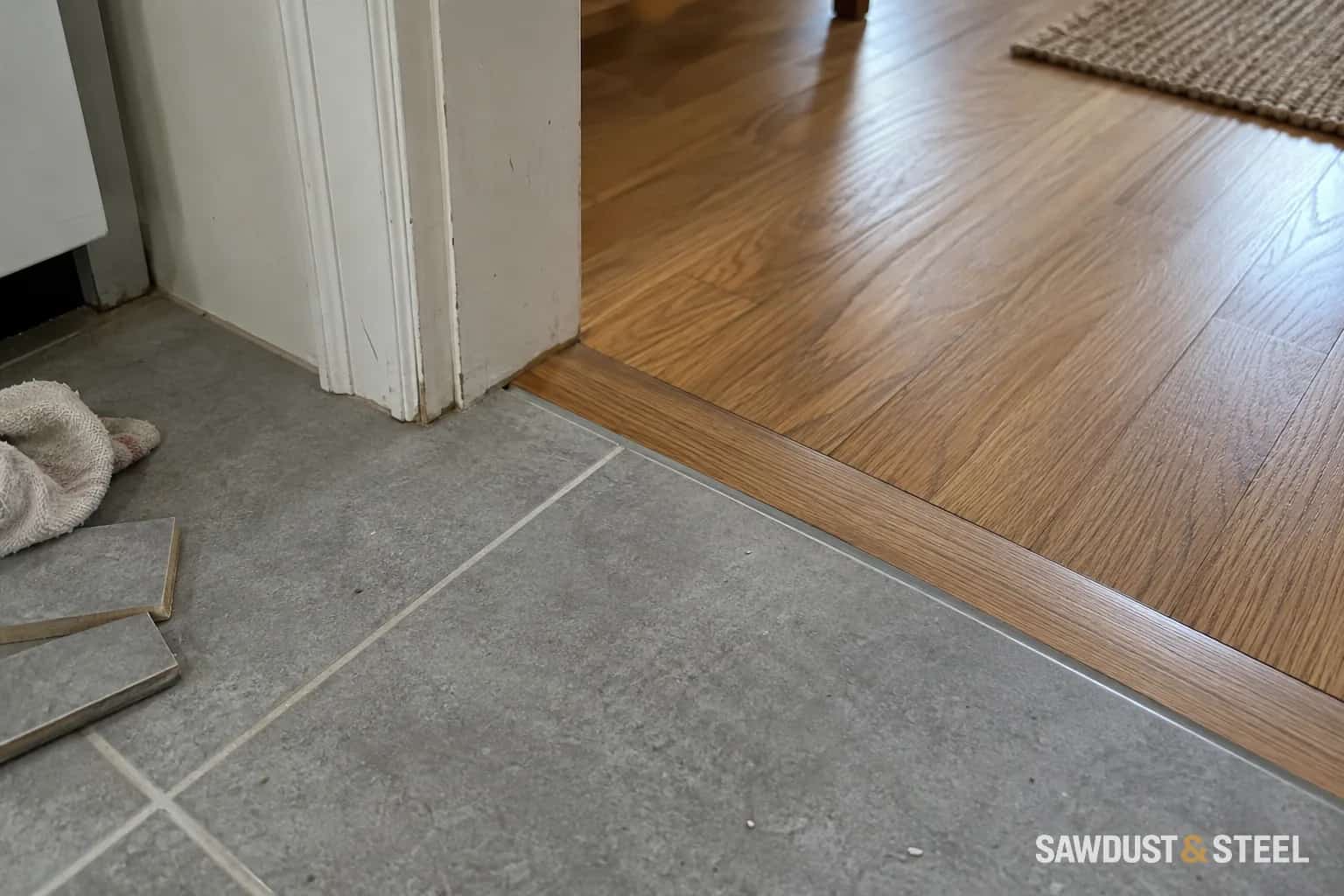
A long rectangular tile can look wonderfully calm in a box. Put it in a half-offset pattern, shine afternoon light across the floor, and suddenly every edge seems to have an opinion. The word for a difference in height between neighbouring tile edges is lippage.
A long tile is not a perfect ruler
Tiles can have some curvature. In a half-offset pattern, the end of one tile meets the middle of its neighbour. If those points sit at different heights because of the tile’s shape, the layout can make the difference more noticeable.
Daltile’s wood-look tile guidance recommends limiting the brick-pattern overlap to 33 percent for the products discussed. Read the guidance for the tile you are buying; do not turn that example into a blanket rule for every rectangular tile.
Ask for a small layout before a large commitment
- Open more than one box and check the actual tiles being installed.
- Compare the proposed offset with the manufacturer’s recommendation.
- Look at a sample arrangement with the specified grout-joint width.
- Consider the light from windows and fixtures in the finished room.
- Agree on the layout and preparation before installation begins.
A sample will not predict every detail of a completed floor, but it is much better than discovering on grouting day that you and the installer imagined different patterns. This is also the time to discuss cuts at the doorway and the wall you see first.
Clips cannot replace a suitable surface
The floor or wall beneath the tile needs the preparation required by the selected system. A tile-levelling clip is an installation aid, not permission to ignore a hump or dip. Our guide to flat versus level floors explains why those are separate questions.
The Tile Council of North America’s explanation of lippage and warpage describes how substrate variation, tile shape, joint spacing, and lighting affect the result and its appearance. Its older numerical tables should not substitute for the current specification applicable to your tile and installation.
If the floor is already down
Record the locations that concern you and whether edges catch a foot or cleaning tool. Take photographs in ordinary room light, as well as a closer view. Ask the installer to assess the actual edge-height differences, tile characteristics, and applicable tolerances.
A dramatic side light can reveal small variations; it cannot by itself establish whether the work meets the specification. Equally, a real catching edge should not be dismissed with “all tiles do that.” Ask for a measured explanation and a proposed remedy where needed.
Do not grind a finished tile edge or scrape out joints as a first experiment. Repairs can affect the surface, neighbouring tiles, and waterproofing below. Settle the cause and method before a small annoyance becomes a larger patch.