
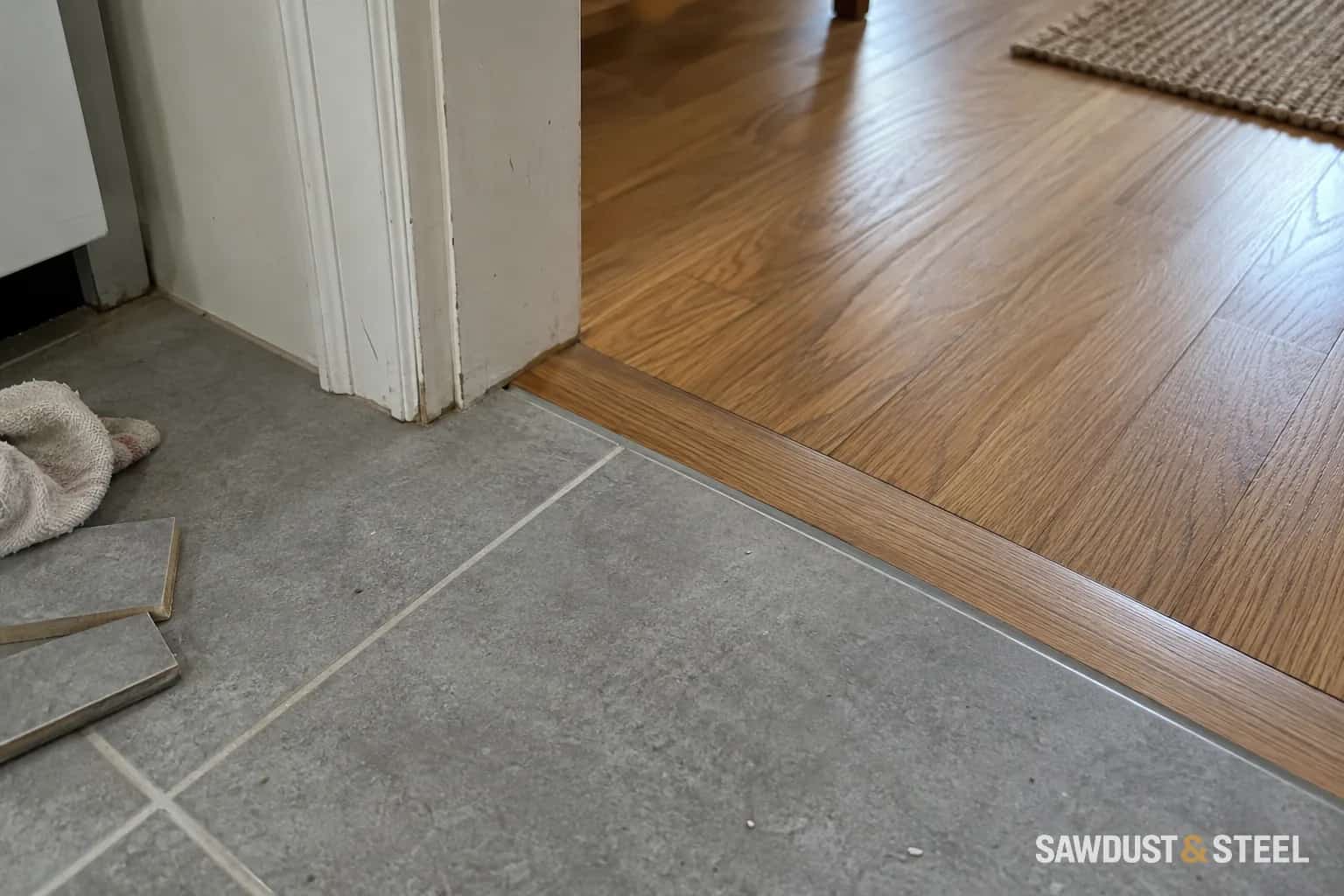
One tile through the hall and bathroom can make the rooms feel connected. The question is whether the installation beneath that calm surface has room to move. A doorway is a good place to have that conversation before the tile grid becomes permanent.
Three lines that can look similar
| Detail | Its job |
|---|---|
| Ordinary grout joint | Fills the specified space between neighbouring tiles. It is not a substitute for a movement joint. |
| Edge or transition profile | Protects an edge or resolves a transition. Its appearance alone does not establish movement capacity. |
| Movement joint | Accommodates movement using the specified flexible sealant detail or a suitable manufactured profile. |
Schluter's profile guide separates edge protection and transitions from movement-joint products. When someone proposes a metal strip at the door, ask which function it provides and how the surrounding assembly is detailed.
Why the doorway deserves a drawing
A narrow opening may connect differently shaped rooms, different substrates, or areas with different heating and sunlight exposure. Schluter's movement-joint guidance specifically includes doorsills and transitions to restraining structures among the locations to consider.
Ask the installer to show the proposed joint relative to the closed door, tile cuts, and adjacent finish. A necessary joint can often be coordinated with the layout; hiding the discussion until grouting day makes the available choices much less pleasant.
- Identify what lies beneath the doorway, including a change of substrate or an existing joint.
- Show the finished height of both rooms, including membranes, adhesive, and flooring.
- Name the movement-joint product or sealant detail, including its width and colour.
- Check the closed-door position and remaining door clearance against the finished assembly.
- Include the room perimeter and other required joint locations in the same plan.
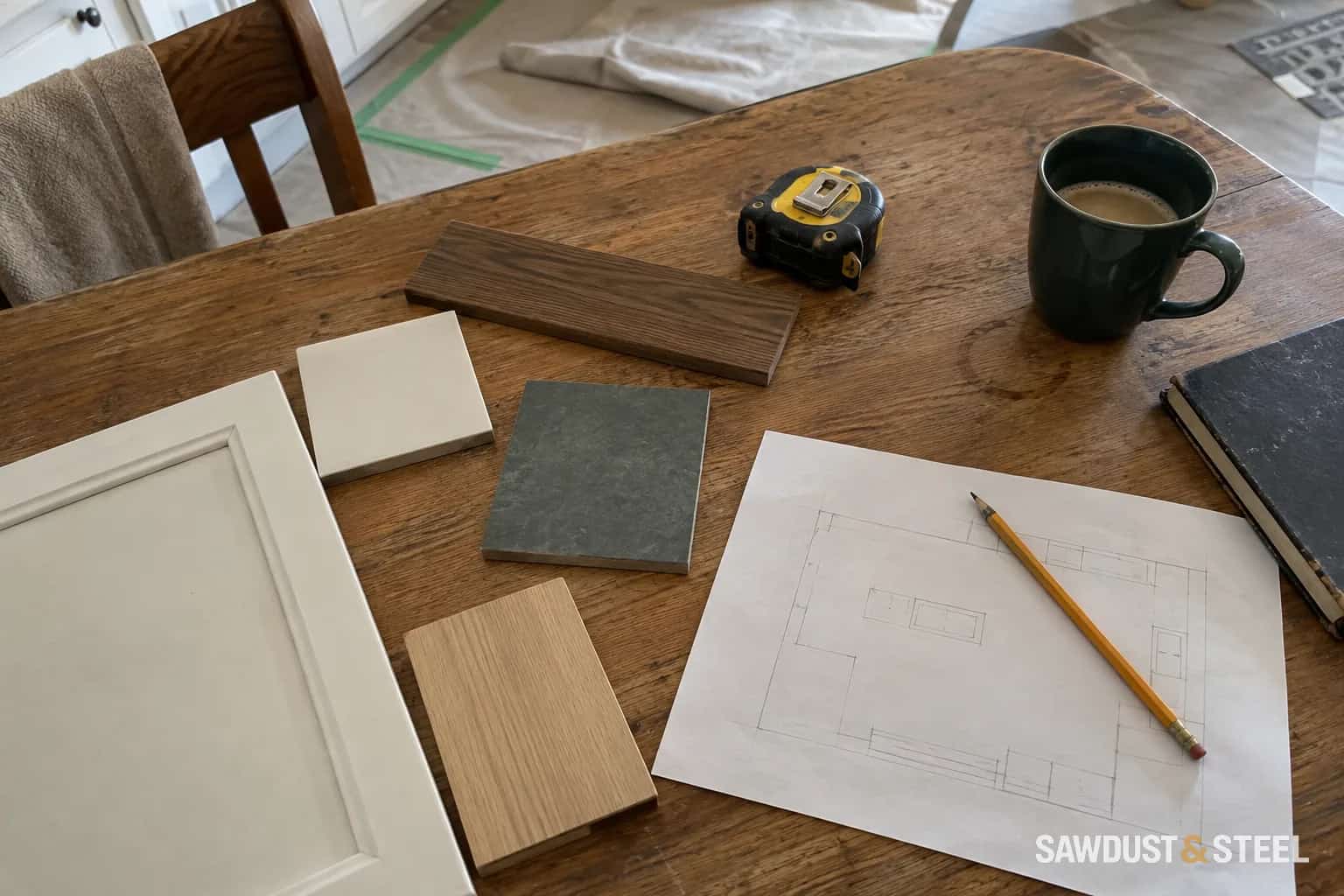
There is no room-count shortcut
Two small rooms do not automatically need the same treatment as one long sunlit floor. The Tile Council of North America explains that movement-joint placement and frequency depend on site conditions, with moisture and direct sunlight affecting the arrangement. Its EJ171 detail provides guidance for the designer and installer.
For your project, ask what conditions determined the layout. The answer should describe this floor, not just a favourite distance repeated from another job. A movement-joint plan also does not replace the separate checks for a sound, sufficiently flat substrate.
If the doorway joint is already cracking
Photograph where the crack starts and ends, whether it crosses tiles or follows joints, and whether either side has changed height. Keep any product records and installation photographs. Recurring cracking needs an assessment of the assembly rather than another automatic grout patch.
Do not assume a surface bead of sealant can turn any existing crack into a correctly designed movement joint. Ask what caused the movement, which layers need attention, and how the repair will connect to the surrounding floor. The visible line is the final detail, not the whole repair.