
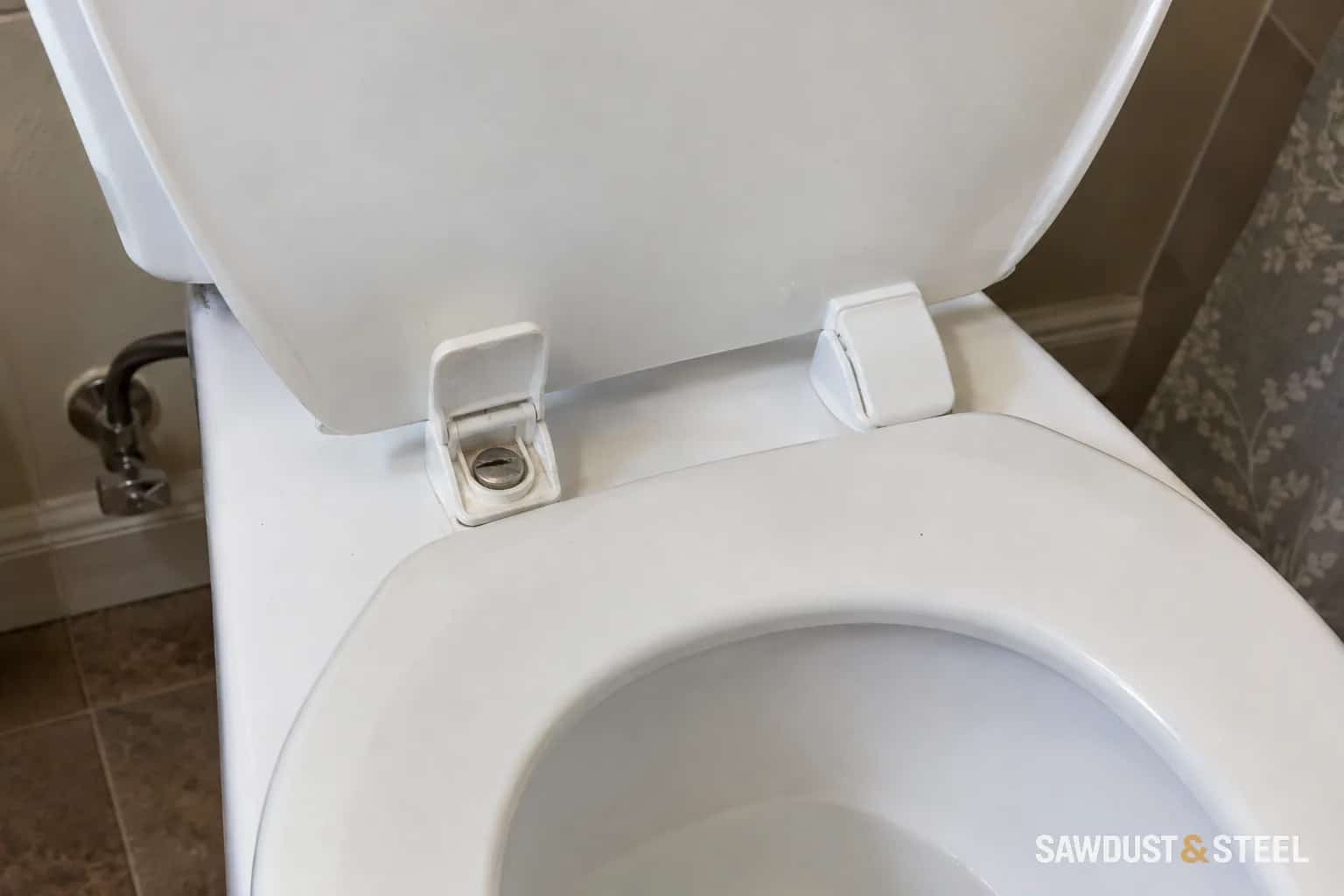
The showroom label says comfort height. Your feet say otherwise. Toilet height is one of those small purchases that becomes a household opinion several times a day, so it deserves more thought than matching the white to the basin.
Measure the surface you actually sit on
KOHLER's toilet buying guide measures height from the floor to the top of the seat and distinguishes standard from chair-height models. Retail listings also show overall tank height and bare bowl height. Those are different measurements. Ask the supplier which dimension is on the drawing before comparing two models.
Measure your existing toilet with its normal seat down and the lid up. Note what works: feet supported, no awkward drop, easy standing, enough room beside the bowl. If the new floor will be thicker, use the proposed finished floor as the reference. Include the selected seat rather than assuming every seat adds the same amount. For example, a drawing showing a 16-inch bowl plus a 1-inch seat gives a 17-inch finished sitting height; the tank height tells you nothing about that calculation.
Taller helps some people and hinders others
CMHC's bathroom accessibility guidance explains that preferred height depends on the person and transfer method. It cautions against raised seats that leave feet unsupported and notes the relationship between a wheelchair seat and toilet during transfers. That is a good reason to involve the user and their occupational therapist when mobility is changing.
A tall adult who struggles to rise from a low seat and a shorter adult who wants both feet firmly down may prefer different heights. If the house has two bathrooms, they need not contain identical toilets. In a shared bathroom, try the proposed height on a stable, suitable demonstration fixture with appropriate assistance. Do not create a wobbly test by stacking loose cushions or blocks on a toilet.
| Check | What to bring to the supplier |
|---|---|
| Finished seat height | Current measurement and the exact new seat model. |
| Transfer and support | How the user approaches, sits and stands, including any prescribed equipment. |
| Room fit | Bowl projection, nearby door movement and the existing rough-in. |
| Controls | Flush position and bidet controls the user can actually reach. |
A bidet seat changes the calculation
A thicker cleansing seat can change the final sitting height and the usable opening. Check bidet seat compatibility before ordering the bowl. Also confirm that the rough-in still fits the finished wall; a comfortable height cannot rescue the wrong plumbing fit.
Keep support equipment separate from decorative hardware. An ordinary towel rail is not a transfer aid, and a raised seat must be compatible, securely installed and appropriate for the user. If the room itself makes transferring awkward, the next purchase may need to be a better layout rather than an even taller toilet.
Write the final height into the order
Record the bowl model, seat model and expected floor-to-seat height together. For a wall-hung toilet, have the installer confirm the finished height before the carrier and wall are closed. At handover, check the seat is stable, the flush is reachable and the intended user can approach comfortably. This is a better acceptance test than whether the tank lines up with the window trim.