
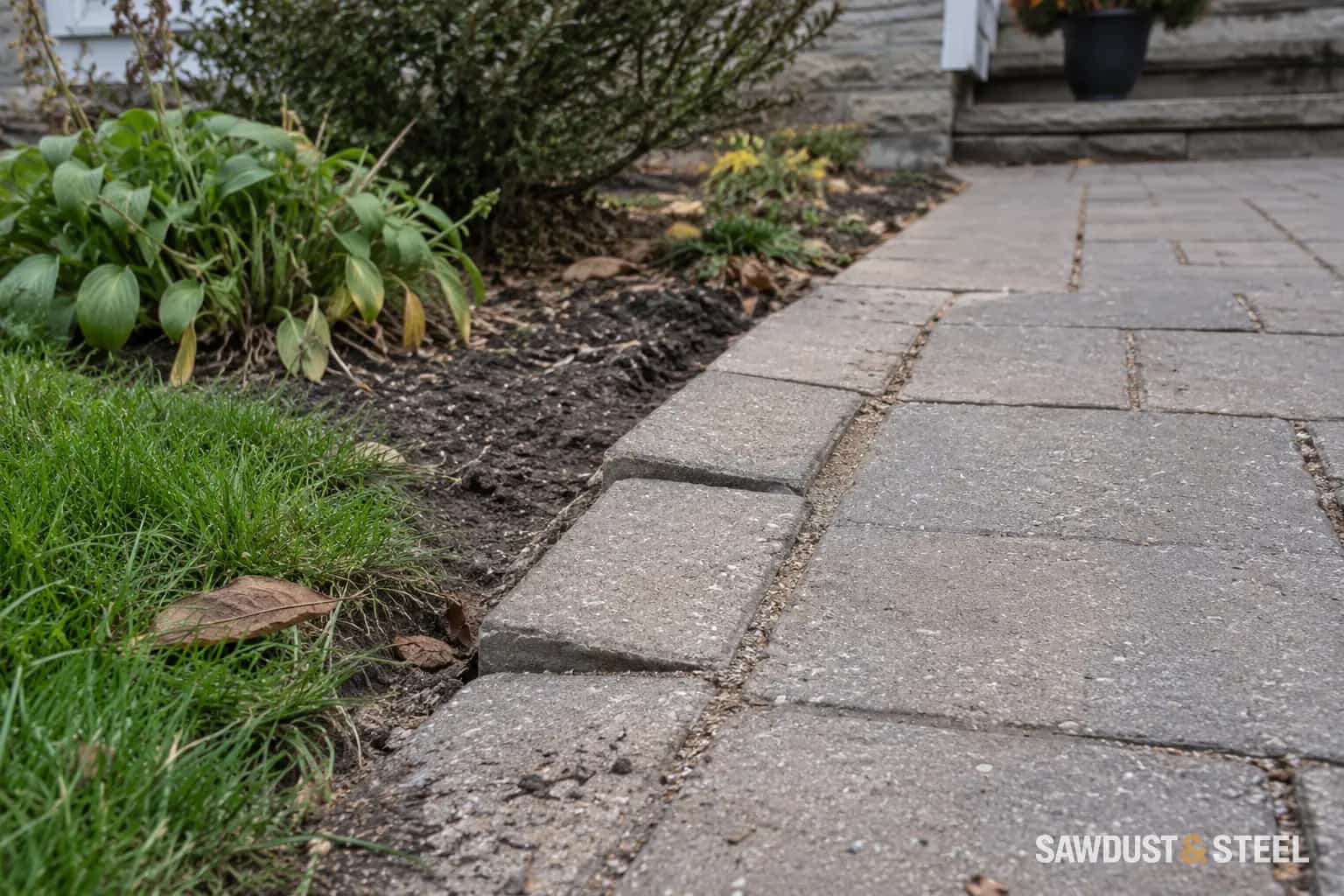
One corner of a paver rises, a chair rocks and the nearby tree becomes the obvious suspect. A root may indeed be involved. But a tree beside an uneven patio is not proof that every displaced stone is being pushed from below.
Read the pattern before lifting the paving
Photograph the raised area and its relationship to the tree, patio edge and drainage. A narrow ridge differs from broad settlement or an eroded border. Note when it appeared and whether water collects nearby. Keep people away from a trip hazard while the cause is assessed.
Toronto's tree-protection guidance notes that infrastructure problems, including drainage and freeze-related failures, can precede roots entering the available space. Root presence and the original cause of failure are not always the same thing. That is a useful reason to examine the paving base as well as the tree.
A root is not spare material
The Royal Horticultural Society's guidance on trees near buildings discusses local paving damage and warns that cutting substantial roots near a tree can damage or destabilize it. Its horticultural explanation is useful here; it does not establish Ontario permit rules or a safe cutting distance for your tree.
Do not dig down and sever whatever prevents a paver from sitting flat. Root importance depends on the species, tree condition, size, location and other roots already lost. A photograph rarely settles those questions. An arborist can help determine whether the route should move, the surface should change or any root work is appropriate.
- Identify whether the tree belongs to you, a neighbour or the municipality.
- Check the municipality's tree and ravine protection rules before excavation or grade changes.
- Describe the proposed work, not just the tree diameter: excavation, compaction and added soil can all matter.
- Ask the arborist and paving contractor to agree on a workable detail before either starts.
Compare repairs that do not begin with root cutting
| Possible approach | What needs resolving |
|---|---|
| Lift and relay a locally failed base | Whether excavation and compaction can occur without harmful root disturbance. |
| Move the path or patio edge | Useful clear width, access, drainage and the protected root area. |
| Change the surface or route design | Trip-free transitions, maintenance and suitability near the tree. |
| Retain the layout with a designed repair | Arborist guidance and a durable paving detail, rather than repeated patching. |
Adding a mound of sand over a root is not automatically benign. It changes levels, can bury more of the root zone and may create a new raised edge. A repair also needs to keep surface water moving appropriately. Do not solve one rocking chair by directing runoff toward the house.
If the proposed new level crosses a gate opening, check the entire gate sweep over rising ground. A gate can clear the paving when closed and strike it halfway open. Establish that relationship before the contractor fixes the final levels.
Toronto requirements are local, not an Ontario shortcut
In Toronto, protected-tree and ravine rules can apply to work involving excavation, grade changes and root disturbance. Use the City's current guidance to determine the application and arborist information required for the actual work. Other municipalities use their own rules; Toronto's thresholds and process should not be copied into a project elsewhere.
For the first enquiry, provide the address to the relevant municipality, photographs, tree location and a sketch of the disturbed area. Keep the tree's base and visible roots unobstructed while advice is obtained. An emergency trip-hazard response should still avoid unplanned cutting or excavation.
Choose a repair with room for the tree
The best long-term answer may be a slightly different patio outline rather than a perfectly restored original rectangle. Ask how the proposed surface will be maintained as the tree grows and how transitions will stay usable. A modest layout change can be easier to live with than lifting the same row of pavers every spring.