
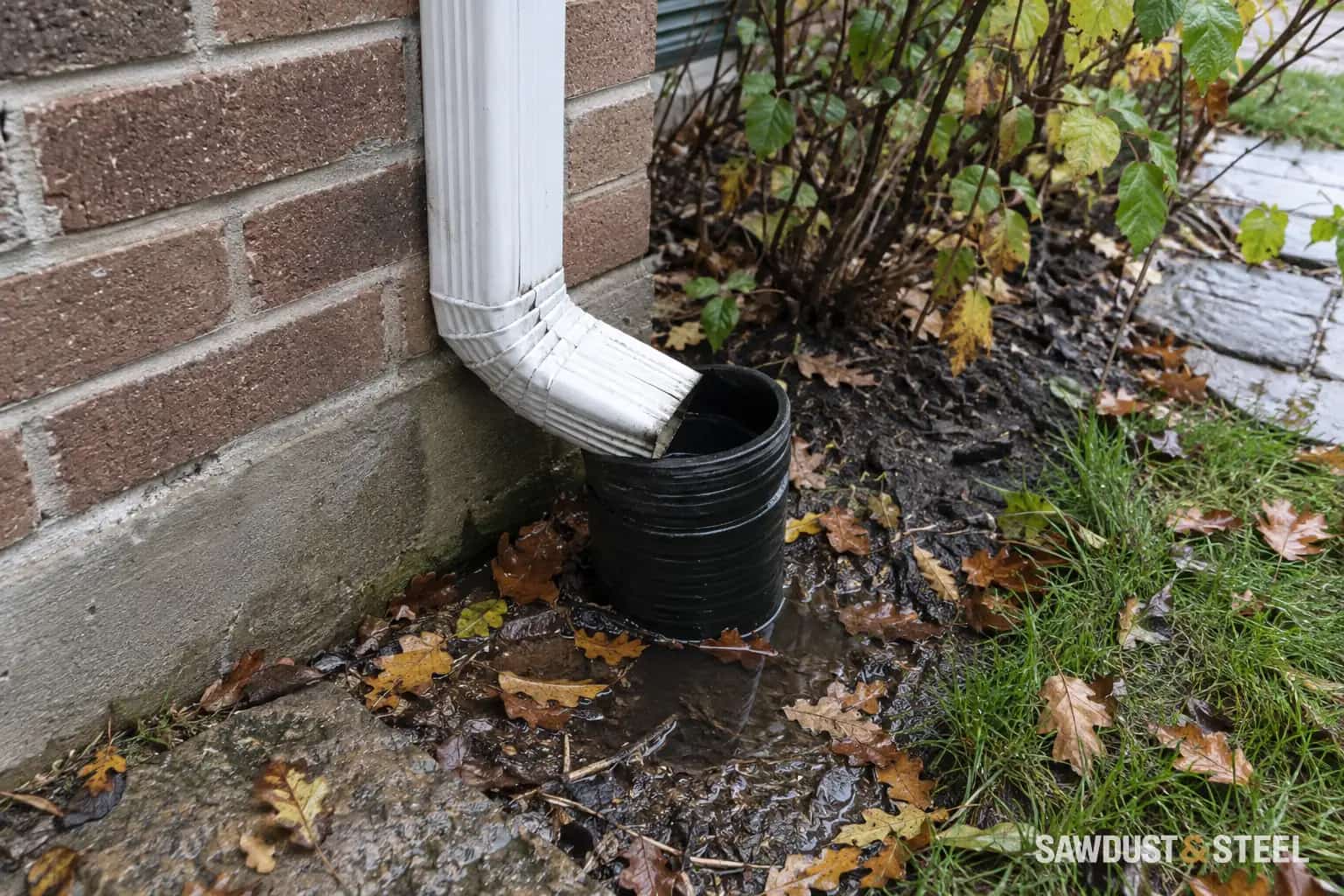
Rain pours into the downspout, reaches the pipe at ground level and comes straight back out. The gutter may be perfectly clean. The problem can be farther along a buried route that nobody has looked at since the paving went down.
Do not begin by sealing the gap around the downspout. That may hide the visible overflow while leaving water under pressure somewhere less convenient. First establish the route, the destination and what changes when the rain becomes heavy.
Record where the overflow begins
Watch from a safe position during rain and photograph the first escape point. Does water spill from the gutter, an elbow, the ground-level connection or a nearby drain? Does it happen in modest rain or only during an intense storm? Are other downspouts or floor drains affected at the same time?
| Finding | Possible next step |
|---|---|
| Debris in an accessible section | Suitable clearing and maintenance |
| Defect on inspection | Repair the damaged pipe or joint |
| Several connected routes back up | Assess downstream capacity or surcharge |
| Unidentified destination | Locate and confirm the system before alteration |
Those observations do not prove the cause, but they help separate a local obstruction from a wider capacity or surcharge problem. If water is reaching the basement or electrical equipment, treat that immediate situation first rather than continuing an outdoor experiment.
Find out what the pipe connects to
Look for drawings, service records, visible cleanouts and a known outlet. The pipe might lead to a municipal connection, a private drainage system or an old arrangement that no longer works as intended. Its colour and diameter are not enough to identify the destination.
Toronto's downspout-disconnection guidance explains the local requirement and the need to cap the remaining sewer standpipe when disconnecting. Check the applicable municipal rules and any exemption process before altering the connection. A buried pipe that existed when you bought the house is not proof that it should remain connected indefinitely.
A drainage contractor may need to clear or camera-inspect the line and locate defects or the outlet. Ask what the inspection can establish and request the findings. Keep the video or report with a sketch showing access points so the next investigation does not start from zero.
Separate blockage from the wider water system
Leaves and sediment can obstruct a route. Roots, broken joints or collapsed sections can require repair rather than cleaning. Water backing up from farther downstream can produce similar symptoms, so a clear first section does not necessarily mean the whole system is adequate.
The City's basement-flooding information distinguishes overland water and sewer-related problems. Tell the investigator about any basement backup, recent paving, neighbouring drainage work or changed downspout connections. Those details can matter more than the age of the gutter.
Avoid chemical drain cleaners or aggressive pressure methods in an unidentified system. Ask the professional to choose a method suitable for the pipe and its condition. Digging at the first wet patch without locating services and tracing the route can damage an unrelated line while missing the real problem.
Rerouting needs a destination, not just an extension
Where disconnection or surface discharge is appropriate, route water away from the foundation without creating a hazard or sending it onto another property. Consider winter ice, doorways, stairs, window wells and the grade beyond the visible end of the extension.
Our downspout-across-a-walkway guide helps identify a common compromise that should not become the permanent solution. A rain barrel also needs a functioning overflow and seasonal arrangement; see rain-barrel and winter discharge planning before treating a barrel as unlimited storage.
Verify the repair in real rain
After work, inspect the former overflow point, the outlet and the ground near the house. Look for erosion, ponding and water taking an unexpected route. A brief hose test can help with a local check, but it does not reproduce every storm or downstream condition.
Retain the route drawing, cleanout locations, inspection findings and any approvals. Keep access points visible instead of burying them under the new planting bed. Once the water path is understood, maintenance becomes much simpler: you know what to keep clear, where to look during rain and whom to call if the same symptom returns.