
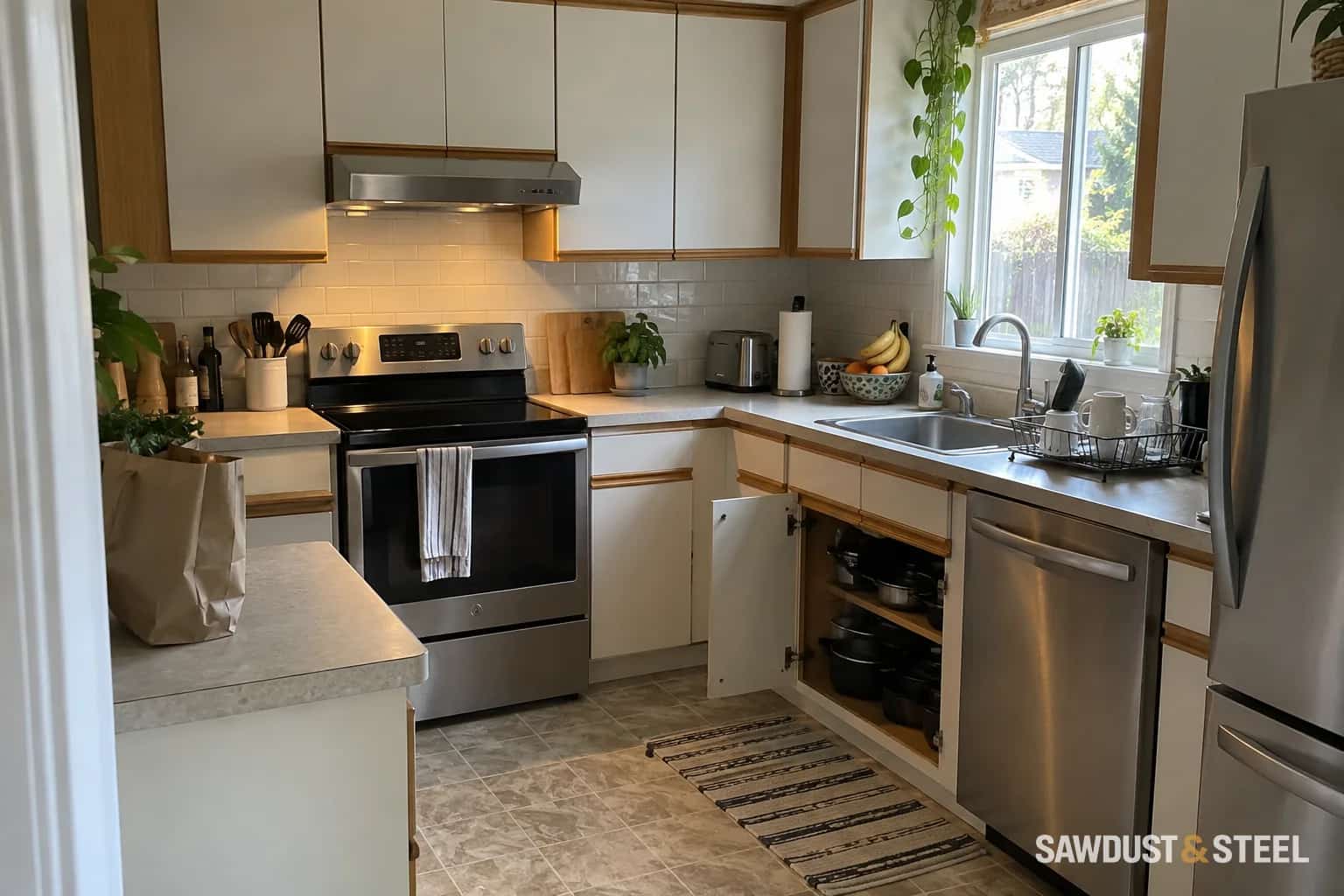
An undermount sink makes wiping crumbs off the counter wonderfully simple. Everything disappears over the edge, which is exactly the point. The less photogenic question is what keeps the sink itself from disappearing into the cupboard.
The tidy edge is not the whole installation
The joint at the countertop needs sealing, while the sink needs the attachment or support specified for its material, size, and installation. A large bowl full of water is a different load from an empty sink sitting on a showroom display. Waste equipment and accessories also need to be considered in the approved assembly.
BLANCO’s undermount installation guide illustrates mounting clips alongside the sealant detail. Its undermount sink guidance also emphasizes a suitable, strong countertop. Follow the documents for the particular sink and counter; different assemblies can use different support methods.
Ask for the underside view
Before the cleaning products move in, ask the installer to show the fixings or support system. You do not need to become a sink installer. You do need to know that there is a deliberate detail, who supplied it, and how it can be serviced.
- Identify the sink model, countertop material, and specified mounting method.
- Confirm who provides and installs the support: the fabricator, plumber, or cabinet installer.
- Check that brackets or rails do not block drawers, bins, shutoffs, or the drain trap.
- Keep a clear photograph of the finished underside with the product paperwork.
If several trades are involved, have one person confirm the complete installation rather than assuming the last person through the room owns every connection. “The sink is in” can describe several very different states of readiness.
Sort the cupboard before drilling anything
A supporting rail may need the same space as the pull-out waste bin. A deeper sink can occupy the top of a drawer you expected to use. Discuss those overlaps on the cabinet drawing, with the sink depth and its mounting detail included.
If a gap appears around an existing sink
A new gap, movement, or visible drop needs assessment. Stop filling or loading the bowl and contact the installer or a suitable repair professional. Do not crawl underneath and experiment with removing clips while the sink is unsupported.
Adding another surface bead may hide a symptom while leaving loose fixings, damaged cabinet material, or a failed support unresolved. The repair should establish what moved, restore the correct support and seal, and check the plumbing afterward. Then the sink can return to its proper role: collecting dishes that everyone insists they will wash in a minute.