
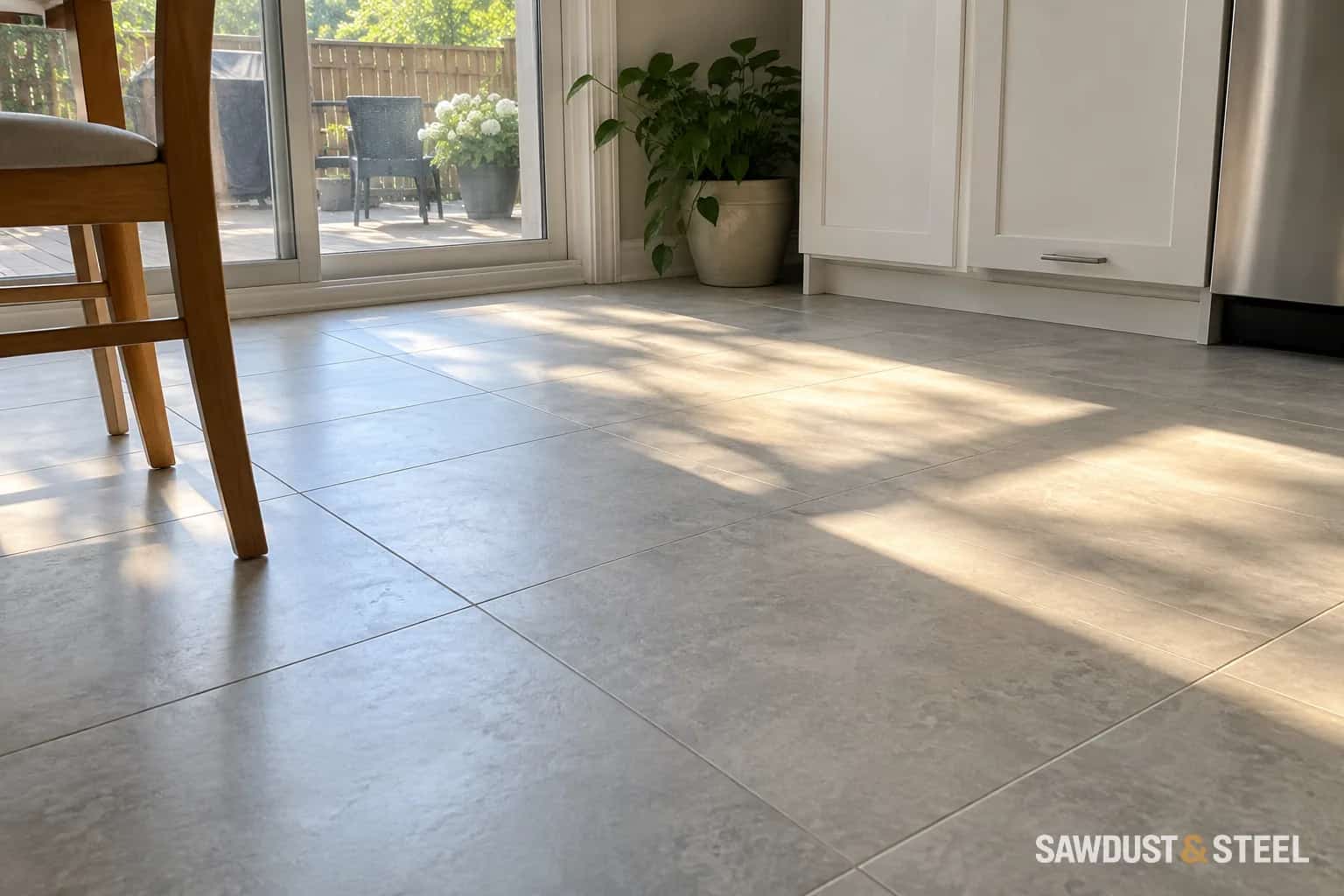
The sunny patch by the patio door deserves its own conversation before you order flooring. The room thermostat can read comfortably while the floor beside the glass gets much warmer. Bring that detail to the supplier before choosing a colour, especially in a south-facing kitchen or an enclosed porch.
Walk the room when the sun is strongest
Mark which parts of the floor receive direct sun, how long the exposure lasts, and whether curtains or exterior shading normally cover the glass. Include seasonal use: a room heated all winter is different from a cottage left cold between visits. Photographs taken at different times help explain the conditions without guessing.
Ask the flooring supplier which temperature limits apply to the exact product: room air, floor surface, installation conditions and ongoing service conditions may be described separately. If measurements are needed, agree on the method. One cool morning reading does not describe a summer afternoon. Save the answer with the product code and installation guide.
Separate colour change from movement
Karndean's care advice recommends protecting flooring from strong direct sunlight to reduce discoloration. That is a useful care principle, but the Australian care page does not establish a temperature limit for every product sold in Ontario.
Colour change, buckling and open joints need different investigations. A surface can fade without a joint failing, while a floor trapped under fixed cabinetry can have a movement problem without obvious fading. If the floor is already installed, photograph the pattern and read why vinyl end joints open before adding glue to every gap.
| Observation | Question to resolve |
|---|---|
| Strong sun on a small area | Is that exposure permitted for this product? |
| Floating installation | Can the floor move at boundaries and fixed units? |
| Glued installation | Which adhesive is approved for these conditions? |
| Colour change beneath a mat | Is the backing compatible, and is shading contributing? |
Choose the whole installation
Karndean publishes separate installation guides for gluedown, rigid-core and loose-lay products. Treat the chosen method as part of the specification. An adhesive recommended for ordinary conditions is not automatically the right adhesive for a concentrated sunny exposure.
For a floating floor, confirm required perimeter movement space and restrictions around fixed units. Do not hide a tight installation beneath trim and call it finished. For a glued floor, confirm substrate preparation and the adhesive approved for the conditions. Gluing down a product intended only to float is not an upgrade.
Make shading practical
Plan how the shading will actually be used. A blind that stays open because it blocks the only garden view is a weak part of the plan. Consider the daily routine, glare, pets and access to the door. A mat may shade a patch, but it also creates a different exposure pattern and its backing must be compatible; see mat staining on vinyl.
For example, a breakfast area might be shaded until noon while a narrow strip beside the sliding door stays exposed all afternoon. Give the installer that specific strip to evaluate. It is more useful than describing the whole room as bright. If the selected floor excludes those conditions, choose another product or change the exposure before installation.
Keep a useful handover record
Keep the exact flooring identification, installation method, adhesive where applicable, care instructions and written response about sun exposure together. Take photographs before trim conceals the perimeter. This makes later troubleshooting much easier than trying to identify a plank from a leftover marketing brochure.
After installation, watch the exposed section during the first periods of strong sun. Report new lifting, joint changes or surface distortion promptly, with dates and photos. Avoid drilling, pinning or adding screws through a floating floor to hold it down. The repair needs to address the cause as well as the visible symptom.