
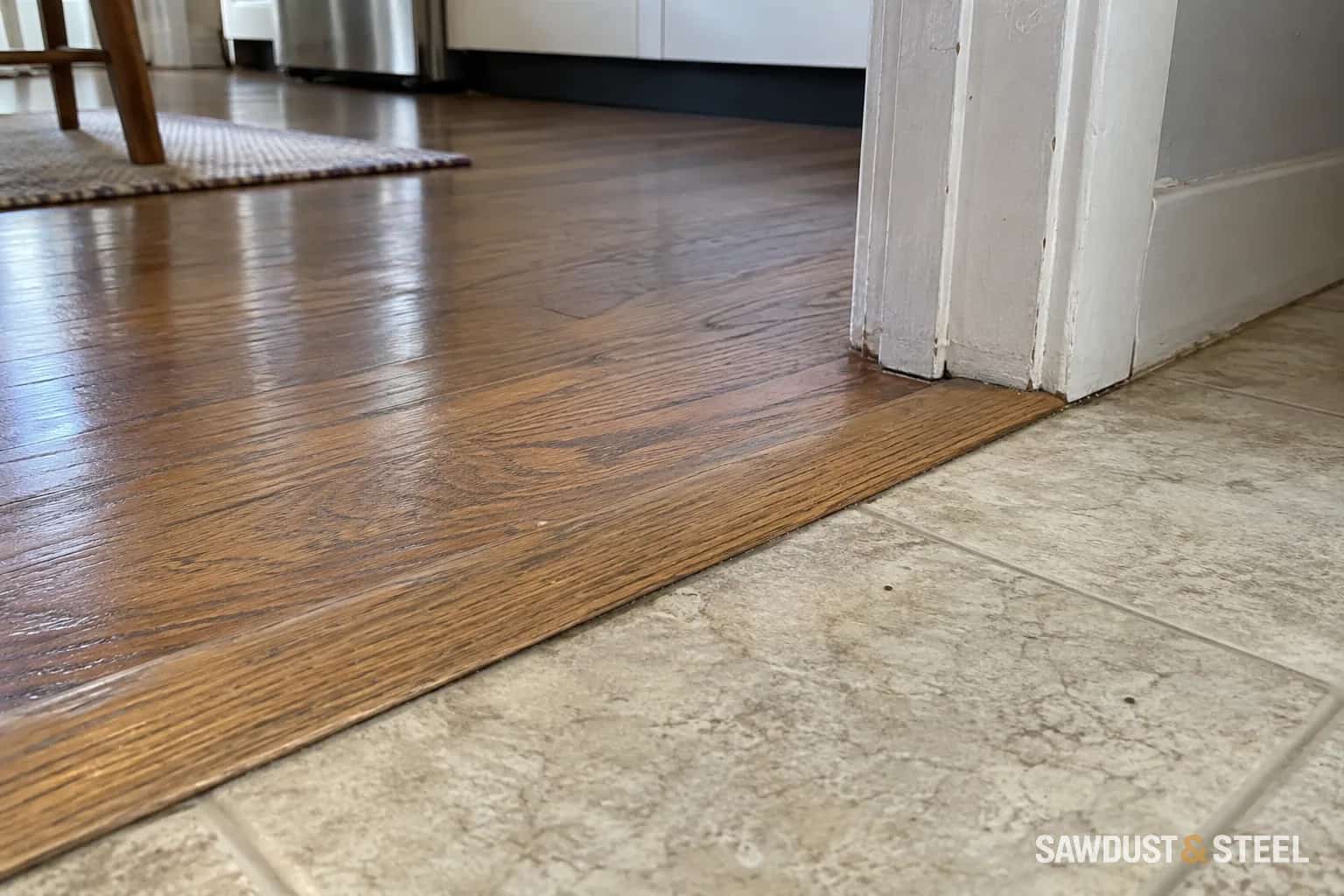
One short seam opens beside the hallway, gets pushed back together, and opens again. Take a photograph with a scale and mark the location on a room sketch. Note whether it changes after sunny afternoons, heating changes or moving furniture. Repetition is useful information, even if the gap is small.
Find the locking system before touching the edge
COREtec: six installation questions distinguishes several locking methods. That matters because a technique that works on one joint can break another. Locate the product code and installation instructions, including any approved plank-replacement method. A loose offcut can show the joint profile without risking a sound board. Keep any broken fragments if an installer has already opened the floor.
Check where the floor stops moving freely
Tell the installer about new built-ins, floor-mounted door stops, screwed-down tracks and tightly fitted trim. Look for the relationship between the opening joint and those locations. Do not remove a fixing blindly; it may support furniture or protect a service. The assessment needs to establish how the floating field is allowed to move and whether its edges were installed as specified.
Joint edge
Is the correct lock fully engaged and undamaged?
Room perimeter
Are fixed objects or trim restraining the floating field?
Support and conditions
Does the substrate and room environment meet this product's requirements?
Describe movement without stress-testing it
Does the joint click or move during ordinary walking? Is the problem concentrated near a doorway or a dip? Do not bounce on it to make a better video. Ask the installer to check support using the manufacturer's flatness method and tolerance. Softness can come from the assembly beneath the plank, so an extra layer of underlay is not an automatic cure.
Agree on the repair and its cause
A useful repair record names the cause found, the boards replaced or reconnected, and any restraint or substrate correction. Adhesive squeezed into a seam may hide the opening while making future disassembly harder. If no cause is established, ask what will be monitored and when the repair will be reassessed. Save spare boards; a matching colour with a different locking edge may not fit later.
If the opening started after fitted furniture was installed, read how built-ins can restrain a floating floor before moving the problem to another joint.