
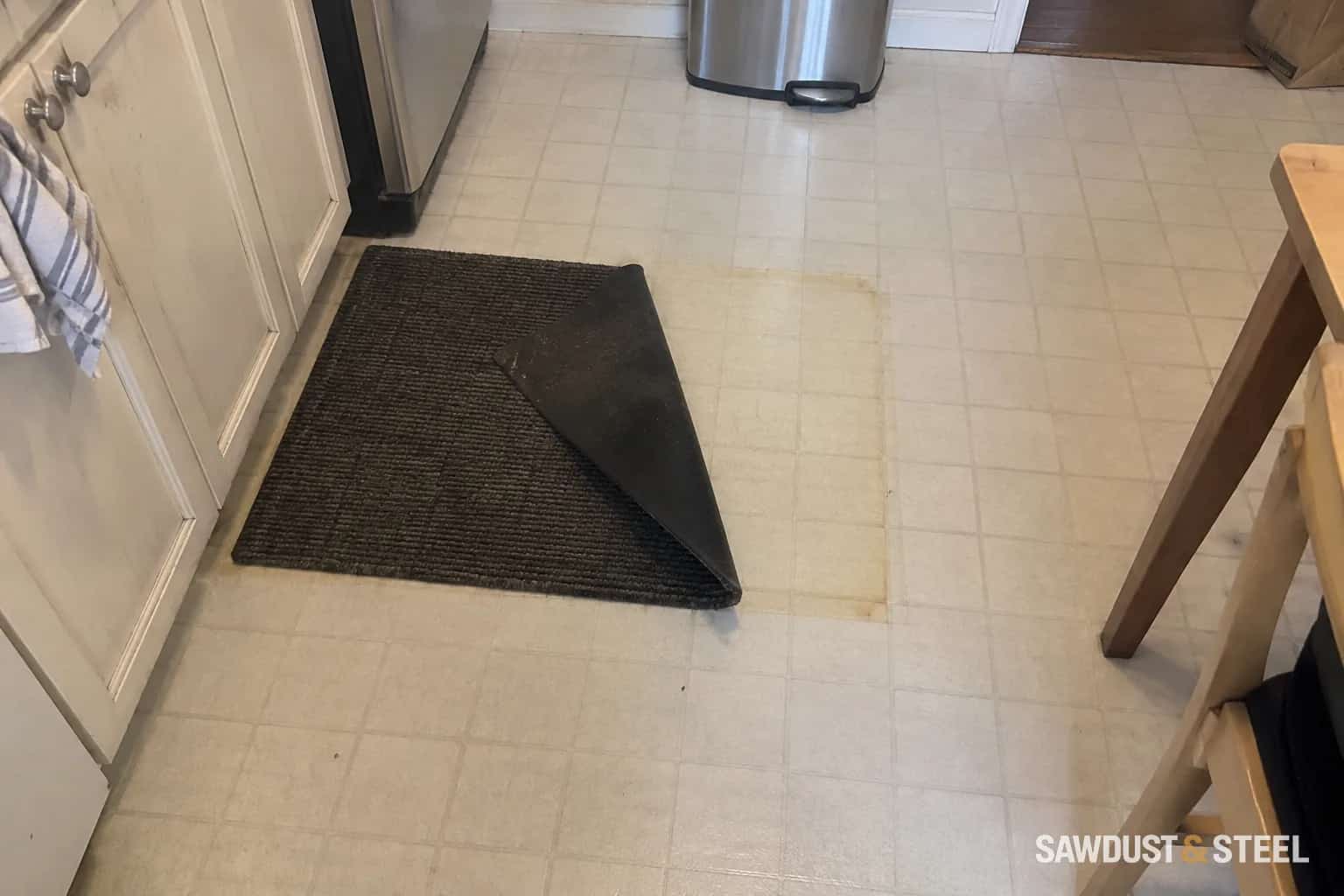
The kitchen mat comes up and leaves a neat yellow rectangle. Unfortunately, it has remembered its position rather better than you wanted. Before attacking the patch with a stronger cleaner, check whether this is dirt, trapped residue or a change in the floor caused by contact with the mat.
Keep the mat label
Photograph the patch and the underside of the mat. Save its care label, backing description and receipt if available. Record how long it was down and whether it sat in sunlight, near a heater or on a newly installed floor. Remove the mat from contact while you investigate; turning it over is not a useful compatibility experiment.
Identify the flooring from the invoice or a spare carton. Sheet vinyl, glue-down luxury vinyl and rigid-core planks may have different care instructions. A wood pattern does not tell you the product, and the label waterproof does not promise resistance to every household chemical.
Check the maker's mat restrictions
Mannington's resilient-floor care guidance warns that certain mat materials, including latex backing and coco fibre, can stain or damage its floors. Use that as a prompt to check your exact floor's permitted mats. Do not turn one product's warning into a guarantee that every other backing is safe.
Ask the mat supplier for a written compatibility statement if the backing is unclear, then compare it with the flooring instructions. Descriptions such as non-slip, natural and kitchen-safe answer different questions. The backing, adhesives, dyes and any separate pad all contact the floor.
| Evidence | What it helps establish |
|---|---|
| Exact floor code | The relevant cleaning, mat and warranty guidance. |
| Backing label | Whether the material is expressly permitted or restricted. |
| Dry approved test area | Whether ordinary residue responds without finish damage. |
| Spare flooring | Whether a local repair can match and connect. |
Clean a small area only as directed
Remove loose dirt without abrasion, then use the floor maker's permitted cleaning method on a small part of the patch. Follow any rinsing and drying instructions and judge the result once dry. Stop if the finish changes, becomes tacky or the colour worsens. Keep a photograph of the untreated area for comparison.
Do not escalate to bleach, solvent, a cleaning eraser or a steam mop without specific approval. A stain within a wear surface cannot necessarily be washed away, and polishing can change the sheen without changing the colour. The steam-mop guide explains why heat and moisture deserve their own product check.
Separate contact staining from other outlines
A patch can also reflect different light exposure or a build-up of cleaning product. Report the actual pattern rather than diagnosing every rectangle as rubber damage. If the surface feels sticky or has a visible film, use the residue troubleshooting sequence before adding another coating.
A floor that changed colour in strong sun needs a separate sunlight assessment. Several causes can coexist: a mat may cover one area while light reaches the rest. The useful evidence is the product identity, history and response to an approved small test.
When the colour stays
Ask the manufacturer whether the stain is removable and whether a warranty assessment is appropriate. Do not cut out material before the supplier has the evidence it needs. Keep packaging and photographs, including a wide view showing the patch's location.
For plank or tile flooring, a replacement may be possible if matching stock exists and the connection permits a suitable repair. With sheet flooring, a patch introduces seams and may be more visible than expected. Price the finished appearance and repair method, not just the area of the yellow rectangle.
Choose the next mat around the floor
Before buying, compare backing type, cleaning instructions and whether moisture can remain trapped beneath it. Keep the floor dry and clean under the mat, inspect periodically and follow the flooring maker's advice about rugs after installation. A washable top does not establish a washable backing.
If the old mat was mainly there because standing at the sink is uncomfortable, consider the entire choice: a compatible mat, a different placement or another way to change the working position. The replacement should solve the original comfort problem without quietly creating the same stain.