
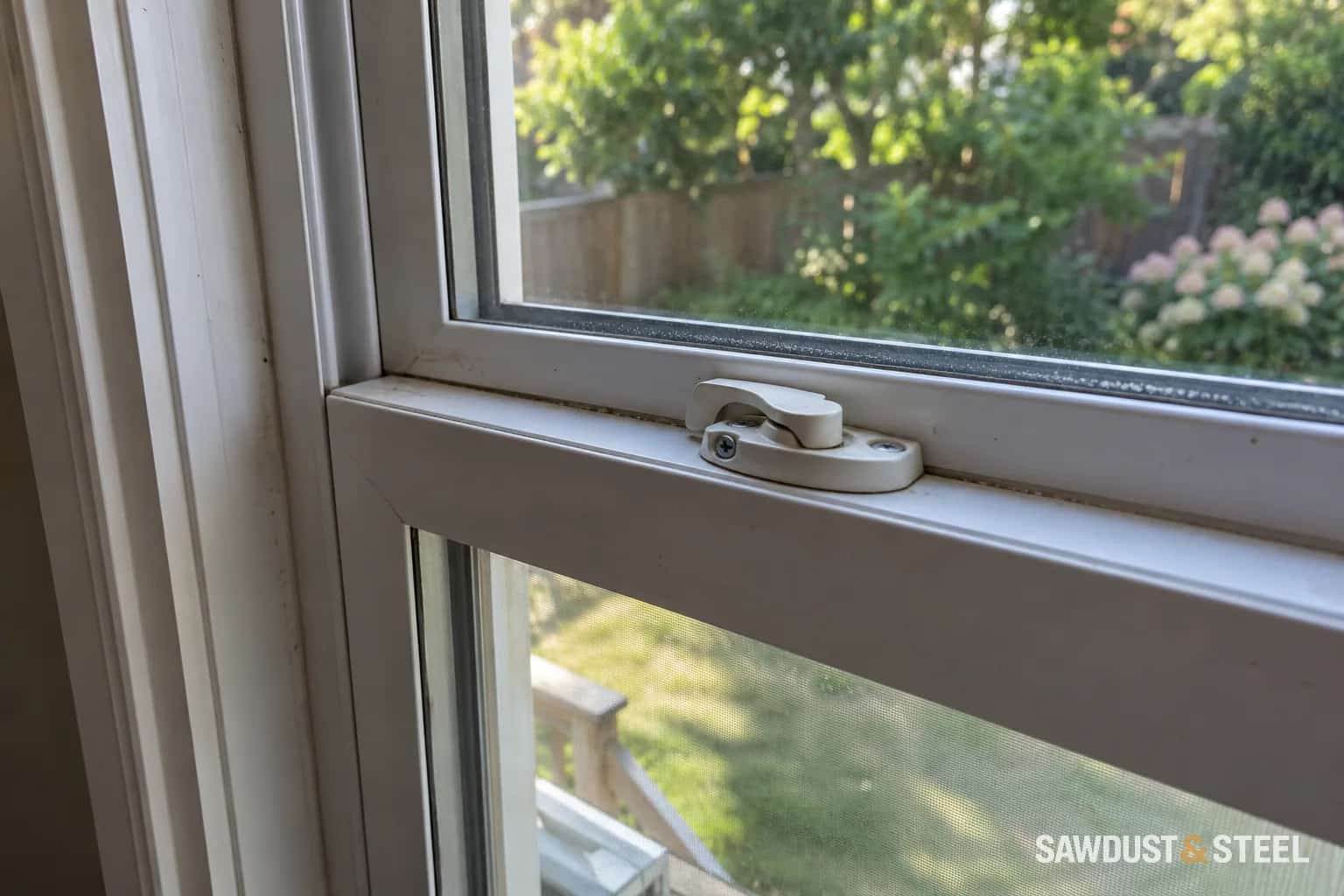
Start with the sash that is easy to overlook
On a double-hung window, the upper sash can sit slightly below its fully closed position while the lower sash looks correct. Check both under the manufacturer's operating instructions. On a slider, inspect the meeting edges and track. On a casement, watch whether the sash meets the frame evenly along the hinge and lock sides.
Do not extend the lock handle with a tool or lean on it to gain leverage. A lock may pull a correctly aligned sash into its final seal, but it is not intended to correct substantial distortion. A bent keeper or broken handle adds another repair to the original fault.
Clear the route and look at the seal
Inspect accessible channels for grit, a displaced screen component, paint accumulation or other obstruction. Check weatherstrip for a fold or a section pulled out of its groove. Use the maker's cleaning method and avoid scraping delicate seals with a sharp tool. Then close gently and compare the gap around the sash.
Andersen's A-Series guidance identifies dragging, poor closing and poor locking as possible signs that a casement sash needs alignment adjustment Andersen: A-Series casement sash adjustment.
Lock aligns normally
Retain the hardware position and address the obstruction.
One corner remains proud
Inspect hinges, balance engagement or frame alignment for that window type.
Sash sits evenly; keeper is loose
Use the model's locking-hardware service instructions.
Fit changes suddenly across several windows
Investigate the wider building condition before repeated adjustments.
A moved keeper can hide the wrong problem
Mark the original keeper position before any permitted adjustment. If the frame or sash is out of alignment, moving the keeper may make the handle close while leaving uneven seal contact. Ask the repairer to demonstrate the sash fit and operating motion as well as the locked position. The objective is a window that closes properly, not merely a handle that points the right way.
A hung sash that drops also needs its support system checked; see the balance guide. A casement that became difficult to crank needs the operator and hinge check. These mechanisms interact, but they are not interchangeable diagnoses.
Open, close, lock and release
Repeat the complete sequence several times using ordinary hand pressure. Check that the insect screen, blinds and handle do not obstruct each other. Inspect the weatherstrip after opening again to ensure it stayed seated. Record any seasonal pattern instead of repeatedly moving hardware back and forth. If the window cannot be secured, arrange timely service and use a suitable temporary security measure that does not create an unsafe exit obstruction.