
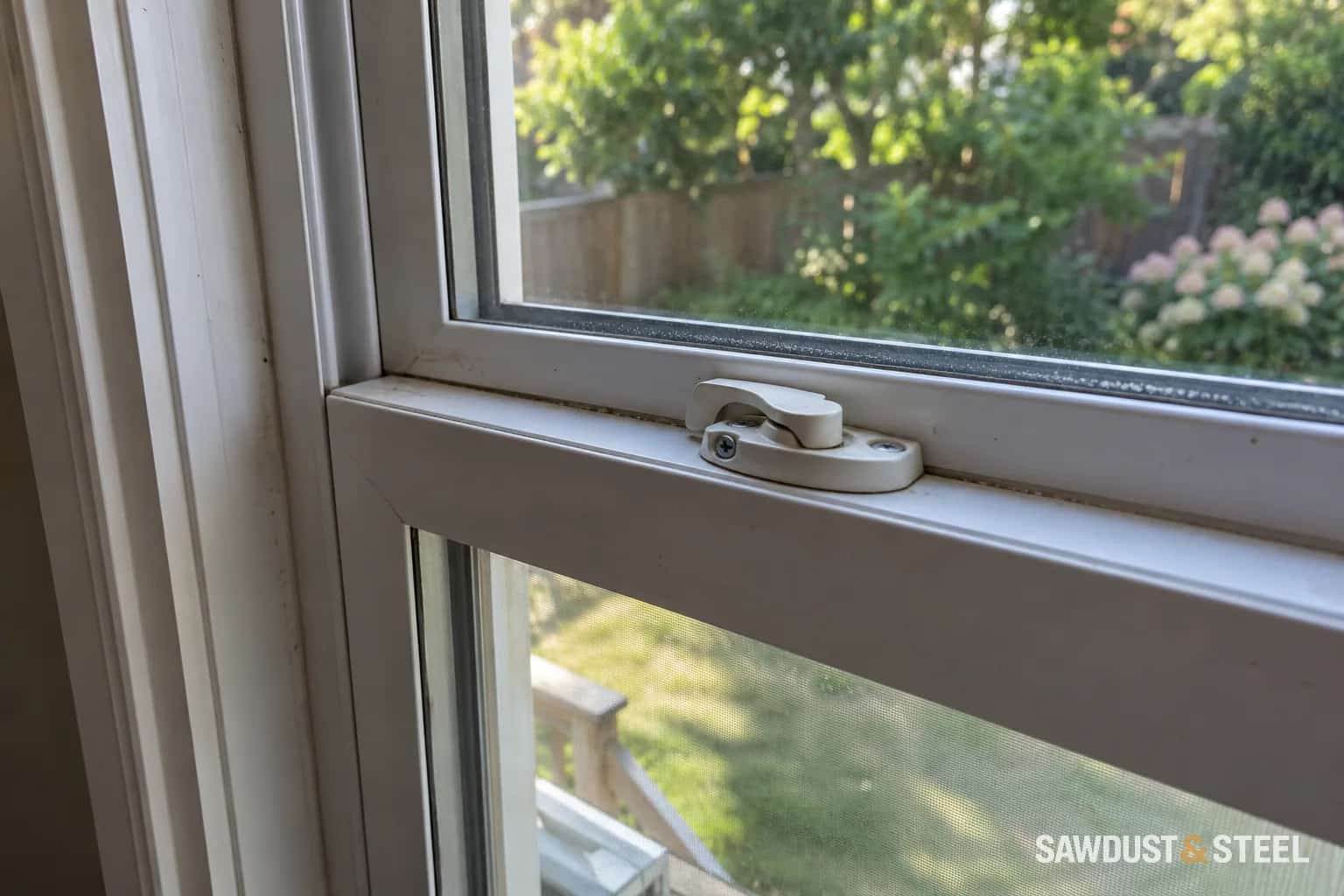
Do not rely on a prop
If the sash drops when released, stop using it as an open window. Lower it carefully if safe and keep people clear of the closing path. A stick, paint tin or screwdriver can slip and is not a permanent solution. Do not repeatedly let the sash fall to demonstrate the fault; a description and a short video taken while it is controlled are enough.
A sash is the moving frame that holds the glass. Its balance counteracts its weight so it can stay at a chosen height. Different windows use different balance systems, including cords and weights, spring channels or other mechanisms. The visible symptom does not identify the replacement part by itself.
Did it start after cleaning or gradually?
If the problem began immediately after the sash was tilted for cleaning, tell the service technician. The sash may not have been re-engaged correctly, or a component may have been damaged during handling. A gradual increase in heaviness suggests a different history. If only one side drops or the sash twists, stop moving it before it jams or damages the frame.
After tilt cleaning
Describe the removal and reinstallation sequence; do not assume a spring has failed.
Gradually heavier
Ask for balance condition and matching part identification.
One side drops
Keep the sash supported and have both sides inspected.
Glass recently replaced
Confirm the balance specification suits the current sash weight.
Andersen's 100 Series double-hung replacement guide requires full sash support and warns that balancer cords are under high tension Andersen: 100 Series sash and balancer replacement.
Give the supplier more than the window width
Collect the manufacturer, series, product label, approximate age and photographs of accessible hardware. A part may be selected by length, attachment style and load range. Two similar-looking balances can behave differently. Do not dismantle a tensioned assembly merely to read a stamp if the model's safe removal procedure is not established.
Ask whether the repair includes checking the opposite balance, pivot connections, tilt latches and frame channels. Replacing a broken part without correcting a jammed sash or mismatched load can leave the problem unresolved. If the frame is sound and compatible parts exist, a balance repair may preserve an otherwise useful window; failure of one component does not automatically mean replacing the whole opening.
Test holding, closing and locking
After service, the sash should move smoothly and remain where the product is designed to hold it. Check several positions under controlled conditions, then close and lock it. Both sides should seat evenly. If the lock misses, investigate sash seating and lock alignment rather than forcing it. Keep the insect screen fitted correctly, while remembering it does not support a person leaning against it.
When parts are unavailable or the frame is badly deteriorated, compare repair with insert or full-frame replacement. Include the complete installation and usable opening in that decision, not only the price of a new sash.