
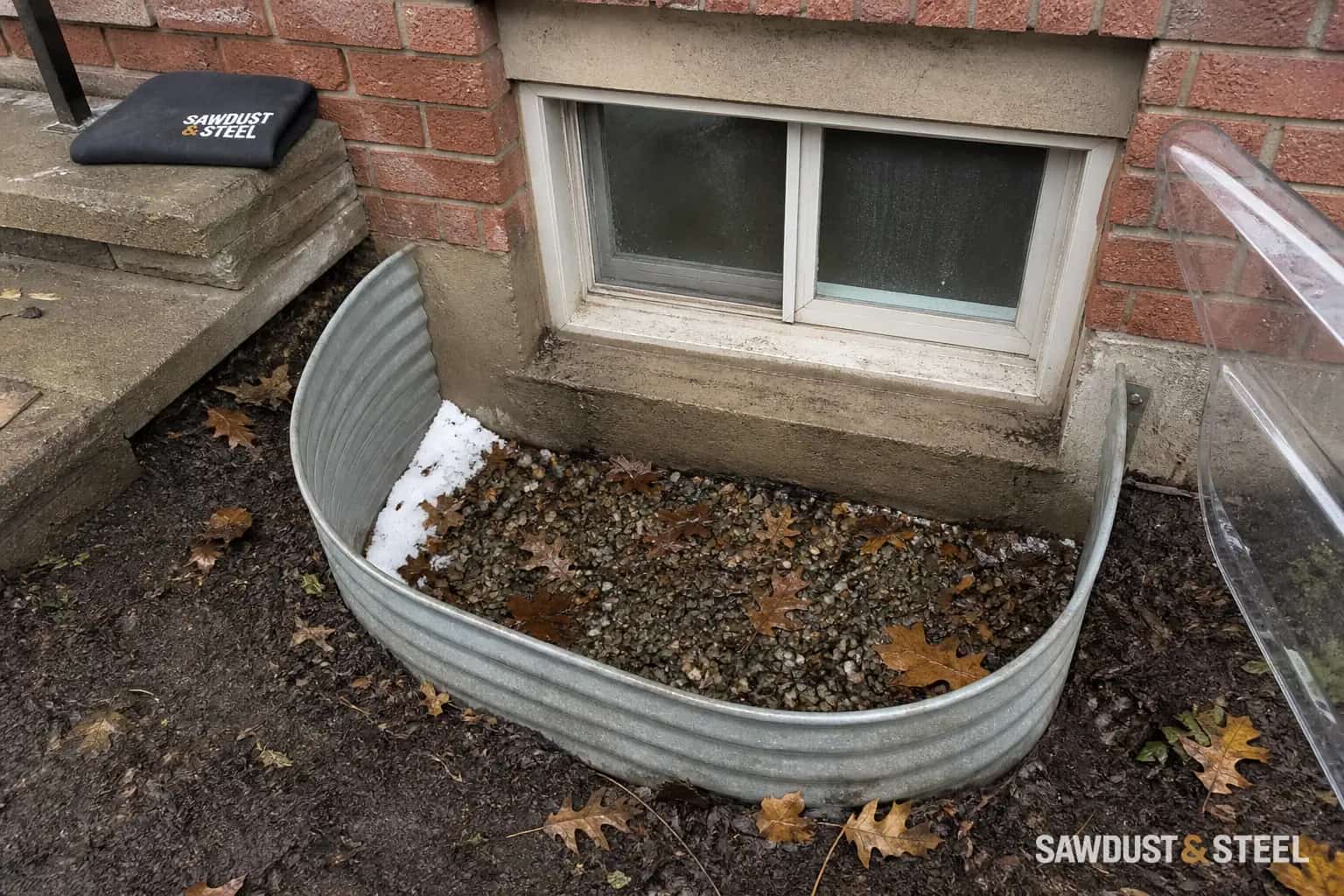
A window well is supposed to give the basement window some breathing room. Seeing water climb toward the sill rather spoils that idea. Before buying a cover or blaming the drain, watch where the water arrives from a safe position. Runoff over the rim, water behind the well, a leaking frame and water rising from below lead to different repairs. A few useful photos can keep you from paying to fix the wrong thing.
Check these five things in order
| Check | Clue | First response |
|---|---|---|
| 1. Leaves, silt, or hidden drain | Debris mats the gravel or the drain location is buried | Remove loose debris by hand from a safe position |
| 2. Grade over the rim | Mud streaks or a water line enters from the yard side | Redirect surface flow away from the well |
| 3. Well-to-wall joint | Water tracks behind a loose edge against the foundation | Have the attachment and exterior seal assessed |
| 4. Window or frame | Wetness starts at corners, joints, glazing, or the sill | Inspect the window assembly and perimeter detail |
| 5. Drain capacity or connection | Water rises from below or remains after the surface flow stops | Arrange a drainage investigation before flushing or digging |
Canada's current basement-window maintenance guidance says window wells collect rain, ice, and snow because they are low points. It recommends clearing dirt, leaves, sticks, ice, and snow; checking that the well stays snug to the foundation; and monitoring more often during wet spring and fall weather.
A clean well can still have a drainage problem
The top gravel can look respectable while fine soil blocks the path below, a buried drain is disconnected, or foundation drainage is already overwhelmed. Water that rises from below deserves a different investigation than water visibly spilling over the rim. Record whether it appears during rain, hours later, or during a thaw. Share the timing and photographs with the drainage professional.
- Do not push a rod or pressure hose into a drain whose route and condition are unknown.
- Do not excavate beside a foundation without checking utilities, soil support, waterproofing, and the safe limits of the work.
- Do not seal the interior trim and call the drainage fixed. Interior caulk can hide the entry point while the wall stays wet.
- Do not pump water onto a slope that sends it back toward the house or a neighbour.
Mississauga's Rain Ready home guide treats window wells as part of the larger property-drainage system. That is the right frame: grading, downspouts, the well, the window, foundation drainage, and the sump may all share the same rainstorm.
A cover must not trap the escape route
We checked a covered well where the owner was understandably annoyed to find wet gravel again. The cover kept leaves out, but roof runoff was landing nearby and following the grade toward the rim. We photographed that route for the drainage assessment instead of immediately ordering another cover. A correctly fitted cover can reduce direct rain and debris; it cannot correct every route water takes around the house. Check beneath it after storms, keep snow from packing into ice, and confirm that water shed by the cover travels away from the well-to-wall joint.
The federal guidance specifically warns that emergency-exit windows can have cover requirements and points homeowners to the applicable provincial code. Ontario's current Building Code Volume 1 sets the inside-opening, enclosure, 550 mm clearance, and snow-accumulation rules in Article 9.9.10.1. Our Ontario basement-egress guide explains why the open sash, well clearance, and cover need to work as one route.
What to do before the next storm or freeze
- Clear loose leaves, sticks, and snow without damaging the window, well, or drain.
- Photograph the rim, grade, wall joint, gravel, window corners, and interior staining.
- During safe weather, watch where roof and yard runoff travel before they reach the well.
- Keep a required egress route clear and test the cover and window from inside.
- If water rises from below, returns quickly, or enters the basement, arrange a drainage and window-detail assessment before covering the evidence.
Move valuables away from the area while the cause is investigated. If water is near outlets, cords, or a panel, keep people clear and call qualified help. The best window-well repair fixes the route the water actually took. Verify drainage after the work is complete.